

Ajit Doval net worth is one of the most searched topics in India, and for good reason.
Known as the “James Bond of India,” Ajit Kumar Doval is the country’s longest-serving National Security Advisor (NSA) and one of the most powerful men in Indian governance.
From covert undercover missions to shaping billion-dollar security decisions, his life is a rare story of intelligence, sacrifice, and strategic brilliance.
Ajit Doval Net Worth
| Detail | Information |
|---|---|
| Full Name | Ajit Kumar Doval |
| Date of Birth | January 20, 1945 |
| Age (2026) | 81 Years |
| Birthplace | Ghiri Banelsyun Village, Pauri Garhwal, Uttarakhand |
| Nationality | Indian |
| Education | Ajmer Military School; M.A. Economics, Agra University (1967) |
| Service | IPS (Kerala Cadre), 1968 Batch |
| Current Position | National Security Advisor (3rd Consecutive Term) |
| Wife | Aruni Doval (married 1972) |
| Children | Shaurya Doval, Vivek Doval |
| Net Worth (2026) | $3M – $10M USD (Estimated) |
| Monthly Salary | ~₹2 Lakh + Allowances |
| Nickname | James Bond of India |
| Major Award | Kirti Chakra (1988) |
| Think Tank Founded | Vivekananda International Foundation (2009) |
Ajit Doval Net Worth in 2026
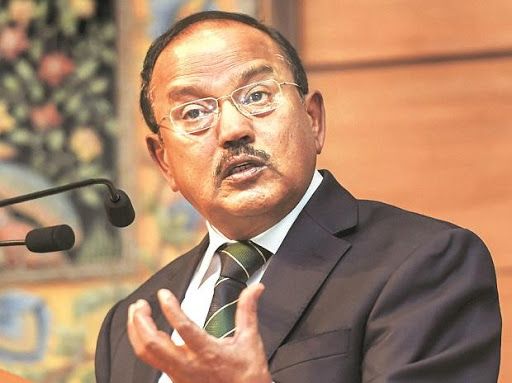
As of 2026, Ajit Doval’s estimated net worth ranges between $3 million and $10 million USD, which is approximately ₹25 crore to ₹85 crore.
Unlike politicians or business tycoons, his wealth comes almost entirely from decades of government service, not from corporate dealings or investments.
He has no known business directorships, luxury real estate portfolio, or commercial interests. His lifestyle is famously modest for someone of his stature.
Where Does His Wealth Come From?
His primary income sources include his government salary as NSA, his IPS pension from decades of service, and modest personal savings and investments.
He also receives official perks including a government bungalow, Z+ security cover, diplomatic passport, and a full support staff — none of which add to personal net worth.
Ajit Doval Salary Per Month
As NSA, Ajit Doval earns a basic salary of approximately ₹1,37,500 per month, the same pay scale as a Union Cabinet Minister.
With additional allowances, perks, and benefits, his total monthly compensation reaches around ₹2 lakh or slightly above.
In 2019, Prime Minister Modi elevated his rank to Cabinet Minister level — the first time in India’s history an NSA received Cabinet rank — significantly boosting his salary and official standing.
Net Worth Compared to Other NSAs
Compared to his peers globally, Doval’s net worth is considered modest. His wealth reflects a career entirely rooted in public service rather than private sector accumulation.
This modesty is often seen as a mark of his integrity and dedication to national security above personal gain.
Ajit Doval Biography
Early Life and Childhood
Ajit Kumar Doval was born on January 20, 1945, in Ghiri Banelsyun village, a small hamlet in Pauri Garhwal district, which is now part of the state of Uttarakhand.
He was raised in a disciplined household. His father, Major Gunanand Doval, served for 36 years in the Bengal Sappers of the Indian Army, and his mother, Indra Doval, was a homemaker known for her strong moral values.
Growing up in the serene but rugged hills of Uttarakhand, young Ajit was exposed to military discipline, patriotism, and a sense of duty from a very early age.
Education
Doval completed his schooling at the prestigious Ajmer Military School in Rajasthan, one of India’s finest military institutions for young students.
He then pursued higher education and earned a Master’s degree in Economics from Agra University (now Dr. Bhimrao Ambedkar University) in 1967.
Over the decades, he received three honorary doctorate degrees — from Agra University in December 2017, Kumaun University in May 2018, and Amity University in November 2018 — acknowledging his extraordinary service to the nation.
Entry into IPS
In 1968, Ajit Doval cleared the UPSC Civil Services Examination and joined the Indian Police Service (IPS) as a member of the 1968 batch, allotted to the Kerala cadre.
Just six years into his police career, he received the Police Medal for Meritorious Service — an award normally given after 17 years of service. Prime Minister Indira Gandhi herself presented the medal to him.
This early recognition signaled the extraordinary career that was to follow.
Ajit Doval Career Timeline
IPS and Intelligence Bureau Entry
After his IPS training and initial postings, Doval was transferred to the Intelligence Bureau (IB) in 1972, where he would go on to spend the majority of his career.
His first major assignment was to handle the insurgency in the northeast, specifically in Mizoram. Between 1972 and 1977, he led the IB’s Subsidiary Intelligence Bureau in Aizawl.
This mission was a success — he reportedly managed the defection of 6 out of 7 commanders of Laldenga’s militant outfit to the Indian side, which eventually forced the secessionist leader to sign the Mizoram Peace Accord.
7 Years Undercover in Pakistan
One of the most legendary chapters in Doval’s career is his covert posting in Pakistan, where he spent approximately seven years undercover, posing as a Pakistani Muslim in Lahore.
He was officially stationed at the Indian Embassy in Pakistan, using a diplomatic cover, but his actual work involved intelligence gathering at considerable personal risk.
This daring mission earned him legendary status in intelligence circles and became one of the defining stories of his spymaster persona.
Operation Black Thunder (1988)
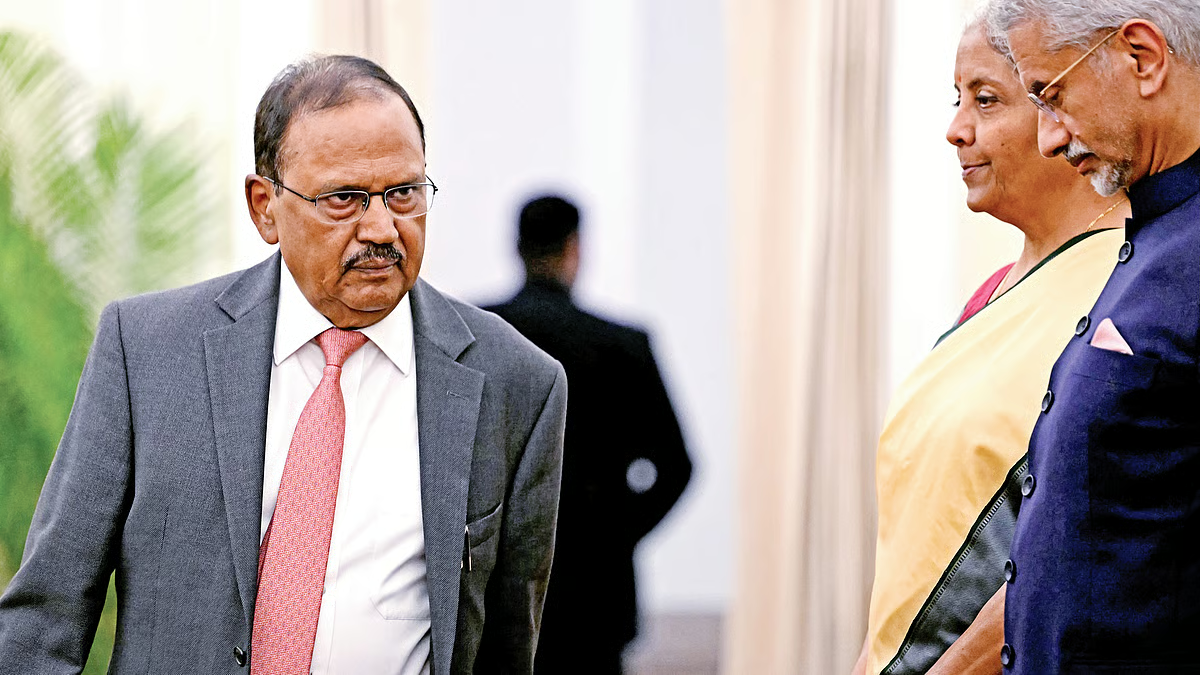
Perhaps the most celebrated episode of Doval’s field career is his role in Operation Black Thunder in 1988, when Khalistani militants had barricaded themselves inside the Golden Temple in Amritsar.
Doval went undercover as a rickshaw puller and convinced the militants that he was an ISI operative sent from Pakistan to help the Khalistan cause.
He entered the Golden Temple and spent time among the militants, gathering crucial intelligence — including the exact strength, weapon positions, and hideouts of the terrorists inside the shrine.
The information he relayed to security forces was critical to the success of the operation, which ended without major structural damage to the holy site.
For his extraordinary bravery in Operation Black Thunder, Doval was awarded the Kirti Chakra in 1988 — making him the first police officer in Indian history to receive this honor, which was previously given only to military personnel.
Kashmir Operations
In the Kashmir Valley during the peak of militancy in the late 1980s and 1990s, Doval led several infiltration and counter-terrorism operations.
One of his most notable achievements was turning the militant commander Kuka Parray from a rabid anti-India figure into a pro-India peacemaker — a strategic intelligence triumph that helped stabilize parts of Kashmir.
This skill of turning adversaries rather than just defeating them became a hallmark of Doval’s intelligence philosophy.
IC-814 Hijacking Negotiations (1999)
When Pakistan-based terrorists hijacked Indian Airlines Flight IC-814 on December 24, 1999, flying 178 passengers to Kandahar, Afghanistan, Doval was India’s lead negotiator with the hijackers.
This was a high-pressure diplomatic crisis, and Doval’s role in the negotiations earned him further recognition in intelligence and security circles across the country.
Director of Intelligence Bureau (2004–2005)
After decades of field operations and leadership of the IB’s operations wing, Doval was appointed Director of Intelligence Bureau (DIB) in 2004, the top intelligence post in India.
He served in this role until January 2005, after which he retired from active government service.
Vivekananda International Foundation (2009)
After retirement, Doval did not step away from national affairs. In December 2009, he founded the Vivekananda International Foundation (VIF), a prominent public policy think tank based in New Delhi.
The VIF focused on national security, foreign policy, and strategic affairs — areas where Doval’s expertise made him one of the most respected voices in the country.
He served as the director of VIF until his appointment as NSA in 2014.
Appointment as National Security Advisor (2014)
When Prime Minister Narendra Modi came to power in May 2014, Ajit Doval was appointed as the fifth National Security Advisor of India — one of the first key appointments made by the new government.
This appointment returned Doval to the center of India’s strategic and security decision-making at the highest level.
He reports directly to the Prime Minister and sits on the country’s most powerful national security committees.
Second Term as NSA
In 2019, Doval was reappointed for a second consecutive five-year term as NSA. In the same year, he was elevated to Cabinet Minister rank, becoming the first NSA in India’s history to receive this distinction.
His second term saw the Balakot airstrike (2019) in response to the Pulwama attack, the revocation of Article 370 in Kashmir, and the Doklam standoff resolution with China — all operations in which he played a pivotal advisory and operational role.
Third Term as NSA (2024 Onwards)
In 2024, Doval was reappointed for an unprecedented third consecutive five-year term, cementing his position as the longest-serving NSA in Indian history.
No other individual has served more than one term in this role before Doval, making his three terms a historic milestone.
Operation Sindoor (2025)
In May 2025, following the deadly Pahalgam terror attack in Kashmir, India launched Operation Sindoor — a series of precision airstrikes on May 6–7 targeting nine terrorist camps in Pakistan and Pakistan-occupied Kashmir.
Doval was widely credited as the key architect behind the operation’s planning and diplomatic management. Shortly after the strikes, he personally briefed US Secretary of State Marco Rubio on behalf of India, framing the action as “focused, precise, measured, and non-escalatory.”
Operation Sindoor marked one of the most assertive military responses in recent Indian history, and Doval’s fingerprints were all over its execution.
Ajit Doval Family
Wife: Aruni Doval
Ajit Doval married Aruni Doval in 1972. The couple has maintained an intensely private life over the decades, consistent with the security demands of Doval’s position.
Aruni Doval has rarely appeared in public and is not known to have any public profile, interviews, or social media presence. She has stood by her husband through decades of high-risk, secretive work.
Son 1: Shaurya Doval
Shaurya Doval is the elder son of Ajit Doval. He has spoken in public about growing up with a father whose profession was a complete mystery to him as a child.
In his own words, he said: “I had no idea about this… To date, I don’t know what he does; there is no culture of discussing work at home.”
Shaurya is a banker-turned-political thinker and has been associated with the India Foundation, a think tank. He has a public profile unlike his father and participates in policy discussions.
Son 2: Vivek Doval
Vivek Doval is the younger son. Like his mother, he maintains an extremely private profile and stays away from the public eye.
Very limited information is available about Vivek’s professional life, which is in keeping with the family’s tradition of privacy and discretion.
Family Values and Lifestyle
The Doval family is known for discipline, simplicity, and an extreme sense of privacy — values that flow directly from Ajit Doval’s decades as an intelligence operative.
Doval himself lives in a government-provided bungalow, travels with Z+ security, and has no known luxury assets. His lifestyle reflects the ethos of service over self that has defined his career.
Ajit Doval Awards and Recognition
Kirti Chakra (1988)
The Kirti Chakra is India’s second-highest peacetime gallantry award, awarded for acts of bravery or self-sacrifice away from the battlefield. Doval received it for his extraordinary undercover work during Operation Black Thunder.
He is the first and only police officer to have been awarded this medal, which was previously exclusive to military personnel.
Police Medal for Meritorious Service
Doval received this medal only six years into his career — far ahead of the standard 17-year requirement. Indira Gandhi presented it to him personally, recognizing his exceptional service in early missions.
President’s Police Medal
A further recognition of his service, the President’s Police Medal acknowledges distinguished service at the highest level within India’s police and intelligence services.
Honorary Doctorates
Doval has received honorary doctorates from three universities: Dr. Bhimrao Ambedkar University (2017), Kumaun University (2018), and Amity University (2018) — all in recognition of his service to national security.
Cabinet Minister Rank (2019)
In a historic first, Doval was elevated to Cabinet Minister rank in 2019, a recognition of the central importance of his role in India’s security establishment.
International Recognition
US Ambassador Eric Garcetti publicly called Doval an “international treasure,” reflecting his reputation not just within India but among global strategic and security communities.
Ajit Doval’s Strategic Legacy
The Doval Doctrine
Doval is credited with shaping what analysts call the “Doval Doctrine” — a more assertive, offense-oriented approach to India’s national security policy.
Under this doctrine, India moved from a reactive posture to a more proactive one: cross-border surgical strikes, diplomatic pressure via intelligence channels, and using internal security operations as a tool of statecraft.
Role in Key National Decisions
Doval played a critical advisory role in the abrogation of Article 370 in 2019, the Balakot airstrike in 2019, the Doklam standoff resolution with China in 2017, the surgical strike in Myanmar in 2015, and Operation Sindoor in 2025.
Each of these events represented a turning point in India’s national security posture, and Doval was at the center of all of them.
Rashtriya Raksha University
Around 2008, Doval helped establish the Rashtriya Raksha University, India’s first national security-focused university, another testament to his commitment to building long-term institutional capacity in security affairs.
Ajit Doval Personal Life and Lifestyle
Doval is known to lead an austere, disciplined life. He has no known luxury cars, expensive real estate, or high-profile social appearances.
He lives in a government-provided residence in New Delhi, uses official vehicles, and keeps a very low personal profile outside of his official duties.
His diet, fitness habits, and daily routine are not public knowledge — consistent with the extreme privacy he maintains.
Despite his enormous power and influence, Doval remains one of the least personally visible figures among India’s top leadership, appearing in public only when security matters require it.
Ajit Doval in Popular Culture
Doval’s legendary spy career has inspired several Bollywood and OTT references. In the 2019 film “Uri: The Surgical Strike,” actor Paresh Rawal portrayed a character based on Doval.
Bollywood superstar Salman Khan’s character in “Tiger Zinda Hai” is also believed to have been inspired in part by Doval’s persona as a master spy.
Sony LIV produced a docuseries episode titled “Ajit Doval” as part of its “Adrishya: Undercover Stories of Indian Spies” series in 2025, dramatizing his role in Operation Black Thunder.
Frequently Asked Questions (FAQs)
What is Ajit Doval’s net worth in 2026?
Ajit Doval’s estimated net worth in 2026 is between $3 million and $10 million USD. His wealth comes from government salary, IPS pension, and modest investments, not from business ventures.
What is Ajit Doval’s monthly salary as NSA?
His basic salary is approximately ₹1,37,500 per month. With allowances and perks, his total monthly compensation reaches around ₹2 lakh, equivalent to a Union Cabinet Minister.
How many terms has Ajit Doval served as NSA?
Doval is currently serving his third consecutive five-year term as NSA, making him the longest-serving National Security Advisor in India’s history since 2014.
Who is Ajit Doval’s wife?
Ajit Doval married Aruni Doval in 1972. She leads an extremely private life and has no known public profile, consistent with the family’s security-conscious lifestyle.
What is Ajit Doval famous for?
He is famous for his undercover missions including 7 years in Pakistan, his role in Operation Black Thunder at the Golden Temple, and architecting modern India’s assertive national security doctrine.
What award did Ajit Doval receive for Operation Black Thunder?
He received the Kirti Chakra in 1988 for his bravery in Operation Black Thunder. He is the first police officer to receive this award, which was previously given only to military personnel.
What is Ajit Doval’s educational qualification?
He completed schooling at Ajmer Military School and holds a Master’s degree in Economics from Agra University (1967). He also holds three honorary doctorates from Indian universities.
Did Ajit Doval really go undercover in Pakistan?
Yes. Doval spent approximately seven years undercover in Pakistan, reportedly posing as a Pakistani Muslim in Lahore, gathering critical intelligence for India at considerable personal risk.
What is Operation Sindoor and what was Doval’s role?
Operation Sindoor was India’s precision airstrike in May 2025 targeting nine terrorist camps in Pakistan. Doval is widely credited as the key architect and also personally briefed the US Secretary of State after the strikes.
What is the Vivekananda International Foundation?
It is a New Delhi-based public policy think tank founded by Ajit Doval in December 2009. It focuses on national security and strategic affairs, and Doval served as its director until becoming NSA in 2014.
Conclusion
Ajit Doval net worth may be modest on paper, but his real worth to India is immeasurable.
From a humble village in Uttarakhand to the highest corridors of national security, his journey is one of extraordinary dedication, selfless sacrifice, and strategic genius.
As India’s longest-serving NSA, his influence spans seven decades of service — from undercover missions in Pakistan to architecting Operation Sindoor in 2025.
A simple lifestyle, a private family, and a legacy built in the shadows — Ajit Doval is not just a spymaster, he is a nation-builder who shaped modern India without ever seeking the spotlight.
