

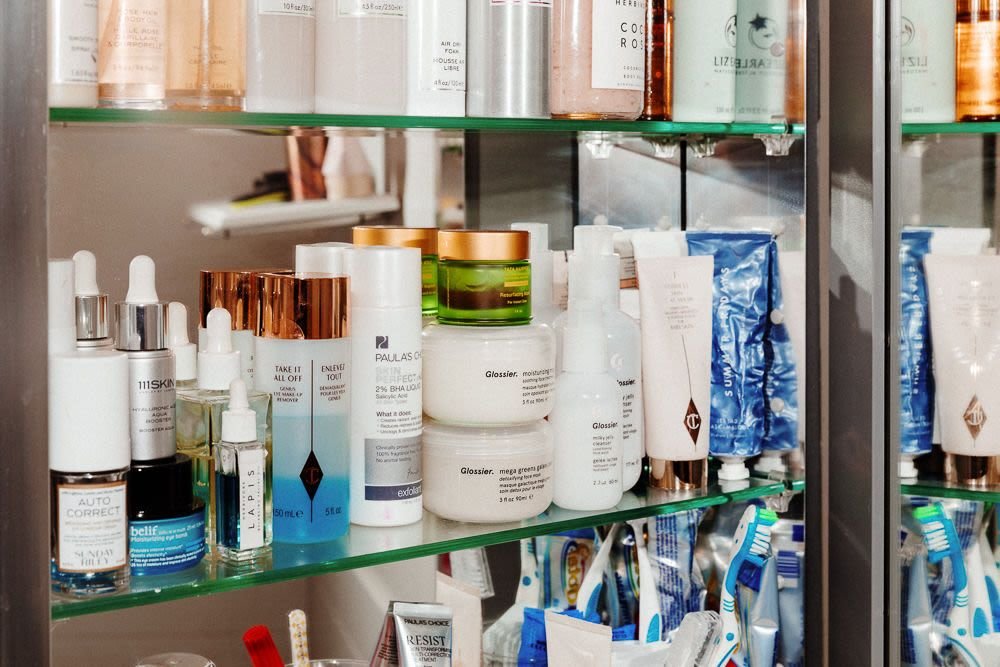
Business leaders don’t approve a vendor, sign a contract or back an investment based on a slogan. They ask what’s being promised, what supports it and whether the evidence applies to the deal on the table. Yet many of the same people buy skincare on the strength of a confident label, a technical-sounding ingredient or a striking percentage.
The skincare aisle is full of claims that sound scientific. Some are well supported. Others lean on vocabulary more than evidence. The habits that make someone good at reviewing a business proposal can also help them choose products more carefully and set realistic expectations about what those products can do.
Start With The Claim, Not The Pitch
In any review, the first step is pinning down exactly what’s being offered. Skincare is no different. “Supports hydration,” “improves the look of fine lines” and “helps skin feel smoother” describe three different outcomes, and each needs its own support.
Broad phrases such as “advanced renewal” or “powerful results” are harder to assess because they don’t describe anything you can observe. That doesn’t make them false. It means they are positioning, not findings. Before weighing any product, translate its main claim into one specific, observable result. If you can’t, the claim is too vague to evaluate.
Ask What The Evidence Actually Covers
Once the claim is clear, look at what supports it. A useful way to think about this is to ask three questions:
What is being claimed? Name the specific outcome.
What supports it? Identify the type of evidence offered.
Does it apply to this product? Check whether the support concerns the finished formula or only one ingredient.
That third question matters most. Research on an ingredient can explain why it was included in a formula, but it doesn’t prove that every product containing it delivers the same result. A finished product has its own mix of ingredients, texture, packaging and directions for use, and all of those affect how it performs. Treat ingredient research as useful background, then look for support that relates to the product itself.
Not All Evidence Is Equal
Executives know that a market forecast, a customer survey and audited financials answer different questions. Skincare evidence works the same way.
Laboratory research shows how an ingredient or formula behaves under controlled conditions. It can be a reason to study something further, but it doesn’t show what happens on a person’s skin in daily use. Testing on a finished formula is more directly relevant, though its value depends on how it was designed. Consumer feedback can describe how people experienced a product, but it reflects their impressions rather than an objective measurement.
When a product is described as “tested,” look for the method behind the word. Helpful details include:
Product identity: whether the tested item is the same finished product.
Participants: who took part and whether they reflect the claim.
Duration and use: how long and how the product was used.
Comparison: whether there was a baseline or reference point.
Outcome: what was measured and whether it matches the claim.
Nearly every study has limits. That isn’t a reason to dismiss it. The question is whether those limits are acknowledged and whether the claim stays within what was measured. A small, short study may offer an early signal, but it shouldn’t be presented as proof of a sweeping benefit.
Read Numbers Like A Financial Statement
A percentage on a label can feel precise, much like a figure in a pitch deck. And like any figure, it needs context. Does it refer to a single ingredient, a blend or a broader complex? Is it the amount in the finished product? What does the supporting evidence say about that amount?
Two percentages can only be compared when they describe the same thing. A share of one ingredient can’t be measured against a share of a multi-ingredient blend. More isn’t automatically better, and a larger number doesn’t replace an understanding of the whole formula. Technical terms work the same way: they may describe a real formulation feature, but they don’t promise a visible result on their own.
Separate Facts From Conclusions
A detailed product page usually mixes two kinds of information. Some of it is factual, such as ingredients, texture, directions and packaging. Some of it is a conclusion about what the product will do. Facts are useful on their own. Conclusions need a separate basis.
Watch for one study being used to support a long list of benefits, and be cautious of absolute wording. Claims suggesting a product works for everyone, acts instantly or guarantees a lasting change need unusually strong support. Educational resources such as BABOR’s guide to science-backed skincare walk readers through these distinctions, including the gap between ingredient research, finished-product testing and consumer impressions.
When information is missing, don’t assume the product is ineffective. Note the open question, decide whether you have enough to make a sensible choice and ask the brand or a qualified professional if needed.
Fit Matters As Much As Proof
A product can be well supported for its stated purpose and still not suit a particular person. Evidence and personal fit are separate questions. Preferences, sensitivities, current routines and any advice from a healthcare professional all shape whether a product makes sense.
Introduce changes gradually. Follow the directions, avoid adding several new products at once and pay attention to any discomfort. Changing one step at a time makes it easier to understand what you’re noticing. Remember that your own observations, while useful, aren’t the same as a controlled study. Anyone with a known sensitivity or skin condition should get qualified advice before starting something new.
A Simple Review Checklist
Before adding a product, run through a short review:
Name the goal you want the product to address.
Turn the main claim into a specific, observable result.
Identify whether the evidence covers the formula or an ingredient.
Check how the testing was done and what was measured.
Notice whether the claim stays within the study’s limits.
Read the directions and cautions.
Weigh your own needs and sensitivities.
Apply the same questions to every option.
That last step keeps the process fair. A dramatic claim on one product shouldn’t outweigh a narrower, clearly explained claim on another.
Better Questions, Better Choices
Good decisions in business come from asking clear questions and matching the evidence to the claim. Skincare rewards the same discipline. By pinning down what’s promised, checking what supports it and staying realistic about individual results, busy professionals can spend less time chasing labels and more time using products that genuinely fit their routines.
