

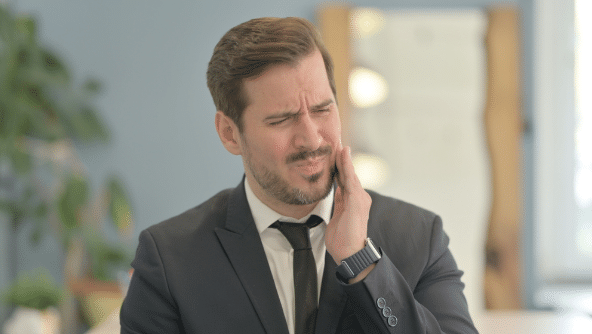
The pressure of running a company has to go somewhere. For a surprising number of leaders, it goes straight into their jaw. They clench through tense board meetings, grind through the night before a funding deadline, and wake up with a dull headache they put down to too much coffee. Most never connect the dots until a tooth cracks.
The habit nobody notices
Dentists call it bruxism: the clenching or grinding of teeth. It comes in two forms. Sleep bruxism happens at night. Awake bruxism often happens without realizing it, too. That’s what makes it so easy to ignore. A clenched jaw shows up later, in the form of worn enamel, sensitive teeth, or a molar that splits down the middle over a sandwich.
Why leaders are especially exposed
The link between stress and bruxism is well established. Read this review in Frontiers in Neurology and it looks like a description of startup culture. Long hours, too much caffeine, interrupted sleep, a drink to wind down, and a constant low hum of anxiety about runway, hiring and customers.
In early 2021, the American Dental Association’s Health Policy Institute reported that more than 70% of dentists it surveyed were seeing more patients with teeth grinding and clenching, up from just under 60% a few months earlier.
What it costs if you let it run
In the early stages, the fix is cheap and simple. Often it’s a custom night guard and some changes to habits. Left alone for years, the constant force can wear enamel down, crack teeth, loosen old fillings, and strain the jaw joint. At that point you’re no longer talking about a guard. You’re talking about crowns, root canals and, for teeth that can’t be saved, replacements.
That last stage is where many people suddenly become very interested in dentistry. Some go through a long treatment plan at home. Many are very expensive, which is why dental implants in Turkey have become a go-to for many people.
A few habits that actually help
There’s no single cure for bruxism, and anyone with symptoms should get a proper assessment from a dentist. But a few changes are low cost and worth trying.
Learn your resting position. Dentists often teach a simple cue: lips together, teeth apart. Your teeth aren’t meant to touch at rest. Some people set a few phone reminders a day to check, and are surprised how often they find themselves clenching.
Watch the late caffeine and the nightcap. Both are linked to bruxism, and both affect sleep quality. Moving your last coffee earlier and cutting back on alcohol before bed won’t fix everything, but it removes two common triggers.
Take sleep seriously. If you snore heavily or wake up exhausted after a full night, it’s worth asking your doctor about sleep apnea, which has also been associated with grinding.
Ask about a night guard. A custom guard made by your dentist won’t stop you clenching, but it absorbs the force so your teeth don’t. For many people, it’s the single most useful step.
Deal with the stress, not just the symptom. A guard protects your teeth, but the underlying pressure is still there. Whatever actually lowers your stress, whether that’s exercise, therapy, delegation or a real holiday, is likely to help your jaw too.
Smiles open doors
Leaders spend a lot of energy on what they can measure: revenue, burn rate, retention. The body keeps its own ledger, and it’s less visible. A clenched jaw is one of the clearest examples of stress turning into physical wear, slowly and quietly, until it isn’t quiet anymore.
The good news is that this is one of the easier things to catch early. A conversation with your dentist, a few small habit changes and a bit of attention to how you’re holding your face during that next tense meeting can save you a lot of trouble later. Your company may need you to carry the weight. Your teeth don’t have to.
