

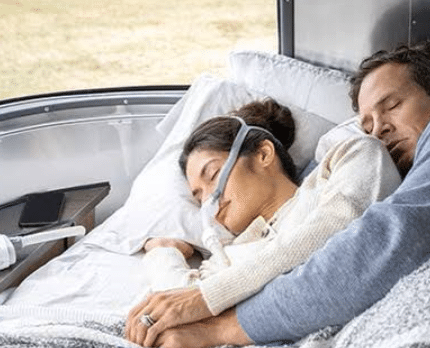
Travelling may be an exhilarating experience, be it a family vacation, a business trip or a weekend vacation. Nevertheless, in the case of individuals who have obstructive sleep apnea, a regular exercise of their sleep therapy during travelling takes some preparation. The older models of CPAP could be cumbersome and can occupy space that would have been used to carry other luggage. Another more convenient form of CPAP machine is a traveling machine that provides breathing support to individuals who require it during sleep but do not wish to carry bulky machines.
These smaller machines are made to offer a similar form of basic positive airway pressure therapy to the usual CPAP machines, but are more portable. Moving to other places, users can go on with their prescribed treatment because of the right equipment and accessories.
What Is a Travel CPAP Machine?
A travel CPAP machine is a smaller size, compared to a conventional Continuous Positive Airway Pressure unit. It is meant to assist obstructive sleep apnea affected individuals in keeping their airways clear when they could sleep.
The pressurised air is supplied by the machine via a mask and tubing system. This airflow will prevent airways collapse, which makes breathing during sleep apnea less frequent.
In comparison with typical bedside devices, travel CPAP devices are smaller and lighter. Their small design enables them to fit into pack bags, suitcases and special travel bags.
Automatic pressure adjustment, digital connection and specialised humidification systems are also found on some of these models.
Benefits of Using a Travel CPAP
A portable travel CPAP machine can be acquired to enable one to continue with regular sleep therapy even when they are out of home.
- Compact and Lightweight Design
The small size is one of the key benefits of a travel CPAP. The machines of traditional type might contain a bigger humidifier chamber, as well as other elements, thus being more inconvenient to carry.
The travel modal is constructed to be of less space, which comes in handy when an individual travels a lot or has limited luggage to carry.
- Maintaining Consistent Sleep Therapy
Obstructive sleep apnea should be managed by using CPAP on a regular basis. Dropping therapy over the holiday or business vacation may cause a relapse.
A travel CPAP will help to adhere to the prescribed treatment protocol, irrespective of the location where the user sleeps.
- Convenient for Air Travel
Numerous travel CPAP devices are created keeping frequent flyers in mind. They are also smaller, thereby making them easier to transport to airports and can be kept as cabin luggage.
Nevertheless, passengers are advised to check the airlines policies and leave their gadgets ready when undergoing security screening.
- Modern Technology and Connectivity
A number of travel CPAP models have digital capabilities that enable the user to look at therapy measures. Smartphone applications can be used to access reports of the usage and other treatment related information depending on the device.
These capabilities can aid the users to keep track of their therapy schedule whilst traveling.
Important Features to Consider When Buying a Travel CPAP
It is not just the size of a device which needs to be looked up to. There are a number of considerations, which ought to be made during purchases.
- Adjustment of Pressure: Certain machines have fixed pressure, other devices automatically change the pressure based on breathing pattern. The right choice is variant of the treatment given.
- Battery Choices: Battery compatibility: This is useful when one needs to go camping, road trip to different locations that might not have electricity and where there might be no easily accessible electrical outlets available. Confirm the compatibility of the battery and the expected life span.
- Humidification: During CPAP, it may cause discomfort due to dry air. Travel machines can include waterless humidification systems and some can lack in-built humidification.
- Mask Compatibility: some travel CPAP units are only compatible with a number of masks or need specialised connectors. Once the compatibility is verified, then you can proceed to purchase accessories.
- Noise Levels A less noisy machine may help in enhancing sleep more especially when one is sharing a hotel room or accommodation facility with others.
- Cleaning: Travel equipment must be easy to clean. Determine the cleaning and replacement advice of the manufacturer of masks, filters and tubing.
Travel CPAP vs Regular CPAP Machines
The design of both devices has slight differences, despite the fact that they both offer positive airway pressure therapy.
An ordinary CPAP device is typically designed to be used on a regular basis, at the bedside. It can be designed with an built-in Humidifier that is also heated, bigger and more comfortable displays.
A travel CPAP is more concerned with convenience and portability. It is easier to transport and some are less featured or need more parts.
Others would like to use an ordinary CPAP machine at home and have a separate travel one at home during holidays and business trips. This eliminates the necessity of filling and unloading the same equipment several times.
Tips for Travelling With CPAP Equipment
You can avoid causing avoidable issues when you are away by making sure that you have prepared your equipment at home.
- Load your machine into a travel Case.
- Have the appropriate power adapter and cables.
- Determine if your destination needs a voltage converter or not.
- Remember to carry spares in case of need to use a mask.
- Wipe and dry reusable parts and pack.
- Research airline regulations on taking medical equipment.
- Think about a suitable battery in areas where there is no power.
Even when travelling, ensure you use the machine in your recommended settings of treatment.
Is a Travel CPAP Worth Buying?
A travel CPAP is a valuable purchase that can help individuals who travel a lot and do not wish to carry large machines to keep the treatment of sleep apnea. Its small size, movability and innovation are more convenient to sleep outside of home.
But it does not necessarily take the place of all functions of a standard CPAP machine. Before one buys a mask, they are supposed to compare models available, verify their mask compatibility and discuss their needs with a health care worker.
Conclusion
Continuation of sleep apnea therapy must be of priority even during travelling. Travel CPAP machine offers a convenient solution of sustaining prescribed therapy as one enjoys holidays, business trips, and outdoor activities. Treatment requirements and lifestyle enable users to choose equipment that supports their lifestyle and humidification needs after considering portability, battery support, humidification and mask compatibility. By planning, sleep therapy outside of home would be a much easier affair.
