

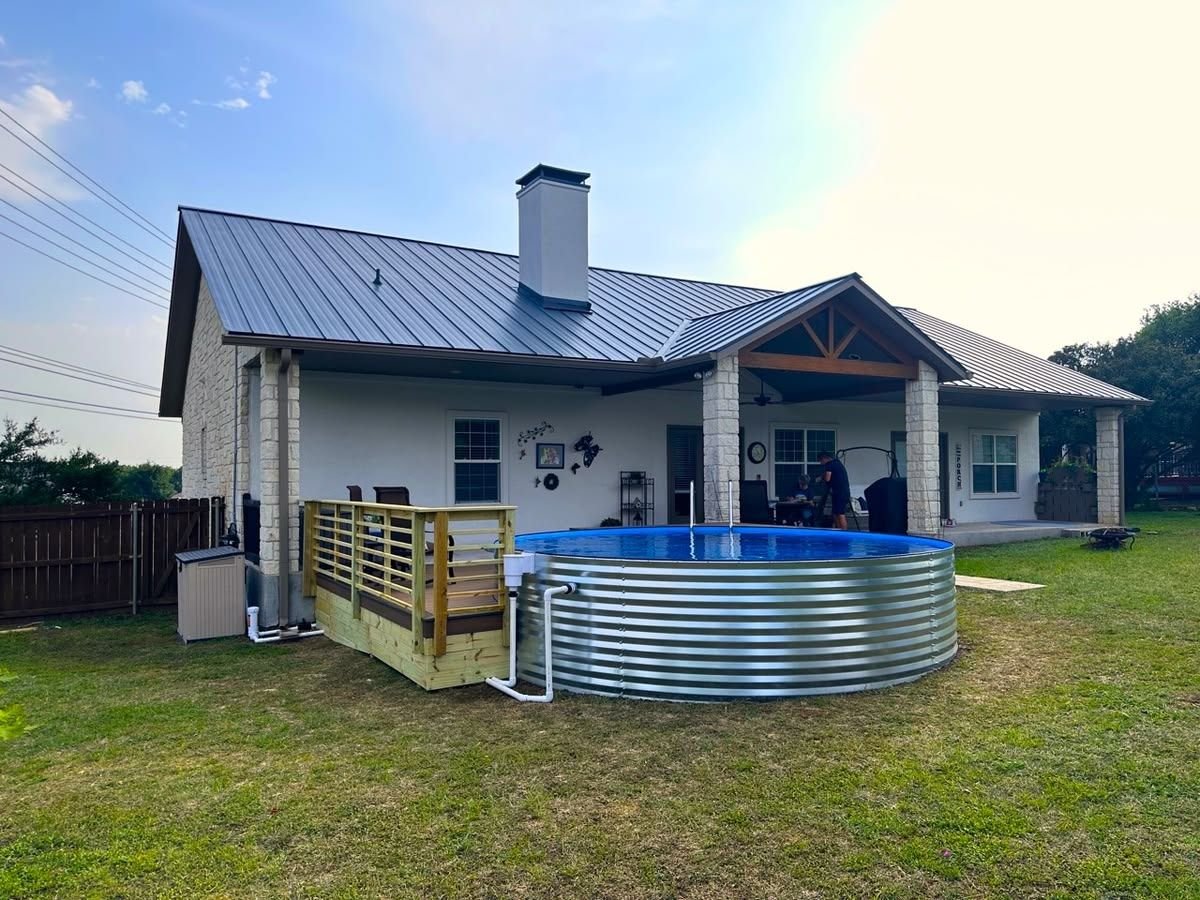
Anyone who has owned a small plunge pool and later switched to a bigger one notices the difference fast. In a compact pool, one hot afternoon with a few kids can push the pH off target, while a larger pool barely reacts to the same load. The amount of water, its depth and the way it moves all decide how quickly chemical levels drift, and once you understand that, dosing becomes far less of a guessing game.
Why Pool Water Volume Matters for Water Chemistry
Every product you add gets diluted across the total gallons in the pool. A cup of liquid chlorine raises the level in a 3,000-gallon pool roughly five times more than in 15,000 gallons. The same logic applies to everything swimmers bring in, from sweat and sunscreen to grass clippings stuck to wet feet. More water simply absorbs these hits with smaller swings.
This is one reason many families settle on mid-range sizes. StainlessSwim sees this often with its 18-foot swimming pools: they hold enough water to stay steady between tests, yet still fit an average yard without eating through chemicals. The company runs the entire project, including excavation, leveling, plumbing and installation, so the pump and filter are matched to the pool’s volume from day one.
How Pool Size Affects Chemical Stability
Small pools in the 9 to 12-foot range are easy to correct but just as easy to throw off. A heavy hand with pH reducer can overshoot in minutes, so it’s smarter to add half the calculated dose, wait an hour and retest. Testing three or four times a week is normal for these pools, especially in summer.
Larger pools work the other way around. They drift slowly, but when something does go wrong, fixing it takes more product and more patience. Getting the volume right matters here, because most dosing mistakes start with a wrong gallon count. For a round pool, multiply diameter squared by average depth and then by 5.9. An 18-foot pool at 4 feet deep holds about 7,650 gallons.
How Pool Depth Influences Water Chemistry
Depth adds volume without taking up more yard. Raising the walls of an 18-foot pool from the standard 46 inches to 60 inches adds roughly 2,200 gallons, close to 30% more water, and that extra buffer keeps chlorine and pH steadier during busy weekends. A slightly off dose also won’t swing the readings as sharply, which gives you more room for error between tests. On top of that, deeper water warms and cools more slowly, and since chlorine breaks down faster in warm water, a cooler and more stable pool holds its sanitizer longer and needs fewer top-ups through the hottest months.
Circulation Differences Between Shallow and Deep Pools
Shallow water mixes almost on its own, since return jets reach the bottom easily. In deeper pools, the lower layer can stay cooler and less treated if circulation is weak. Aiming return jets slightly downward, pouring chemicals near the return and brushing the walls and floor a couple of times a week keeps the whole water column even.
The Role of Circulation and Filtration in Different Pool Sizes
The basic rule is turnover: all the water should pass through the filter at least once every eight hours. For a 7,650-gallon pool, that works out to about 16 gallons per minute, a modest target for decent equipment. A 1 HP Pentair pump paired with a 19-inch sand filter, the setup StainlessSwim uses, handles this comfortably for most tank pool sizes. In smaller pools it finishes the job in fewer hours, which means lower power bills, while larger pools may need the pump running a bit longer on hot, busy days. Filter media matters too: StainlessSwim’s kits include aquatic glass media alongside filter pebble, and glass traps finer particles than standard sand, so the water stays clearer with less chemical correction.
Problems usually show up when equipment is undersized for a large pool or the pump runs too few hours to save on electricity. Corners, steps and the area behind the ladder turn into dead zones where algae gets a head start, even when test strips taken near the skimmer look fine. Running the pump at night alone isn’t enough in summer, because chlorine works hardest during the day when sunlight and swimmers are using it up. Keep an eye on the pressure gauge and backwash when it climbs 8 to 10 psi above the clean reading. A clogged filter quietly ruins good chemistry, and no amount of shock will make up for water that isn’t moving through it.
How Weather Affects Small, Shallow, and Large Pools Differently
Sun and heat hit small, shallow pools hardest. The water warms quickly, chlorine burns off faster and algae finds ideal conditions. Stabilizer (cyanuric acid) in the 30 to 50 ppm range protects chlorine from UV, though going higher makes the chlorine less effective.
Rain creates the opposite problem. A heavy storm can noticeably dilute a small pool and drag pH and alkalinity down, while a large pool may shift only slightly. Testing the morning after a storm is a simple habit that catches issues before cloudy water appears. Large pools take longer to warm up in spring, but once warm, they stay balanced through hot spells with much less effort.
Conclusion: Finding the Right Maintenance Routine for Your Pool
There’s no universal schedule, because a 9-foot pool and a 21-foot pool behave like different systems. Smaller and shallower pools need frequent testing and small, careful doses. Larger and deeper pools forgive more but call for accurate volume calculations and strong circulation. Base your routine on your actual gallons, adjust it after heat waves and storms, and keep the filter clean.
If you’re still choosing a pool, think about chemistry before you settle on size and depth. StainlessSwim offers custom tank pools from 9 to 21 feet with depths up to 5 feet, placed above ground, partially buried or fully recessed. Their team handles the full project, from site preparation to the finished deck, so you end up with a pool that’s easy to keep balanced all season.
