

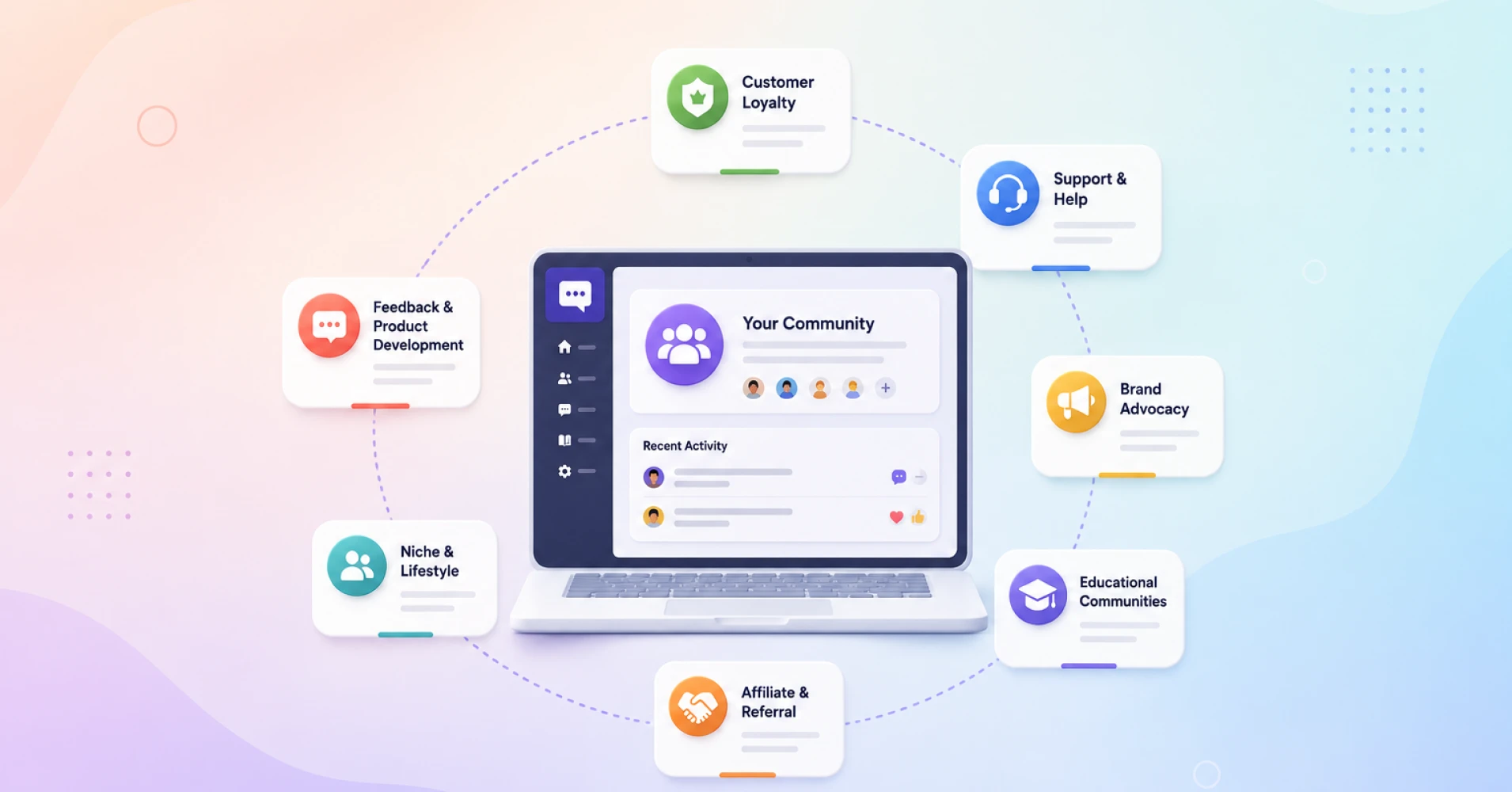
Most local businesses treat social media like a bulletin board. Post the lunch special. Share a holiday graphic. Wonder why nobody’s buying. The problem isn’t the platform. It’s the absence of a community, and that’s a different animal entirely from an audience.
An audience watches. A community participates. And the businesses that figure out the difference are the ones whose comment sections look like neighborhood conversation, not a wall of silence.
Here’s a practical breakdown of how regional and local brands are building online communities that hold attention and, eventually, turn that attention into revenue.
Why Platform Choice Still Matters More Than Brands Think
Before you post a single piece of content, you need to know where your actual customers are spending time. This sounds obvious. Almost nobody does it correctly.
According to a 2024 Pew Research Center survey of U.S. adults, 68% report using Facebook and roughly half (47%) say they use Instagram. Those two numbers alone should shape your platform priority if your brand targets adults 25 and older. If your product skews younger, TikTok’s user base has grown significantly in recent years, with 33% of U.S. adults now reporting they use it, per the same Pew Research Center report published in January 2024.
The mistake most local businesses make is defaulting to every platform at once. You end up thin everywhere and strong nowhere. Pick two. Master the dynamics of each before adding a third.
| Platform | U.S. Adult Usage (Pew, 2024) | Best For Local Businesses
|
|---|---|---|
| 68% | Events, Groups, broad adult demographics | |
| 47% | Visual products, local lifestyle brands | |
| TikTok | 33% | Discovery, under-35 audiences, video storytelling |
The C-A-R-E Framework for Community Content
Every high-performing local community online runs on a content rhythm. After studying dozens of regional brand accounts, I’d describe the pattern with four content types: Conversation starters, Acknowledgments, Resources, and Exclusives. Call it C-A-R-E.
Conversation starters are posts built around a genuine question or local opinion. “Best first date spot downtown: our patio or somewhere else?” invites replies. “Check out our new menu” does not.
Acknowledgments mean tagging customers by name (with permission), resharing their photos, and celebrating local milestones. Nothing builds belonging faster than seeing your own face on a brand’s page.
Resources are free, genuinely useful content that your audience would share even if your logo weren’t on it. A hardware store posting a seasonal home maintenance checklist. A coffee shop sharing a brewing guide. The content does not have to be about your product.
Exclusives are the community’s reward for showing up. Early access to a sale. A discount code dropped only in the comments of a specific post. A members-only Facebook Group where regulars get insider info first. Exclusives create a reason to stay subscribed beyond curiosity.
Run this cycle and your feed stops looking like advertising. It looks like a neighborhood.
The One Metric Most Local Brands Are Ignoring
Follower count is not a community metric. Neither is reach. The number that actually predicts revenue conversion is comment-reply rate: the percentage of comments your brand personally responds to within 24 hours.
This matters because a community is defined by two-way interaction. When someone comments “Do you do catering?” and receives no reply for three days, they’ve learned something important about your business. That lesson costs you a customer.
Set a non-negotiable internal rule: every comment with a question gets a reply within four hours during business hours. Every positive comment gets at least an emoji or a “thank you” within 24. This sounds like a lot of work until you realize most of your competitors are doing zero of it.
A Real Scenario: The Midwest Bakery Problem
Picture a family-owned bakery in a mid-size Midwestern city. They post beautiful photos of their cakes every morning. Their Instagram has 4,200 followers. Monthly walk-in traffic hasn’t moved in two years.
The diagnosis is almost always the same: they’re broadcasting, not conversing. Nobody’s asking followers what flavors they want to see next month. The owner isn’t going live on Friday mornings to show the bread being pulled from the oven. There’s no Facebook Group for regulars. The comment section looks like a ghost town because the bakery never replies.
Now flip that. The owner starts a Friday morning “Bake With Me” Instagram Live. She pins the best customer photo of the week every Tuesday. She drops a “secret code” in her Stories once a month for 15% off, valid that day only. Within 90 days, her comment-reply rate goes from 4% to 61%. In-store regulars start mentioning her posts by name. That’s community working as a business tool.
When Organic Reach Isn’t Enough
There’s a ceiling to what organic content can do in a regional market. Eventually, you hit it. The people who already follow you see your posts. The people who don’t follow you almost never do.
That’s where paid social enters the picture. Targeted ads on Facebook and Instagram let you put community-style content in front of people who live within five miles of your shop, match your existing customer demographics, or have already visited your website. The creative doesn’t have to feel like an ad. A boosted “conversation starter” post can pull cold audiences into your community just as effectively as a dedicated ad campaign.
Businesses in specific regions benefit from working with a local partner who understands the geographic and cultural nuances of their market. For brands in the tri-state area, for example, paid social advertising and community management Ohio Valley specialists can layer that geographic targeting alongside organic community strategy, so both sides of the funnel are working at once.
The key is consistency. Running ads for two weeks, stopping, then wondering why results didn’t last is the single most common paid social mistake regional businesses make. Budget for at least 90 days before drawing any conclusions.
Your Practical 30-Day Community Kickstart Plan
You don’t need six months to start seeing traction. Here’s a four-week sequence that builds momentum without requiring a full-time social team.
- Week 1: Audit and commit. Pick your two platforms. Document your current follower count, average engagement rate, and comment-reply rate. These are your baselines.
- Week 2: Start the conversation. Post one C-A-R-E framework piece per type across the two weeks. Note which style earns the most replies.
- Week 3: Acknowledge publicly. Reach out to five existing customers and ask if you can feature their photo or story. Publish at least two. Tag them and watch the ripple.
- Week 4: Launch an exclusive. Create a one-time offer that lives only on social. Make it clear in the copy that the deal exists because of your community. Then reply to every single comment it gets.
By day 30, your comment-reply rate will have moved. Your DMs will be more active. And you’ll have real data, not assumptions, about which content type your specific audience responds to.
The Habit Nobody Builds But Everyone Needs
Community management is not a campaign. It’s a daily habit, closer to customer service than marketing. According to Oklahoma State University Extension’s 2025 guide on social media for small businesses, the average person spends nearly 2.5 hours a day on social media platforms, which means your customers are reachable every single day at predictable times and through predictable habits. The brands that build genuine communities are the ones that show up consistently in those daily windows, not just when they have something to sell.
Your product or service earns the first purchase. Your community earns the fifth, the tenth, and the word-of-mouth referral that brings in someone new. Start building it today, even if all you can manage right now is replying to every comment before you go home for the night. That’s the foundation everything else gets built on.
