

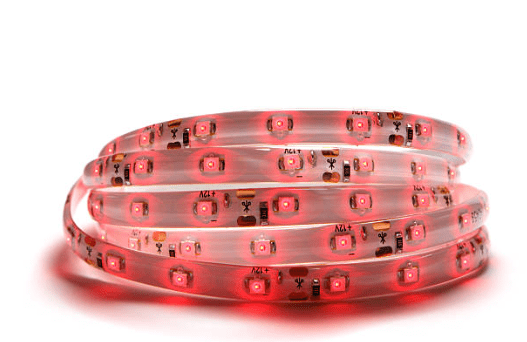
LED tape lighting has become an important option for modern residential, commercial, retail, and architectural projects. Its slim construction allows lighting to be incorporated into ceilings, furniture, displays, signage, and other areas where conventional fixtures may be difficult to install. However, choosing the right product involves more than finding a suitable price. Buyers need to consider LED type, voltage, power consumption, dimensions, cutting flexibility, protection, and the intended application. Working with a reliable LED tape light factory can help businesses find products that better match their project requirements.
Why Product Specifications Matter
An LED strip can look similar to another product while having significantly different technical characteristics. Two strips may use the same general LED package but differ in LED density, wattage, PCB size, operating voltage, or waterproof protection.
These differences can affect installation, power requirements, brightness consistency, and long-term suitability. For this reason, professional buyers should review technical specifications before ordering rather than making decisions based only on photographs or general product descriptions.
DekingLED offers a 5050-WW-300 strip with 300 LEDs across five meters, a 5,000mm × 10mm size, and 12V or 24V DC input. These specifications provide useful reference points when comparing different LED tape options for a project.
Understanding LED Density
LED density refers to how many LEDs are positioned along a particular length of strip. It can influence the appearance of illumination, especially when the strip is visible or installed close to a surface.
A higher density can help create a more consistent lighting effect, while a lower-density product may be appropriate when the strip is concealed or used primarily for decorative accent lighting.
DekingLED’s 5050-WW-300 configuration uses 300 LEDs over five meters, giving buyers a straightforward specification for evaluating the density of the product. Buyers should still compare density with power consumption and the desired lighting effect rather than treating LED quantity as the only measure of performance.
Choosing Between 12V and 24V
Operating voltage is an important consideration when planning an LED tape installation. The power supply must always correspond to the strip’s required voltage.
DekingLED provides the 5050-WW-300 strip with 12V or 24V DC input, allowing the product to be considered for different system configurations.
For longer runs, 24V systems can also be advantageous because they generally experience less voltage drop than 12V systems. Lower voltage drop can help reduce the gradual brightness reduction that may occur toward the end of a long strip.
The actual voltage should always be selected according to the specific product and project design. Power distribution should also be planned carefully for longer installations.
Considering Power Consumption
Power consumption is another specification that should be checked before purchasing. It determines the electrical load and helps installers select a suitable power supply.
DekingLED’s 5050-WW-300 strip has a maximum power rating of 72W. When planning an installation, buyers should consider the total length that will be connected and calculate the overall power requirement before selecting the power supply.
This becomes especially important for commercial projects where several reels may operate together. A suitable electrical plan can help avoid overloaded power equipment and inconsistent operation.
Cutting Flexibility for Custom Installations
LED tape is often installed in spaces that require specific lengths. Shelves, cabinets, ceilings, displays, and architectural features rarely match the exact length of a standard reel.
DekingLED’s 5050-WW-300 strip can be cut by three LEDs for DC12V or six LEDs for DC24V, with accessories available for reconnecting sections. This gives installers greater flexibility when adapting the strip to measured sections.
Cutting should always be performed at the designated cutting points. Making a cut outside the appropriate section can damage the circuit and prevent the remaining strip from operating correctly.
Physical Dimensions and Installation Space
The physical dimensions of an LED strip can be just as important as its electrical specifications. A product that is too wide may not fit inside a particular channel, furniture recess, signage structure, or concealed architectural space.
The DekingLED 5050-WW-300 strip measures 5,000mm × 10mm, giving installers a clear dimensional reference when planning the mounting area. Checking these dimensions before ordering can help prevent compatibility problems during installation.
Buyers should also consider the mounting method. Adhesive backing can simplify installation, while profiles or other accessories may be appropriate when additional mechanical support or heat management is required.
Waterproof Protection
The correct protection level depends on where the LED tape will be installed. Indoor applications generally have different environmental requirements from outdoor or moisture-prone locations.
DekingLED provides 5050 LED strip options with IP65 and IP68 waterproof ratings. These options can help buyers consider different levels of environmental protection when selecting a product.
However, an IP rating should always be matched to the actual installation environment. Buyers should confirm the appropriate product and follow its installation requirements rather than assuming that any waterproof-rated strip is suitable for every outdoor or wet application.
RGB Tape Lighting for More Creative Designs
Single-color LED tape is useful for general illumination and accent lighting, but some projects require more flexibility in color and atmosphere. RGB strips can provide changing colors for entertainment venues, retail displays, signage, architectural features, and decorative environments.
For businesses looking for an RGB LED strip lights supplier, DekingLED offers an SMD5050 RGB option using 30 LEDs per meter and an IC2811. The product operates at DC12V and has an IP65 protection class.
These specifications are important because an RGB installation involves more than the LED strip itself. The controller, power supply, wiring, and operating voltage all need to work together.
RGB Control and Compatibility
RGB lighting systems depend on appropriate control equipment. Before purchasing, buyers should confirm that the controller supports the selected strip and that its electrical specifications are compatible.
The IC2811 specification on DekingLED’s RGB product provides a specific reference for planning the control system. The strip’s 12V DC working voltage should also be considered when selecting the corresponding power equipment.
For commercial installations, compatibility should ideally be confirmed before the complete system is ordered. This can reduce the possibility of discovering that the controller or power equipment does not match the selected strip.
Applications for LED Tape Lighting
LED tape can support many different applications because of its compact form. Residential users can install it under cabinets, inside furniture, around ceilings, or behind decorative elements. Retail businesses can use it for displays, shelves, signage, and product highlighting.
Architectural projects can use strips around windows, corridors, canopies, archways, and other structural features. DekingLED identifies applications including cove lighting, architectural lighting, signage backlighting, path and contour marking, home DIY lighting, and decorative lighting for events and exhibitions.
The required product should be selected according to the environment and visual objective. A fixed-color strip may be sufficient for functional lighting, while RGB technology can be useful when dynamic color effects are required.
What Wholesale Buyers Should Check
Businesses purchasing LED tape in larger quantities should establish the technical requirements before confirming an order. This helps ensure consistency across the project and reduces the possibility of compatibility issues.
Important specifications to review include:
Operating voltage
Power consumption
LED type
LED density
PCB dimensions
Protection rating
Cutting interval
Reel length
Controller compatibility
Suitable installation environment
These details provide a more useful basis for comparison than price alone.
The Role of Technical Support
Technical support can be particularly useful when a project involves multiple strip types or demanding installation conditions. Buyers may need assistance understanding voltage options, power requirements, waterproofing, control systems, or accessories.
DekingLED identifies technical support, fast delivery, cost-effectiveness, and top quality among its service advantages. The company, Shenzhen Dekingled Co., Ltd., was established in 2014.
For larger orders, discussing the application and specifications before purchase can help buyers select products that are more appropriate for their installation requirements.
Final Thoughts
Choosing an LED tape product should begin with the project requirements rather than the product’s appearance or price. Voltage, LED density, power consumption, dimensions, cutting flexibility, waterproof protection, and control compatibility all influence whether a strip is suitable for a particular installation.
DekingLED provides different configurations for varied applications, including 12V and 24V options, 300 LEDs across five meters on its 5050-WW-300 strip, and waterproof choices such as IP65 and IP68. Its RGB option also provides IC2811 control, DC12V operation, and IP65 protection for projects requiring color-changing illumination.
By evaluating these specifications before ordering, businesses can select LED tape that fits the electrical system, physical installation, and intended lighting effect. A technically suitable product combined with proper planning can make installation more efficient and help deliver a consistent finished result.
