

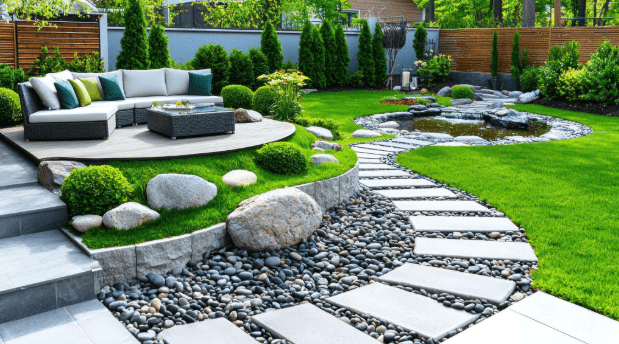
For years, a driveway or a backyard patio was filed under maintenance. Something you paid for when it cracked or looked dated, not something you planned around. That’s changing. A growing number of homeowners, particularly in higher-value markets, are approaching exterior concrete work the same way they’d approach any other capital decision: what does this cost, what does it return, and how long does that return actually last.
It’s a small shift in language with a real shift in behavior behind it.
The Numbers Behind the Shift
Renovation spending in Canada has been climbing for years, even through periods of tighter household budgets. Statistics Canada’s Residential Renovation Price Index shows steady quarterly cost increases across most provinces, which tells you two things at once. Renovation activity hasn’t slowed down, and the projects being done are getting more expensive per square foot, not less.
That second point matters. When costs rise, homeowners tend to get more selective about which projects they take on, and outdoor hardscaping, driveways, patios, walkways, retaining walls, keeps showing up on the list of projects people are willing to pay a premium for rather than cut.
Why Concrete, Specifically
It’s the First Thing Anyone Sees
A driveway is the first surface a buyer, guest, or appraiser interacts with before they ever step through the front door. Interior renovations can be hidden behind closed doors during a showing. A cracked, patched, or visibly aging driveway cannot.
It’s Structural, Not Cosmetic
Unlike paint or fixtures, concrete work carries a structural weight to it. A well-engineered driveway, patio, or retaining wall is doing a job, managing drainage, supporting loads, resisting frost heave, not just sitting there looking presentable. That’s part of why it holds value differently than purely decorative upgrades.
It’s Increasingly Treated as Design, Not Just Utility
The category has also changed on the supply side. What used to be a single grey slab is now a design decision, exposed aggregate, stamped patterns, integrated lighting, heated surfaces, polished finishes. Homeowners aren’t just buying a functional surface anymore. They’re buying a look that’s expected to last fifteen to twenty years without needing to be redone.
What This Looks Like in Practice
In higher-end residential markets around the Greater Toronto Area, this shows up as a fairly consistent pattern: homeowners planning a full exterior renovation, rather than patching individual sections as they fail. Instead of replacing a walkway one year and a driveway three years later, the whole hardscape, driveway, entry steps, pool surround, and patio, gets designed and poured as a single cohesive project.
Specialized firms like Elite Concrete have built their business around exactly this kind of project, architectural-level concrete work rather than standard slab pours, which reflects how much the category has professionalized over the past decade. It’s no longer treated as a commodity trade the way it might have been twenty years ago.
Is It Actually Worth the Investment?
This is where most homeowners get stuck, and the honest answer is that it depends heavily on the local market and the quality of the work. Housing research from Canada Mortgage and Housing Corporation consistently points to curb appeal and exterior condition as factors that influence how quickly a property sells and how it’s perceived relative to comparable listings, even when the interior specifications are similar. It’s rarely the single deciding factor in a sale, but it does affect first impressions in a market where first impressions compound quickly.
The more reliable way to think about it isn’t “will this exact project add this exact dollar amount,” but rather “does neglecting this create a visible liability when the property is compared to others nearby.” In competitive markets, that liability tends to matter more than people expect.
Frequently Asked Questions
Does a new driveway or patio actually increase home value? It can improve perceived value and marketability, particularly in competitive markets, though the return varies by region, project quality, and how the work compares to similar homes nearby. It’s generally considered a stronger investment than purely decorative interior upgrades because of its structural and first-impression role.
How long does quality architectural concrete work typically last? Well-installed concrete driveways and patios commonly last fifteen to twenty-five years with proper sealing and maintenance, though this depends on climate, drainage, and the quality of the original installation.
Is it better to renovate hardscaping all at once or in stages? Doing it as a single cohesive project tends to produce a more consistent design result and can reduce long-term cost, since equipment mobilization and site preparation are shared across the whole job rather than repeated for each separate phase.
The Bottom Line
Framing a driveway or patio as an investment rather than a repair changes the questions homeowners ask before starting a project. Instead of “what’s the cheapest way to fix this,” the question becomes “what will still look and perform well in fifteen years.” That shift in mindset, more than any single material or finish, is what’s actually driving the current interest in higher-quality exterior concrete work.
For more detail on renovation cost trends across Canadian markets, Statistics Canada publishes its Residential Renovation Price Index on a quarterly basis. For research on how housing condition and exterior quality relate to market outcomes, CMHC’s housing market research is a useful starting point.
