

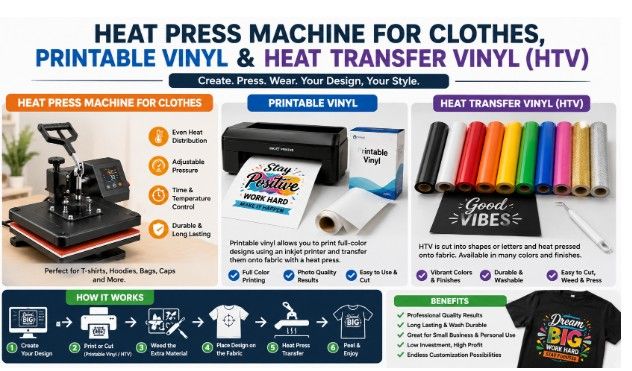
Custom clothing design has become one of the fastest-growing industries in fashion, small business, and print-on-demand markets. Tools like heat press machines, printable vinyl, and heat transfer vinyl (HTV) have made it possible for anyone to create professional-quality apparel at home or in a small workshop.
This guide explains these three essential components in detail, how they work together, their benefits, and how you can use them to start a business or improve your printing quality. The content is written in a simple, SEO-friendly, and practical style.
What is a Heat Press Machine for Clothes?
A heat press machine is a device used to apply designs, graphics, or text onto clothing using heat and pressure. It is widely used for customizing T-shirts, hoodies, bags, jerseys, and other fabric-based products.
Instead of traditional printing methods like screen printing, a heat press allows fast, clean, and precise application of designs using vinyl or printed transfers.
How a Heat Press Machine Works
A heat press machine works by combining three key elements:
- High temperature
- Even pressure
- Time control
When all three are applied correctly, the design bonds permanently with the fabric.
Types of Heat Press Machines
- Clamshell Heat Press
- Opens and closes like a shell
- Compact and easy for beginners
- Best for small spaces and home use
- Swing-Away Heat Press
- Upper plate swings aside for safety
- Better for precise placement
- Ideal for detailed designs
- Drawer Heat Press
- Lower plate slides out like a drawer
- Safer and more comfortable for alignment
- Often used for professional production
Each type is designed for different levels of usage, but all serve the same purpose: transferring designs onto fabric permanently.
What is Printable Vinyl?
Printable vinyl is a special material that allows users to print full-color designs using an inkjet or laser printer. After printing, the design is cut and applied to fabric using a heat press machine.
Unlike standard vinyl, printable vinyl does not require layering different colors. It can print complex images, gradients, and photo-quality designs.
Types of Printable Vinyl
- Glossy Printable Vinyl: Bright and shiny finish
- Matte Printable Vinyl: Smooth and professional look
- Transparent Vinyl: Used for layered or light fabric designs
- Self-Adhesive Printable Vinyl: Used for non-fabric surfaces
Advantages of Printable Vinyl
- Supports full-color printing
- No need for multiple vinyl layers
- Suitable for photo-quality designs
- Easy to use for beginners
Common Uses
- Custom T-shirts
- Personalized gifts
- Promotional products
- Small business merchandise
Printable vinyl is especially useful for designs that are too complex for cutting machines.
What is Heat Transfer Vinyl (HTV)?
Heat Transfer Vinyl (HTV) is a special material used to create custom designs on fabric. It comes in rolls or sheets and is cut into shapes or letters using a cutting machine.
After cutting, excess material is removed, and the design is applied to fabric using heat and pressure.
Types of HTV
- PU HTV (Polyurethane Vinyl)
- Soft and flexible
- Durable and long-lasting
- Ideal for clothing
- PVC HTV
- Strong and thick
- Less flexible but highly durable
- Often used for sportswear
- Glitter HTV
- Sparkly and decorative
- Used for fashion and stylish designs
- Flock HTV
- Soft, velvet-like texture
- Premium appearance
- Stretch HTV
- Designed for stretchy fabrics
- Common in sports and activewear
Difference Between Printable Vinyl and HTV
Although both materials are used for heat press printing, they are different in function:
- HTV is cut into shapes and applied in layers
- Printable vinyl allows full-color printing in one sheet
Key Differences
- HTV: Best for simple designs, text, and logos
- Printable Vinyl: Best for complex images and photos
Choosing the right material depends on your design type and production needs.
How Heat Press, Printable Vinyl, and HTV Work Together
These three components are often used in combination to create professional clothing products.
Step-by-Step Process
- Design Creation
- Create your design using software like Canva or Illustrator
- Printing or Cutting
- Printable vinyl is printed using a printer
- HTV is cut using a vinyl cutting machine
- Weeding
- Remove unwanted parts from HTV designs
- Transfer Setup
- Position the design on the fabric
- Heat Press Application
- Apply heat and pressure using a heat press machine
- Peeling
- Remove carrier sheet or transfer layer carefully
This process ensures long-lasting and high-quality results.
Benefits of Using Heat Press Machines with Vinyl
Using heat press technology with vinyl materials offers several advantages:
1. Easy to Learn
Even beginners can start creating designs without advanced training.
2. Low Investment
You can start a small business with minimal equipment.
3. Professional Quality
Produces clean and sharp designs that look store-bought.
4. Durable Prints
Proper application ensures long-lasting designs that survive multiple washes.
5. Scalable Business Model
You can start small and grow into a full printing business.
Best Fabric Types for Heat Press Printing
Not all fabrics react the same way to heat press application.
Recommended Fabrics
- Cotton
- Polyester
- Cotton-poly blends
- Canvas (for bags and accessories)
Fabrics to Be Careful With
- Nylon (requires special settings)
- Waterproof materials
- Heat-sensitive synthetic fabrics
Always check material compatibility before applying heat.
Common Mistakes to Avoid
Many beginners make simple mistakes that affect print quality:
1. Wrong Temperature Settings
Too high heat can damage vinyl, too low prevents bonding.
2. Skipping Pre-Press
Always pre-press fabric to remove moisture and wrinkles.
3. Incorrect Pressure
Uneven pressure leads to poor adhesion.
4. Not Following Peel Instructions
Some vinyl requires hot peel, others cold peel.
5. Poor Design Alignment
Incorrect placement reduces product quality.
Business Opportunities in Heat Press Printing
Heat press printing has become a profitable business model worldwide.
Business Ideas
- Custom T-shirt printing
- Personalized gift shop
- Event merchandise production
- Sports team uniforms
- Online print-on-demand store
Why It Works
- High demand for personalized products
- Low startup cost
- Easy to operate from home
- Flexible production scale
Many small entrepreneurs start from home and grow into full brands using this method.
Maintenance Tips for Equipment
To keep your equipment in good condition:
- Clean heat plates regularly
- Avoid overheating machines
- Check pressure settings frequently
- Store vinyl in a cool, dry place
- Perform regular maintenance checks
Proper care ensures long-term performance and consistent results.
Future of Custom Apparel Printing
The custom printing industry is growing rapidly due to increasing demand for personalized products.
Future trends include:
- Eco-friendly vinyl materials
- Faster and smarter heat press machines
- AI-based design tools
- On-demand printing platforms
This industry will continue to expand, making it a strong opportunity for new businesses.
Conclusion
heat press machine for clothes, printable vinyl, and heat transfer vinyl (HTV) are essential tools for modern custom apparel printing. They allow individuals and businesses to create professional-quality clothing with minimal investment and simple techniques.
Whether you are a beginner, hobbyist, or entrepreneur, understanding how these tools work together can help you build a successful printing setup. With the right materials and proper technique, you can produce durable, high-quality designs and even turn this skill into a profitable business.
