

Artificial Intelligence (AI) is revolutionizing the way companies handle their operations. Recent statistics suggest AI can boost business productivity by as much as 40 percent. AI management, a confluence of technology and organizational strategy, is at the forefront of this transformation, driving efficiency and innovation.
One of the essential advantages of AI management includes simplifying complex business operations. By integrating intelligent automation and data analysis, companies are experiencing significant improvements in process efficiency. In this article, we’ll explore how AI is redefining operational efficiency across various sectors.
How AI Management Streamlines Business Processes
Utilizing AI management tools is akin to having a highly skilled coordinator that ensures all parts of the business engine are running smoothly. These tools automate routine tasks, flag potential issues before they become problems, and offer predictive insights that keep businesses one step ahead. AI management software typically comes with the ability to learn and adapt, which means business processes can continuously be refined with minimal human intervention.
The integration of AI can reduce process execution times significantly. For example, in financial services, AI can cut down the time required for risk assessment processes by analyzing vast amounts of data in a fraction of the time a human would need. This not only accelerates the pace at which services can be offered but also increases the accuracy of results.
Businesses should audit their workflows and identify areas where AI can make an immediate impact. This might include everything from customer service automation to inventory management. Once these areas are identified, strategically implementing AI management solutions can create a competitive edge and free up human resources for more complex tasks.
Enhancing Decision-Making Accuracy with AI Analytics
With the influx of data in the digital age, AI analytics has become an indispensable tool for improving decision-making accuracy. AI-powered analytics platforms can process and interpret large datasets to uncover trends, anomalies, and patterns that would be virtually impossible to detect with traditional methods.
The key to success is the ability of AI systems to continually learn from new data and apply statistical models to make increasingly accurate predictions. For instance, retailers use AI analytics to anticipate customer demand and optimize stock levels, thereby minimizing waste and maximizing sales. This leads to decisions that are not only data-driven but also proactive.
For companies looking to harness AI capabilities in analytics, it’s important to invest in AI systems that can integrate well with existing data infrastructure. Also, engaging in data-driven culture training for staff ensures they can work alongside AI to interpret and act on insights effectively.
AI-Driven Automation in Reducing Operational Costs
AI-driven automation has brought about a seismic shift in reducing operational costs. By taking over monotonous, repetitive tasks, AI is slashing the time and money spent on these activities. Notably, AI excels at streamlining supply chain management, where forecasting demand and optimizing logistics routes can save substantial sums.
The financial impact of employing AI management is emphatically demonstrated in sectors with high operational costs, such as manufacturing. The predictive maintenance capabilities of AI help manufacturers anticipate potential equipment failures before they occur, significantly reducing downtime and repair expenses. Consequently, companies have seen a decrease in operational costs by up to 20 percent after the adoption of AI technologies.
To maximize these cost reductions, organizations should start with an assessment of their most resource-intensive operations. It allows them to determine where AI can be most effective in automation, thereby prioritizing the deployment of AI systems for the greatest financial impact.
Improving Employee Productivity Through AI Tools
Boosting employee productivity is another major benefit of AI tools. These technologies can take over mundane tasks, thereby freeing up employees to focus on higher-level work that requires human touch and creativity. The incorporation of AI directly correlates with increased employee satisfaction, as it reduces burnout and enhances engagement.
One example is the use of AI in customer support roles. AI chatbots can handle routine inquiries, allowing human support agents to tackle more complex issues, thus improving resolution times and customer satisfaction. This not only improves the quality of service but also the speed of response – a win-win situation for both employees and customers.
Companies considering investing in AI tools for productivity should focus on user-friendly interfaces and training. This ensures that employees can comfortably utilize AI and fully grasp its benefits. Fostering an environment where AI and human workers coexist harmoniously can significantly amplify productivity.
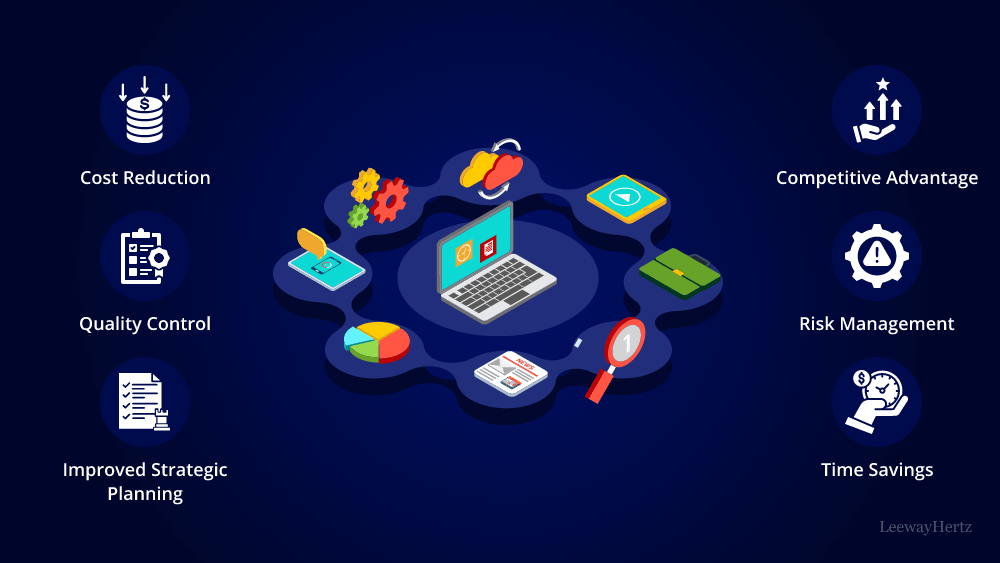
Overall, AI management’s influence on operational efficiency is profound and multifaceted. Through streamlining business processes, enhancing decision-making accuracy, reducing operational costs, and improving employee productivity, AI is a potent catalyst for business success. Companies that understand and implement AI’s full potential will undoubtedly stand out in an increasingly competitive marketplace.
