

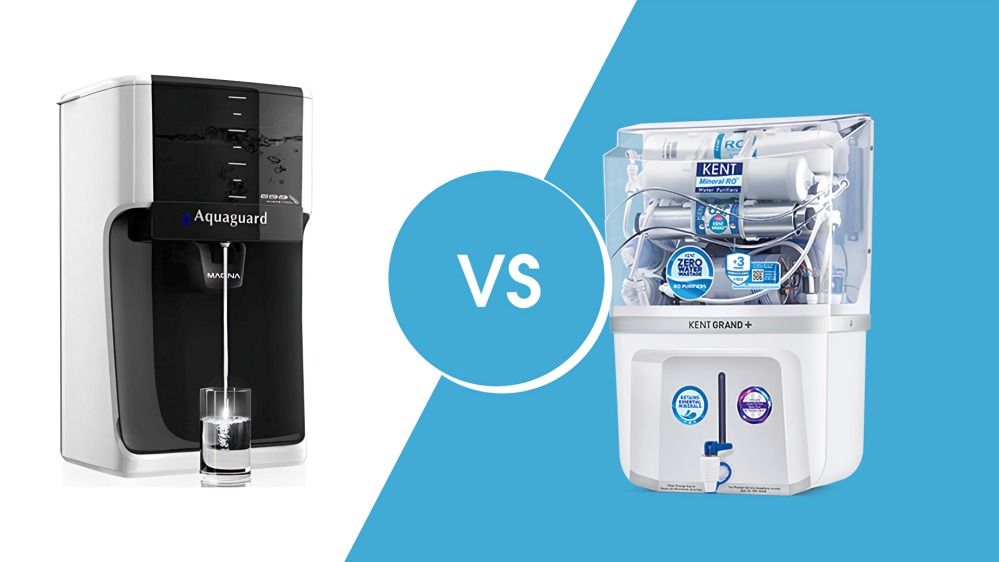
Kent vs Aquaguard are two of the most popular water purifiers in India, offering advanced filtration technologies to ensure clean and safe drinking water. Both brands provide a range of options, including RO, UV, and UF water purifiers, catering to different water conditions and household needs.
While Kent water purifiers are known for their Mineral RO technology, Aquaguard stands out with its Active Copper and UV e-boiling technology.
Choosing between them depends on factors such as water quality, maintenance cost, service availability, and purification efficiency.
Filtration Technology
Both Kent and Aquaguard use advanced filtration technologies, but they differ in their approach. Kent water purifiers use RO (Reverse Osmosis), UV (Ultraviolet), and UF (Ultrafiltration) technologies, often combined in multi-stage filtration systems.
They are particularly effective in removing dissolved impurities, heavy metals, and bacteria. Aquaguard, on the other hand, offers RO, UV, UF, and even active copper technology, which enhances water taste and health benefits.
The Aquaguard vs Kent water purifier debate often boils down to individual water source needs—Kent is better for high TDS (Total Dissolved Solids) water, while Aquaguard is great for low to medium TDS water with added mineral enhancement.
Water Purification Performance
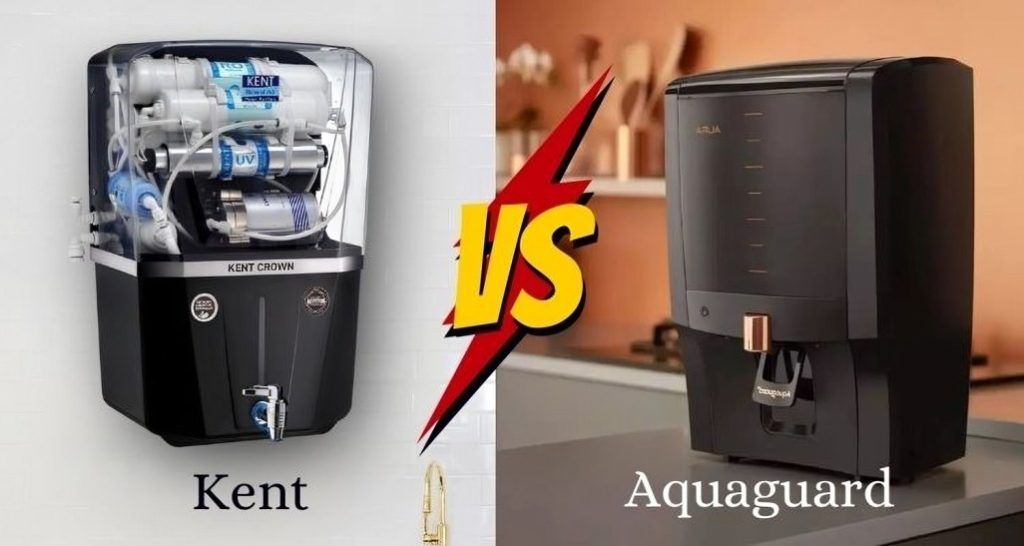
When comparing Aquaguard vs Kent water purifier performance, Kent’s Mineral RO Technology retains essential minerals while purifying water, ensuring a natural taste. Aquaguard’s Active Copper and Mineral Guard technology enriches water with beneficial minerals.
The efficiency of both brands depends on water quality. Kent purifiers can handle TDS levels above 500 ppm, making them ideal for borewell water. Aquaguard models like the Aquaguard Geneus or Aquaguard Enhance perform well with municipal water supplies where TDS levels are lower.
If your primary concern is Kent vs Aquaguard RO, both provide efficient purification, but Kent is often preferred for harder water.
Indian Cross Dressing Stories – Real Experiences & Fictional Tales
Maintenance Cost and Service
A crucial factor in Kent vs Aquaguard maintenance cost is the expense of filter replacements and servicing. Kent filters generally last 6 to 12 months, with replacement costs ranging from ₹2,000 to ₹5,000 annually.
Aquaguard’s filters also need replacement within a similar timeframe but may cost slightly less due to simpler filtration systems. In terms of service, both brands have nationwide networks, but Kent’s service is sometimes criticized for delays.
Aquaguard service is often more responsive, and their annual maintenance contracts (AMC) are affordable, making it a better choice for users looking for hassle-free maintenance.
Design and Build Quality
The design and build quality of a purifier impact durability and aesthetics. Kent water purifiers have a sturdy plastic build with transparent water tanks, allowing users to monitor water levels easily.
Aquaguard models feature compact and stylish designs, making them a better fit for modern kitchens. The Kent vs Aquaguard which is better debate also includes build quality—Kent’s robust design is preferred for long-term durability, while Aquaguard wins in aesthetics.
Storage Capacity
Storage capacity is crucial when selecting a water purifier, especially for large families. Kent models offer storage capacities ranging from 7L to 15L, suitable for households with multiple users.
Aquaguard typically provides 5L to 10L storage, with some higher-end models exceeding this range. For users needing larger storage, Kent water purifiers are the better option.
Pricing Comparison
The price of water purifiers varies depending on features. Kent water purifiers range between ₹8,000 to ₹25,000, depending on technology and capacity.
Aquaguard models fall within the ₹9,000 to ₹22,000 range. While Kent offers affordable entry-level models, Aquaguard’s premium models provide better-advanced filtration and smart features.
Pros and Cons: Kent vs Aquaguard
When evaluating Kent vs Aquaguard, understanding the pros and cons helps buyers make a confident choice. Kent pros include advanced RO+UV purification, large storage capacity, low maintenance, and reliable durability.
However, some models may lack UF technology or mineral retention features, which can be a drawback in areas with poor water quality. Aquaguard pros are multi-stage purification (RO+UV+UF), mineral retention, smart features, and suitability for various water types. On the downside, Aquaguard purifiers tend to be slightly pricier, and filter replacements can be more expensive.
By weighing these advantages and disadvantages, users can choose the brand that aligns with their water quality needs, budget, and household requirements, ensuring safe and healthy drinking water.
Customer Reviews and Ratings
Both brands have strong customer bases, but reviews differ. Kent purifiers receive praise for high TDS water purification, while Aquaguard is favored for ease of use and service quality.
On platforms like Quora and Reddit, discussions on Kent vs Aquaguard Reddit often suggest Aquaguard for urban users and Kent for areas with hard water.
Energy Efficiency
Energy consumption is a key concern for many buyers. Kent’s purifiers, especially RO models, consume slightly more electricity than Aquaguard water purifiers.
If energy efficiency is your priority, Aquaguard is a more cost-effective choice over time.
Installation and Space Requirements
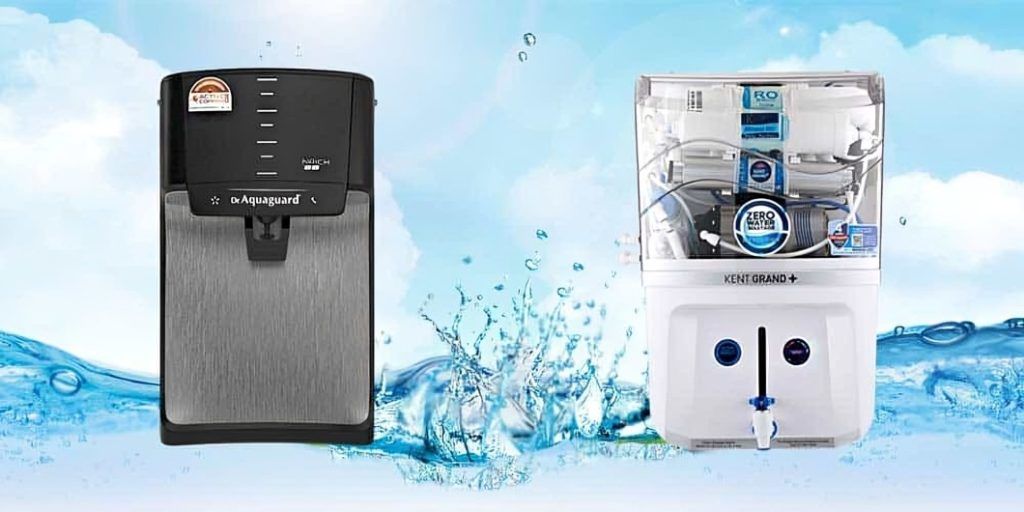
Kent models require more installation space due to larger storage tanks, while Aquaguard purifiers are more compact. If you have limited kitchen space, Aquaguard’s sleek design is preferable.
Smart Features and Connectivity
Modern purifiers include smart features like digital display, app connectivity, and auto water level sensors. Aquaguard models like Aquaguard Blaze offer Wi-Fi connectivity and UV LED purification, making them a smarter choice over Kent’s traditional models.
Aquaguard vs Kent Water Softener
For homes with hard water issues, Kent water softeners are a better option. Aquaguard water softeners are also available but are less popular compared to Kent’s range of TDS controllers.
Key Features Comparison: Kent vs Aquaguard
When comparing Kent vs Aquaguard, understanding the key features is crucial for making an informed decision. Kent water purifiers are known for their RO (Reverse Osmosis) and UV (Ultraviolet) purification technology, removing dissolved impurities and ensuring safe drinking water.
They often come with high storage capacity, smart indicators for filter replacement, and low maintenance requirements. Aquaguard water purifiers, on the other hand, combine RO, UV, and UF (Ultrafiltration) technologies, providing multiple layers of purification suitable for different water qualities.
Many models include mineral guard technology to retain essential minerals, and some feature energy-saving modes and smart alerts. By analyzing purification efficiency, storage capacity, ease of maintenance, and smart functionalities, buyers can clearly see the strengths of both brands and choose the right water purifier for their household needs.
Price and Value for Money: Kent vs Aquaguard
Pricing and value for money are essential factors when choosing between Kent vs Aquaguard. Kent water purifiers are generally priced competitively for their RO and UV models, making them a good option for mid-range budgets. They are durable, require occasional filter replacements, and deliver consistent purification performance, ensuring long-term savings.
Aquaguard purifiers, while slightly higher in price, offer advanced features such as UF, RO, UV combinations, and mineral retention technology, making them ideal for areas with varied water quality. Long-term maintenance, electricity consumption, and filter replacement costs also influence overall value.
By considering both upfront prices and ongoing expenses, buyers can determine which brand offers better value for money, balancing performance, durability, and convenience.
Best Model Recommendations
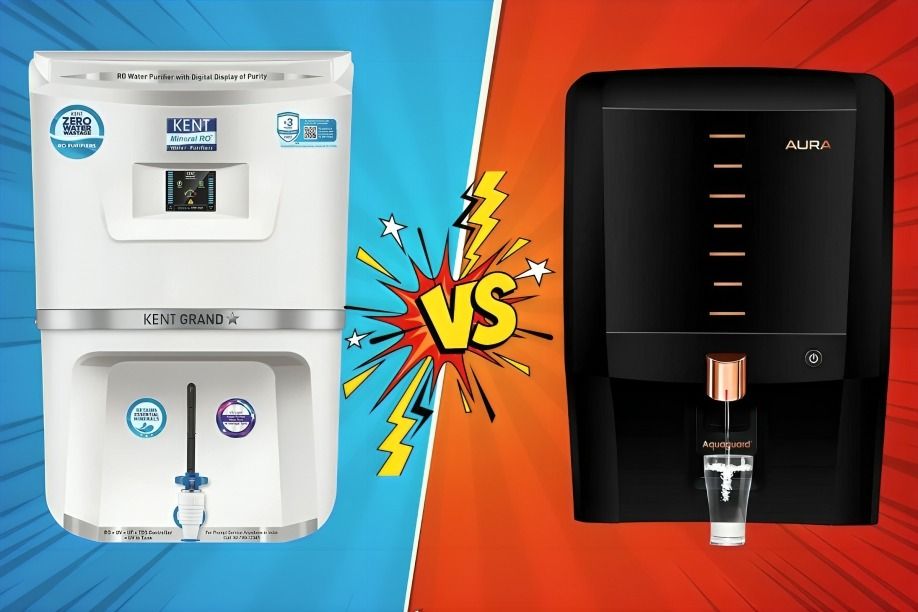
- Best Kent Model: Kent Grand Plus RO + UV + UF
- Best Aquaguard Model: Aquaguard Aura RO + UV + UF + Active Copper
- Budget Pick: Kent Maxx UV or Aquaguard Crystal Plus
Final Verdict: Which One Should You Buy?
If your water has high TDS, Kent is the better choice. For urban users with municipal water, Aquaguard is preferable for its smart features and efficient service.
Vegamovies. Cs – Download Free HD Movies & Web Series 2024
Frequently Asked Questions Kent vs Aquaguard
Which is better: Kent or Aquaguard?
Kent is better for high TDS water, while Aquaguard is ideal for low to medium TDS water with added mineral retention.
What is the maintenance cost of Kent and Aquaguard?
Both brands require ₹2,000 to ₹5,000 annually for filter replacements and servicing.
Which brand has better customer service?
Aquaguard generally offers better service and quicker response times than Kent.
Can I use a Kent purifier for municipal water?
Yes, but Aquaguard’s copper technology may provide better mineral retention for municipal water.
Which is more energy-efficient: Kent or Aquaguard?
Aquaguard purifiers are more energy-efficient, making them cost-effective in the long run.
Conclusion of Kent vs Aquaguard
After comparing Kent vs Aquaguard, it is clear that both brands have unique advantages. Kent water purifiers excel in RO purification and TDS control, making them ideal for areas with high TDS water.
On the other hand, Aquaguard provides better UV and UF purification, making it suitable for municipal water supply. Maintenance cost and after-sales service also play a crucial role in the decision.
Kent has a broader service network, while Aquaguard offers innovative features like Active Copper technology. Ultimately, your choice depends on water quality, budget, and service availability in your area. Carefully evaluate your needs to select the best water purifier for your home.
