

Although you can have a similar deck or board as your normal game, this doesn’t mean you will be having the same experience. With fewer cards, giving players more cards per hand, or altering the action taken upon a player capturing something, there could be new options to consider. If the boards appear very similar, some of the actions you used in the past will no longer apply. Game variations give you the opportunity to notice these differences since everything else looks like the traditional game.
A Different Deck Alters Possibilities
Standard decks of playing cards include 52 cards. Short Deck Poker takes away the 2s, 3s, 4s and 5s (from each suit), making the deck 36 cards total.
Since we know that a standard deck contains four aces (and thus four of 52 cards) and a short deck contains four aces (four of 36 cards), it logically follows that the probability of drawing an ace at random from either deck would change. This is true despite neither version actually having a different amount of aces.
Euchre is another variation where the number of cards in the deck was changed. In Bicycle’s Euchre Rules, several possible numbers of cards were defined. Therefore, a standard fifty-two card deck isn’t always the right equipment for all card games.
This is why taking away content is considered a significant change to the rules of the game. Even if the symbols in the game remain the same, the probabilities related to those symbols have changed.
Adding More Cards Creates More Options
While keeping the same number of cards within the deck is demonstrated by Omaha variants, increasing the number of cards given to each player creates additional ways to create a hand. Variants that allow players to receive five hole cards and/or six hole cards provide players with more information. However, regardless of whether a player receives five or six hole cards, the completed hand is still composed of five cards.
More cards provided to each player do not necessarily equate to more cards being included in the final combination. Omaha specifies that a player must use two hole cards and three community cards to create a valid hand. Even when there are more hole cards available, a player cannot choose to only use three hole cards based on how well they fit together; nor can he ignore his hole cards and solely depend on the community cards.
The four-, five- and six-card Omaha formats listed for CoinPoker show how changing the number of cards dealt creates different versions of the same game. When receiving four hole cards, a player has six ways to select two hole cards; when receiving five hole cards, he has ten ways to select two hole cards; and when receiving six hole cards, he has fifteen ways to select two hole cards. All of these represent the quantity of possible selections and not guaranteed successful hands or win chances. Therefore, it adds more options to explore with respect to utilizing a combination of hole and community cards and also applies equally to your opponents’ selection.
One New Action
In regular chess, if a player captures another piece on the board, that piece leaves the board. In Crazyhouse Chess, after you have taken a piece from your opponent, that piece is placed in your reserve. When it is your turn again, you can take a piece out of your reserve and put it in an open space on the board. This is called dropping a piece. Also, if you promote a pawn and then lose it, it will be returned as a pawn. Therefore, a player who has the opportunity to add to his army via drops can use the reserve piece to block an attacking path toward the king. Reserve pieces become a strategic consideration.
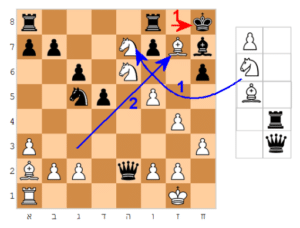
The number of resources available for the players to use has expanded beyond just the pieces on the board. A space on the board that is currently empty could potentially contain a piece at a future time. As such, the current state of the board (who has pieces where) can influence the decisions made about future positions on the board.
Antichess Changes What Winning Means
Instead of protecting your pieces, in antichess the goal is to get rid of all of your pieces before your opponent gets rid of all of theirs. Any piece that can be captured must be captured. Like in standard chess, if there are multiple ways to make a capture, you may pick either way. Additionally, the king loses its special protection under check. Castling is unavailable.
When a piece that was previously protected becomes exposed to capture through your opponent’s actions, it could be used for purposes that differ significantly from those it had when you were using it to protect yourself from harm in standard chess. Your opponents’ obligations to capture become relevant when making plans.
Variants are easiest to describe and explain when they are broken down into three categories: available resources, available actions and available outcomes. Reducing available resources gives fewer choices; adding cards increases combinations; a drop adds an action; and reversing goals changes what constitutes success.
