

It begins in the dark. A vehicle door clicked shut. Your breath hangs briefly in the cold air. Somewhere across the plains of Serengeti National Park, a low call rolled through the quiet. You can’t see the source yet, but you feel it.
A Serengeti safari day doesn’t run on clocks. It runs on track, wind, and light.
If you’re planning a Serengeti safari without an itinerary, this guide explains the natural flow of how a day unfolds based on temperature, animal movement, guide decisions, and those quiet stretches that matter more than you expect. This is your clear, first-timer’s look at what a day in Serengeti is like, without turning it into a timetable.
Dawn: When the Plains Wake Up First
The best clue shows up before the heat does. An early morning safari in Tanzania is less about rushing and more about reading. The air is cool. The light is soft. Predators are still active.
Before guests spot anything dramatic, they hear it bird call layering over one another, distant hooves, maybe a single alarm call cutting through the stillness.
This is when guides make their first key choice. Fresh track crossing the road. Radio update from other vehicles. A cluster of vultures is circling low. Even wind direction matters.
On a good Tanzania Safari, the direction you drive isn’t random; it’s informed by subtle signs that only make sense when you’re out there.
The Language of Signs: Tracks, Calls, and Small Tells

Your guide is reading a whole story written on the ground. A true Serengeti safari day, explained properly include the invisible detail.
Track edge tells you if a lion passed an hour ago or last night. Scat position hints at territory boundaries. A sudden burst of gazelle alarm calls suggests a predator nearby. Oxpeckers clustered on buffalo signal relaxed grazing, but if they lift at once, attention sharpens.
Even dust clouds in the distance can reveal movement long before shapes become visible.
This is where a simple drive transforms into a Serengeti lion experience, not just seeing lions, but understanding how you found them.
Mid-Morning: The Shift From Chase to Shade
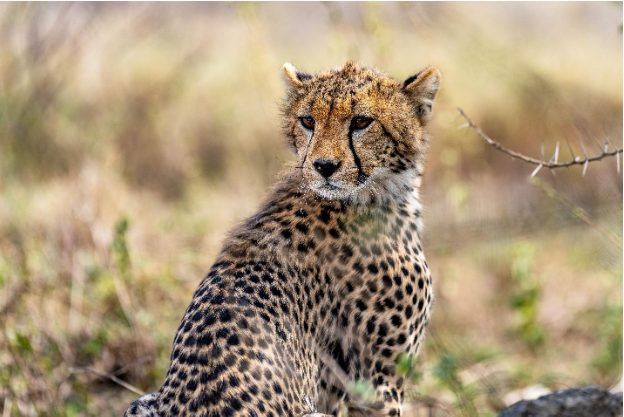
As the sun rise the Serengeti mood changes. As temperatures climb, behaviour shifts. Lions stretch, yawn, and settle into shade. Cheetahs climb termite mounds to scan. Elephants transition between feeding routes and water access.
The energy moves from active pursuit to observation. Sightings become more behavior-based cubs nursing, herds reorganising, predators conserving energy.
The feel of the day also depends on the Tanzania Weather and the Best Time to visit Tanzania dry season concentrates wildlife around water green season spreads movement across the open plain.
Quiet Stretches That Still Feel Full
Some of the best safari minutes are the ones you didn’t plan. There are moments when nothing dramatic is happening. No chase. No roar.
But the landscape holds your attention. Light shifts across the grass. Secretary birds stride through open space. You start noticing movement where others might see stillness.
On a Wildlife soundscape safari or Tanzania wildlife sound safari, the engine may switch off completely. Listening becomes the activity. Wind, distant hooves, rustling shrubs, your awareness expands. Often, nothing simply means wait.
Breaks Without Breaking the Magic
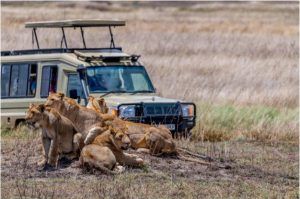
Comfort is part of a good safari day. A strong Serengeti safari day balances wildlife rhythm with human needs.
Picnic stop beneath acacia trees. Lodge lunches with an open view. Hydration check. Dust wiped from camera lenses. Quiet conversations about what you’ve just witnessed.
Practical details matter too, understanding your Tanzania Safari Packing List, basic Tanzania Travel Safety, and managing battery life for camera and phone.
Questions often arise naturally during these pauses: How does the Tanzania Safari Cost vary by season? What are the requirements for a Tanzania Visa? Is Tanzania Travel Insurance necessary? What is typical Tanzanian food like on safari? What about Tipping in Tanzania?
Good Tanzania Travel Guides answer these comfortably without breaking the immersion.
Late Light: The Second Window of Movement
The day softened again, and animals respond. As the heat fades, the plains breathe differently. Grazing intensifies. Shadows stretch. Predators rise and reposition.
Guides adjust to repositioning vehicles based on wind, herd movement, and early sighting. Photography improves dramatically in this softer light.
Across varied Tanzania Destinations, late afternoon often mirrors dawn in energy but never in the same way.
Evening Soundscape: The Park Turns Vocal
You don’t always see the action; you hear it. As the air cools, sound travels farther.
A lion’s call carries across open space. Hyenas answer in a high-pitched burst. Night birds replace daytime song.
You may not witness every movement, but the Serengeti safari day closes with an audible reminder that life continues beyond visibility.
Why No Two Serengeti Days Match
Same park, different day, because nature doesn’t repeat itself. Dry season compresses wildlife near water. The green season spread animals across the vast plain. Migration presence, change density, and predator focus. Weather shifts affect mood and movement. Crowd levels vary.
Even if you followed the same track twice, the outcome would differ. That unpredictability is the point. A Serengeti safari without an itinerary embraces rhythm over rigidity.
- If you want to experience wildlife on its own terms, book a Tanzania Safari designed around natural timing, early drive for sound and big-cat movement, unhurried pause, and guides who interpret more than they chase.
CONCLUSION: A DAY THAT LOOPS, NOT SCHEDULES
A Serengeti safari day isn’t divided by hours. It’s shaped by light, temperature, instinct, and attention.
You listen.
You notice.
You wait.
And then suddenly you see.
That rhythm repeats differently every time. And that’s exactly why it never feels predictable.
