
Close Menu
CEOColumnCEOColumn
    What's Hot

    Corporate Wellness Apps: A Modern Tool for Healthier, More Productive Teams

    March 5, 2026

    Tejaswi Prakash Age, Net Worth, Height & Personal Life 2026

    March 4, 2026

    Dhirendra Shastri Height, Age, Net Worth & Bio 2026

    March 4, 2026
    Facebook X (Twitter) Instagram
    Facebook X (Twitter) Instagram
    CEOColumnCEOColumn
    Subscribe
    • Home
    • News
    • BLOGS
      1. Health
      2. Lifestyle
      3. Travel
      4. Tips & guide
      5. View All

      5 Preventative Mental Health Benefits of Individual Therapy (Even If You Feel Fine)

      March 3, 2026

      Life Science Marketing in 2026: Communicating Science with Clarity and Trust

      March 3, 2026

      Healthcare SEO in 2026: A Practical Guide for Clinics and Hospitals

      March 3, 2026

      Labral Tears of the Hip: Symptoms, Diagnosis and Management

      February 26, 2026

      The Executive Look: How Your Eyewear Choice Defines Your Leadership Style

      March 3, 2026

      The Algorithmic Gym: Strategic Insights into the 2026 Home Fitness Revolution

      March 3, 2026

      Unlock Creative Printing with a Heat Press and Versatile Printable & Adhesive Vinyl

      March 1, 2026

      How Long Does Hair Transplant Surgery Take to Complete

      February 21, 2026

      Top Tourist Attractions in Athens: A First-Time Visitor’s Complete Guide

      February 25, 2026

      Top Reasons Travelers Love Dinner Cruises Around the World

      February 4, 2026

      Why Professional Travel Support Becomes Essential at Scale

      February 1, 2026

      Planning a UK Trip From India: What Smart Travellers Prepare in Advance

      January 31, 2026

      Adapting to UAE VAT Changes: A Guide for Contractors

      February 27, 2026

      What is Scrum Board: How It Works and Best Practices (2026)

      February 24, 2026

      How Startup Founder Coaching Helps Entrepreneurs Succeed

      February 12, 2026

      Tips for Choosing the Right Consulting Operations Platform

      February 11, 2026

      Corporate Wellness Apps: A Modern Tool for Healthier, More Productive Teams

      March 5, 2026

      Applying Federal Investigative Rigor and Six Sigma Discipline to High-End Manufacturing

      March 3, 2026

      How Lighting and Surface Texture Affect Interior Paint Results

      March 3, 2026

      WhatsApp and Telegram in 2026: From Simple Messaging to Complex Systems

      March 3, 2026
    • BUSINESS
      • OFFLINE BUSINESS
      • ONLINE BUSINESS
    • PROFILES
      • ENTREPRENEUR
      • HIGHEST PAID
      • RICHEST
      • WOMEN ENTREPRENEURS
    CEOColumnCEOColumn
    Home»Tech»The Future of SOC: Humans, AI, and Automation Working Together

    The Future of SOC: Humans, AI, and Automation Working Together

    OliviaBy OliviaJanuary 30, 2026Updated:February 26, 2026No Comments6 Mins Read

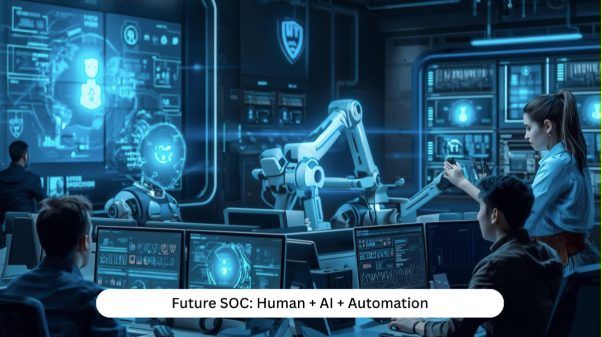
    The Security Operations Centre (SOC) is still the most important part of a company’s digital defence. As threats change, the SOC will use AI and automation along with human knowledge to find threats more quickly, respond more quickly and give clearer security information. 

    AI and automation make incident response, threat detection, and security analytics better, but human analysts give machines the context and judgement they can’t replicate. This model of working collaboratively helps security teams lower risk and improve security outcomes overall. 

    Table of Contents

    Toggle
    • The Evolution of Security Operations Centres 
      • Traditional SOC Models and Their Limitations 
      • The Shifting Cybersecurity Situation in India 
      • Why SOCs Need to Change 
    • Problems that Modern SOCs are Facing Right Now  
      • Analyst Burnout and Alert Fatigue 
      • Skill Shortage in Cybersecurity 
      • Growing Sophistication of Threats 
      • Data Volume and Velocity Challenges 
    • The Role of Artificial Intelligence in Modern SOCs 
      • Machine Learning for Threat Detection 
      • Natural Language Processing for Intelligence Analysis 
      • Predictive Analytics for Proactive Defence 
      • AI-Driven Triage and Prioritisation 
    • Human Expertise: Still the Core of Effective SOCs 
      • What Machines Can’t Replace: Intuition and Context 
    • Conclusion 

    The Evolution of Security Operations Centres 

    The Security Operations Centre (SOC) has changed from manual monitoring to continuous, tool-driven defence. The future of SOC depends on people, processes and technology to work collaboratively and protect a company’s data and systems 24/7 because threats and attack surfaces have grown. 

    Traditional SOC Models and Their Limitations 

    Traditional SOC models depend a lot on human analysts and isolated tools. That method struggles with scalability and costs a lot to operate. It also has a higher chance of human error. These limits make it hard for older models to provide the speed and range of coverage that is needed today. 

    The Shifting Cybersecurity Situation in India 

    India’s quick adoption of technology has made it easier for hackers to get into systems and increased the amount of telemetry and alerts that SOCs have to deal with. Indian businesses increasingly need security operations that can grow and work together to handle faster data and smarter enemies. 

    Why SOCs Need to Change 

    SOCs need to switch from manual, reactive models to hybrid systems that use automation, AI, and better integration to stay useful. Updating the model reduces time to detect and respond, lowers costs and enables analysts to focus on higher‑value security work. 

    Problems that Modern SOCs are Facing Right Now  

    Modern SOCs face several ongoing problems that make it hard for them to quickly and reliably find and respond to threats. To fix these problems, we need better tools, smarter workflows and improved analyst support. 

    Analyst Burnout and Alert Fatigue 

    Alert fatigue remains a top operational problem: analysts receive high volumes of alerts from multiple systems and struggle to separate true positives from noise. That overload makes it more likely that alerts will be missed and adds to analyst burnout. 

    Skill Shortage in Cybersecurity 

    The global shortage of skilled cybersecurity professionals leaves many SOCs understaffed and dependent on overworked teams. So, hiring and retaining experienced analysts is a major constraint on improving detection and incident analysis. 

    Growing Sophistication of Threats 

    Adversaries are using more advanced methods like AI-assisted attacks and targeted social engineering. These evolving threats need more contextual analysis and adaptive detection, not just static rule sets. 

    Data Volume and Velocity Challenges 

    SOC’s job is to handle more telemetry and event data from logs, endpoints and cloud services. High data velocity makes it hard to extract signal from noise and slows down detection. 

    The Role of Artificial Intelligence in Modern SOCs 

    As hackers get better at using sophisticated methods, AI has become an important tool for the future of SOCs. When used correctly, AI helps teams find subtle clues, speed up investigations and give analysts the information they need to act. 

    Machine Learning for Threat Detection 

    Machine learning models analyse a lot of telemetry and event data to find patterns that static rules miss. These models can find anomalies, like unusual lateral movement, by learning what normal behaviour is. This improves overall threat detection and reduces the time it takes to find them. 

    Natural Language Processing for Intelligence Analysis 

    Natural Language Processing (NLP) sorts through unstructured sources like threat reports, alerts, logs and open-source intelligence to find useful indicators and generate concise info for analysts. That automated summarisation turns raw data into actionable information. 

    Predictive Analytics for Proactive Defence 

    Predictive analytics uses historical and current data to forecast likely attack patterns or vulnerable assets. This lets SOCs prioritise hardening efforts before incidents occur. And it shifts the model from reactive monitoring to proactive risk reduction. 

    AI-Driven Triage and Prioritisation 

    AI‑driven triage sorts alerts by risk and how relevant they are to the situation, so analysts focus on high‑impact incidents first. For example, an ML model that correlates an unusual authentication event to known threat intelligence can raise that alert for immediate human review, which cuts down on noise and speeds up response times. 

    These AI capabilities, which range from modelling to natural language processing (NLP) and predictive techniques, improve the capabilities of the SOC and make security operations more scalable and effective. 

    Human Expertise: Still the Core of Effective SOCs 

    Even though automation and AI can do a lot of tasks, human expertise is still what makes security operations work well. Machines can process volume and surface signals; people supply context, judgement and creativity that machines can’t. 

    What Machines Can’t Replace: Intuition and Context 

    The future of SOC depends on tools and automation, but it cannot replace intuition and context. Analysts use their intuition to link unrelated events, spot subtle shifts in behaviour, and prioritise incidents based on how risky they are for the organisation. For accurate threat analysis, you need to know how systems are used, what assets are most important, and what normal behaviour looks like. 

    The key aspects that people bring to SOC operations are: 

    • Organisational context and setting priorities for assets 
    • Understanding incomplete or ambiguous data  
    • Evaluating the effects and needs for escalation 
    • Creative problem‑solving for novel attacks 

    Conclusion 

    The future of SOC is a collaborative model in which human expertise, AI and automation work together to make detection better, speed up response times, and make overall security operations stronger. Organisations that bring together people, platforms and processes will be better able to deal with threats that continuously evolve over time. 

    First, figure out how mature your SOC is. Then, run a focused pilot (detection + SOAR playbook) and invest in training analysts and managing data. These practical steps help make security operations more scalable and lead to measurable improvements. 

    Well-trusted cybersecurity firms can also help you achieve the optimal security using SOC. CyberNX is one such firm which provides AI powered SOC services that use automation to proactively identify and neutralize threats in real time. 

    The time to act is now: figure out your capabilities, choose a small and high-impact pilot and measure the results. The next generation SOC is built step by step, with people and machines working together to provide stronger protection.

    Share. Facebook Twitter Pinterest LinkedIn Tumblr Telegram Email
    Previous ArticleSonu Sharma Age, Net Worth, Relationship, Career & Family 2026
    Next Article Consistent Communication Customers Can Rely On
    Olivia

    Olivia is a contributing writer at CEOColumn.com, where she explores leadership strategies, business innovation, and entrepreneurial insights shaping today’s corporate world. With a background in business journalism and a passion for executive storytelling, Olivia delivers sharp, thought-provoking content that inspires CEOs, founders, and aspiring leaders alike. When she’s not writing, Olivia enjoys analyzing emerging business trends and mentoring young professionals in the startup ecosystem.

    Related Posts

    Free AI Sound Effect Generator: Create Custom Sound Effects

    February 26, 2026

    How AI Customer Experience Platforms Are Enabling Autonomous Customer Journeys

    February 23, 2026

    How AI Is Changing Accounting Services and What Business Owners Must Know

    February 21, 2026
    Add A Comment
    Leave A Reply Cancel Reply

    You must be logged in to post a comment.

    Latest Posts

    Corporate Wellness Apps: A Modern Tool for Healthier, More Productive Teams

    March 5, 2026

    Tejaswi Prakash Age, Net Worth, Height & Personal Life 2026

    March 4, 2026

    Dhirendra Shastri Height, Age, Net Worth & Bio 2026

    March 4, 2026

    Anubhav Singh Bassi Height, Age, Net Worth, Career & Life 2026

    March 4, 2026

    Quick Property Deals: How Fast Bridging Finance Makes It Possible

    March 4, 2026

    Silicone Membranes: Transforming Filtration and Separation Technologies

    March 4, 2026

    15+ High-Paying Affiliate Programs in Lucrative Niches

    March 3, 2026

    Bobby Deol Height, Age, Net Worth & Wife Details 2026

    March 3, 2026

    MC Stan Height in Feet, Age, Net Worth & GF 2026

    March 3, 2026

    MCO Vizag: Full Form, Role & Latest Updates 2026

    March 3, 2026
    Recent Posts
    • Corporate Wellness Apps: A Modern Tool for Healthier, More Productive Teams March 5, 2026
    • Tejaswi Prakash Age, Net Worth, Height & Personal Life 2026 March 4, 2026
    • Dhirendra Shastri Height, Age, Net Worth & Bio 2026 March 4, 2026
    • Anubhav Singh Bassi Height, Age, Net Worth, Career & Life 2026 March 4, 2026
    • Quick Property Deals: How Fast Bridging Finance Makes It Possible March 4, 2026

    Your source for the serious news. CEO Column - We Talk Money, Business & Entrepreneurship. Visit our main page for more demos.

    We're social. Connect with us:
    |
    Email: [email protected]

    Facebook X (Twitter) Instagram Pinterest LinkedIn WhatsApp
    Top Insights

    Corporate Wellness Apps: A Modern Tool for Healthier, More Productive Teams

    March 5, 2026

    Tejaswi Prakash Age, Net Worth, Height & Personal Life 2026

    March 4, 2026

    Dhirendra Shastri Height, Age, Net Worth & Bio 2026

    March 4, 2026
    © Copyright 2025, All Rights Reserved
    • Home
    • Pricacy Policy
    • Contact Us

    Type above and press Enter to search. Press Esc to cancel.

    Go to mobile version