

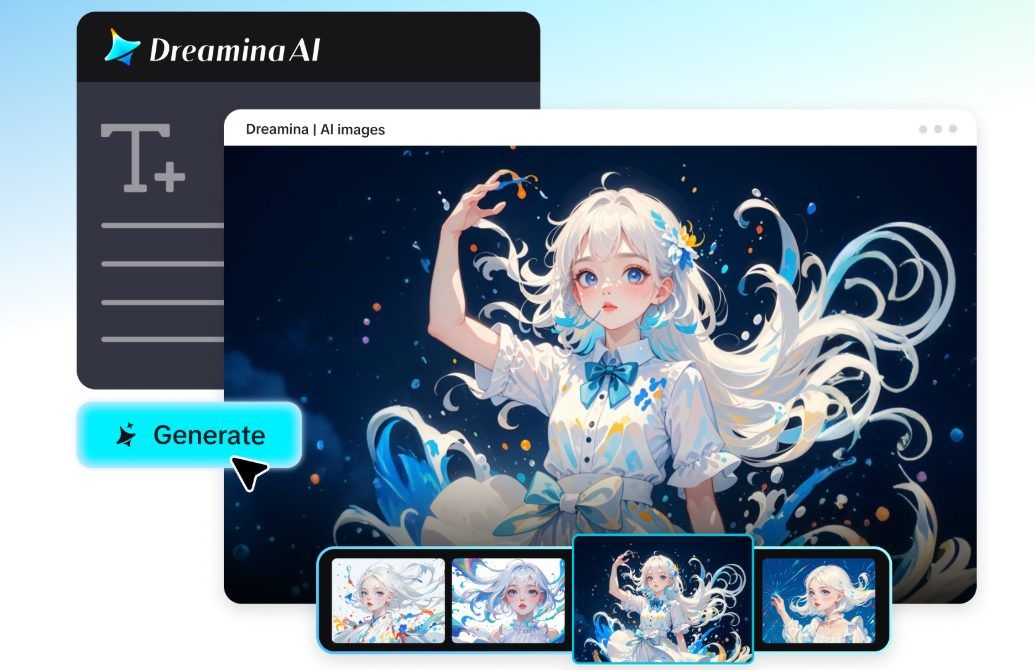
In the digital age, it is essential to draw attention, and more brands and educators are resorting to AI to create something new. The deepfake AI tool is one of the technologies that is happening. Deepfakes can now provide a promising future to responsible creators since they are no longer linked with misinformation. The possibilities are immense both in terms of the ability to bring historical figures to life in their educational videos, as well as the ability to make interesting brand narratives. The trick is to find the equilibrium between creativity and ethics, as well as to make the content interesting and credible. Dreamina is user-friendly to both beginners and experts, with simple functionality and strong AI functionality.
Responsible storytelling
Deepfake AI increases creativity, and it cannot be used ethically. Before using the likeness of anybody, consent should be sought at all times. Open dialogues concerning AI-generated content, guard your integrity and avoid misinterpretations. Do not portray an individual in things or utterances that she never did, particularly in sponsored campaigns or in curricular fields. To teachers, it is important to state when historical characters or scientific models are digitally reproduced so that they do not mislead. Last but definitely not least, make sure that AI-generated images serve to support the narrative, but do not become the focus of it. A story is to be kept in the centre, and it is the deepfake attributes that give it more depth and interactivity.
Combining creativity and technology
The best deepfake material is one that does not embarrass AI and narration. Brands are able to add virtual spokespeople explaining products, showing features, or providing personal messages. People can bring complicated lessons to life through the use of animation of historical events or by demonstrating scientific concepts to teachers. It begins with the mapping of your narrative preceding the creation of visuals, so that AI allows understanding. Deepfake images are effective as an addition to the story and not the core offer. They have to be combined with a tool such as a YouTube thumbnail maker to be understandable and visually pleasing to keep the audience interested, without being a breach of ethics.
The three-step guide to using Dreamina
Step 1: Upload your picture
Start by going to Dreamina’s site. Click on AI Image and then choose the button +, and then you get an opportunity to upload your base picture, which will be Image 1. The second step is to upload another picture that you wish to use as a face. Simply type something like, replace the face in Image 1 with the person in Image 2 and the image-to-image feature of Dreamina will automatically convert it and form a seamless transformation. This approach makes the process simple for new entrants and the results are realistic.
Step 2: Tailor and create
After uploading your pictures, choose Image 4.0 by Seedream 4.0 as your generation as a model in order to get real results. Change the aspect ratio to suit your project and choose the resolution to give you the best quality. Once prepared, select the option of producing your deepfake image, which is the “Generate” button. Technical work is done by Dreamina, and creators can concentrate on narration.
Step 3: Download your Deepfake photo
Dreamina has four distinct designs after generation. Check them thoroughly and press the button for the version you liked the most to save it in high quality. Your image is currently integrated into videos, presentations, or social media.
Step 4: Upload to AI Video or AI Avatar
After that, you can upload your photo to Dreamina’s AI video generator and let its advanced models, like Seedance 1.5 Pro, animate it with audio. You can also upload it to AI Avatar and let the OmniHuman 1.5 model customize your actions and script with text.
Top-notch quality
If the content is more legible, an image upscale tool will be helpful to enhance the quality without any loss of authenticity. These are the improvements that guarantee your deep fake visuals do not dominate, but just empower the story you have.
Maximising the effect and not sacrificing morals
Secure creators reap the rewards of AI-based storytelling without losing credibility. Personalised content, straightforward explanations, and immersive images are highly engaging factors. There is the possibility of reducing production costs and time by replacing traditional shoots with AI-generated images or videos and scaling content with high efficiency. However, such benefits can be achieved only when all the decisions are made with consent, transparency and proper contextualization. The reaction of the audience is favorable if they know about the technology behind the content and can believe that it is being used responsibly.
Bringing stories and learning to life with responsible Deepfake AI
In today’s digital era, technology is changing how we communicate stories and knowledge. The use of technology in this era has enabled the creation of a realistic image, as with the example of the Deepfake AI, which allows a person to create a highly realistic image that may convey a lesson or character that was previously unimaginable before this technology emerged. Platforms such as Dreamina make it easier to achieve a balance between creativity and ethics used in this technology, as it assists users in a step-by-step process of how to create a high-quality AI-image.
Conclusion: The balancing of innovation and integrity with Dreamina
When applied ethically, deepfake AI has exciting possibilities for branded storytelling and educational media. Consent, transparency, and accuracy should be prioritised as the content should be both interesting and reliable. Dreamina makes this process easier with its 3-step model, which helps users upload images to the system and create and download high-quality deepfakes. The combination of Dreamina’s AI images and an image upscale tool or a YouTube thumbnail generator would guarantee clarity, impact, and visual appeal. Drawing on artistic imagination and ethical principles, creators can use AI to create immersive, memorable narratives that empower, teach, and entertain without undermining audience trust.
