

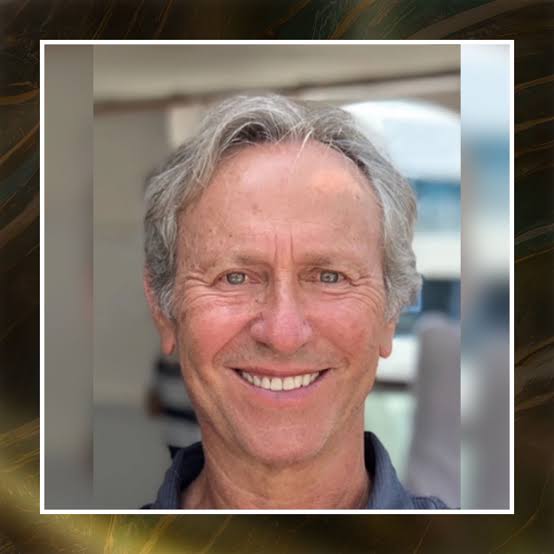
Robert Kasirer has spent decades thinking about what it means to carry something forward. As the son of Holocaust survivors who rebuilt Jewish life in Los Angeles through the creation of schools and synagogues, he grew up inside a living example of communal responsibility in action. That inheritance now drives something built for the present: a digital platform designed to make Jewish life more accessible, more personal, and more continuous for the generations who need it most.
His vehicle is the Neshamah Project, a nonprofit he founded in 2022 with a simple premise. Jewish youth are not absent from their heritage because they lack interest. They are absent because the systems meant to reach them have not kept pace with how they actually live.
A Legacy That Demands More Than Preservation
The phrase “legacy of survival” is not decorative for Robert Kasirer. His parents arrived in Los Angeles after the Holocaust and immediately began building the institutions that would sustain Jewish community life: schools, synagogues, and the broader social fabric that connects them. He watched that process unfold and absorbed its central lesson early. Jewish continuity is not automatic. It requires deliberate investment across every generation.
That belief now shapes Neshamah in practical ways. The platform does not treat engagement as something that happens passively when content is available. It is designed to create pathways to connection, using personalization technology to meet users where their curiosity already exists. Someone drawn to Jewish music is introduced to related learning. Someone processing grief finds prayer tools and guided reflection. The platform adapts in real time, and that adaptability reflects Robert Kasirer’s core conviction: tradition has to move with the person, not wait for the person to come to it.
What Jewish Youth Actually Need From a Digital Platform
Jewish youth today are fully fluent in digital environments. They discover communities, explore identity, and build meaning through mobile apps, streaming platforms, and online networks. What has been missing is a Jewish digital space built to the same standard of personalization and usability they expect everywhere else.
The Neshamah Project is designed to address that gap directly. It brings together prayer, music, Torah study, podcasts, video, and interactive learning, all organized through AI-driven pathways that reflect a user’s interests, location, and engagement history. Users are not navigating a static archive. They move through a living system that becomes more relevant the more they use it.
Since its launch, the platform has grown to include thousands of members across the United States, Israel, and Europe.
Partnerships with YU Torah, the Jewish Theological Seminary, Hebrew Union College, Hillel International, Ohr Torah Stone, OpenDor Media, and Aish bring authoritative content from across Orthodox, Conservative, and Reform traditions into a single integrated experience. For Jewish youth who do not see denominational labels as reflective of how they actually live, that breadth becomes an invitation rather than a barrier.
Robert Kasirer on Rising Disconnection and What to Do About It
Anti-Semitism has intensified in recent years, and many young Jews report feeling less connected to Jewish identity, community, and practice. For Robert Kasirer, these conditions make the mission of Neshamah more urgent, not less.
His response is not defensive. Rather than treating rising anti-Semitism primarily as something to resist in isolation, he sees it as a signal to invest more deeply in affirmative infrastructure. In his view, the most durable response is to build a richer, more accessible, and more personally meaningful Jewish life — one that young people actively choose to inhabit. As a Jewish philanthropist and community builder, Kasirer has consistently argued that a young person with a strong, engaging Jewish digital experience is more likely to remain connected than one who encounters Jewish identity primarily in times of crisis or threat. Neshamah supports Israeli educational initiatives and contributes to anti-Semitism awareness efforts, but its central focus remains constructive: building engagement rather than reacting to decline.
From Content to Community: The Platform’s Expanding Scope
Neshamah is now extending beyond content delivery into community infrastructure. Through a growing event discovery system, the platform is evolving into a centralized hub for Jewish gatherings across the United States — a single place where cultural events, educational programs, and local initiatives can be discovered, organized, and accessed without friction.
The organization-to-user framework built into Neshamah also gives synagogues, schools, camps, and nonprofits their own presence within the platform. This allows institutions to reach their members directly and maintain visibility without competing against one another for attention. Rather than building new boundaries between organizations, Kasirer is creating shared infrastructure that strengthens each participant’s reach and effectiveness.
A Third-Generation Mindset Applied to a Generational Problem
Kasirer’s professional work outside Neshamah provides useful context for this approach. As Founder and Chairman of the Kasirer Family Office, a third-generation family enterprise, he oversees a diversified portfolio spanning retail, healthcare, multifamily, and industrial properties across California and select Western markets. The business is now led alongside his sons, David and Jonathan Kasirer, and his son-in-law, Joshua Kaplan. Operating across three generations naturally shapes a long-term orientation: decisions are made not for the next quarter, but for the next era.
That mindset carries into Neshamah in subtle but important ways. The platform is not designed for a moment in digital culture. It is built to support Jewish identity across the full arc of a person’s life — from early exploration to sustained practice, community participation, and deeper engagement that develops over time.
For Kasirer, honoring a legacy of survival means more than preserving what already exists. It means building what comes next with the same seriousness and intention his parents brought to their work in Los Angeles. Neshamah is his expression of that responsibility, and he is building it to last.
