

Ever wondered when electric cars that don’t cost a fortune will finally hit Indian roads? You’re not alone. If you’re also as excited as I am about affordable electric cars, we can both seriously consider them for daily life without breaking the bank.
Over the next year or two, India is gearing up for a wave of affordable upcoming EV models in India. These are not just concept cars, they are real, everyday cars that could soon be parked outside your home, your office, or even your favourite chai wala’s shop. From city runabouts to small family SUVs, here’s a look at what’s coming and when.
Key Upcoming EV Models In India
Below, I’ve laid out the biggest upcoming entry-level EVs that you’ll likely hear about a lot, along with what we think their arrival timelines look like.
Tata Sierra EV
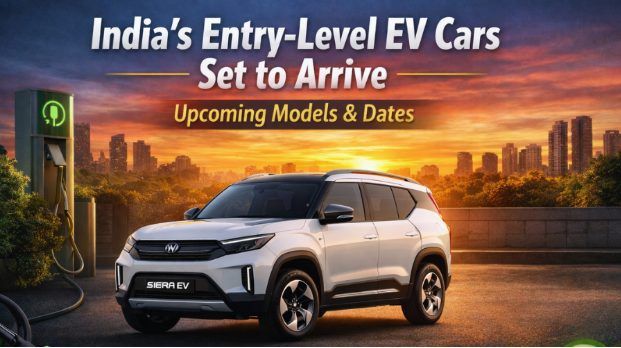
Let’s start with a name that has nostalgia built right into it, Tata Sierra EV. Many of us remember Sierra as a classic SUV from the past, and now Tata Motors is bringing it back as an electric vehicle that could fit more into everyday life rather than just as a premium car. The Sierra EV is expected to arrive by early 2026 and will likely start at a price friendlier than that of larger electric SUVs. As per the automobile articles, the idea is to offer something that’s modern and practical. People are talking about it having multiple versions, so some might come with more power, others more space, but overall, it’s shaping up to be a solid all-around choice when it lands.
Mahindra XUV 3XO EV
If you’re into compact SUVs that balance style and practicality, you’ll be happy to know Mahindra’s XUV 3XO EV is on the way. This model is essentially an electric version of the much-loved XUV 3XO, built for everyday city use and suburban commuting. The expected arrival window is the first half of 2026, and online chatter suggests it will compete with other budget EVs, especially the bigger Tata and Kia siblings. One of the coolest things? It’s likely to be fair-priced so that many of us can consider switching from petrol/diesel to electric without feeling pinched. It’s not a huge SUV, but it’s not tiny either, feels like the right size for most Indian families and young drivers alike.
Hyundai Inster-Based EV
Next up is the Hyundai EV based on the Inster platform, a lighter, more compact electric car that many people are pretty excited about. You can think of this as Hyundai’s answer to other affordable EVs like Tata’s Punch EV and Mahindra’s offerings. While specific launch dates can float a bit, most signs point to a 2026 arrival, likely later in the year, according to recent automotive news. That means you might start seeing this Hyundai EV on Indian roads and in showrooms towards the end of next year. What’s cool is it’s coming from a brand that many of us already trust, Hyundai, and the expectation is that it will feel comfortable and familiar, but powered by electricity. You and I both know that reliability and widespread service support matter, and this Hyundai EV aims to tick both boxes.
Kia Syros EV
Another exciting name is the Kia Syros EV. Think of this as Kia’s compact electric SUV entry, a car that’s sized just right for city drives, quick errands, college drop-offs, and weekend outings alike. The expected launch timing? Early to mid-2026, so it’s one of the first affordable EVs in this list to likely reach buyers. Kia has been very clear that they want to bring fun-to-drive, feature-packed options to buyers who aren’t necessarily looking to spend big. The Syros EV is expected to borrow some tech and design cues from Hyundai’s Inster EV as well, since Hyundai and Kia share a lot of engineering behind the scenes. That means smart interiors, modern safety features, and a comfortable drive, all in an EV you can realistically think about for everyday use.
Vinfast VF3
Last but certainly not least on this list is the Vinfast VF3. Now, this one is interesting because Vinfast is a brand that’s pretty new to India, but it’s moving fast to make affordable EVs for city folks. The VF3 is expected by mid-2026, and it’s shaping up to be one of the most budget-friendly electric cars in this crowd. It’s smaller than many SUVs, leaning more toward compact city cars, which is actually great if you want something easy to park, easy to drive around tight city streets, and light on running costs.
One interesting aspect of Vinfast’s approach is that it may offer Battery-as-a-Service (BaaS) plans. According to the automobile articles, it means lower upfront costs and a battery you pay for like a subscription. That’s a new way of thinking about car buying in India and might just make EV ownership easier for you if up-front prices feel high.
What does this mean for you and me?
If you’re reading this and thinking, “Alright, but what timeline are we really talking about?” here’s the big picture:
- Early 2026: Tata Sierra EV, Kia Syros EV
- First half of 2026: Mahindra XUV 3XO EV
- Mid to late 2026: Vinfast VF3, Hyundai’s Inser-based EV
These aren’t just fancy concepts. Most of these cars are nearing real launch windows as we speak, and many will be priced in ranges realistic for everyday buyers like you and me.
According to the latest automotive news, we’ll soon have Indian EV shopping lists that include vehicles not much more expensive than popular petrol options, with savings on running costs, quieter drives, and a smaller carbon footprint.
Final Thoughts
So if you’re on the fence about making the jump to electric, these upcoming entry-level EVs mean there’s no better time than now to start paying attention. They’re affordable, practical, and more importantly, they’re being built for Indian roads, Indian charging conditions, and Indian families. I’m personally looking forward to seeing how affordable EVs shake up the market. Whether you’re thinking about your first car, a second city car, or just trying to figure out what’s around the corner, India’s EV future finally feels reachable.
