

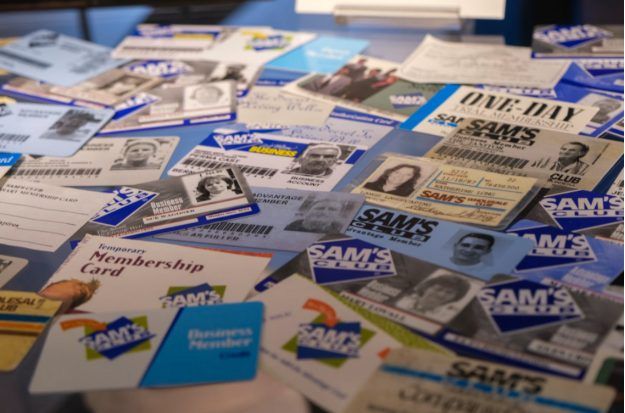
In an era where customer data breaches and identity fraud dominate headlines, businesses face mounting pressure to secure facilities while simultaneously deepening customer relationships. ID card printers have emerged as a critical infrastructure component—bridging the gap between personalized customer engagement and robust access control systems.
These specialized devices enable organizations to produce customized identification credentials on-demand, from retail loyalty cards that drive repeat purchases to secure employee badges that protect sensitive areas. For business leaders evaluating operational investments, understanding how ID card printing technology intersects with both revenue generation and risk mitigation has become essential.
The Technology Behind Modern ID Card Printing
ID card printers are precision devices engineered to produce durable plastic credentials embedded with security features, data encoding, and visual personalization. Unlike standard document printers, these systems handle specialized card stock while integrating technologies like magnetic stripe encoding, smart chip programming, and holographic overlays.
Three primary printing technologies dominate the market:
- Direct-to-card (DTC) printers: Apply dye sublimation ink directly onto PVC card surfaces, offering economical solutions for moderate-volume operations with standard security requirements.
- Retransfer printers: Print images onto a clear film layer before thermally bonding it to the card substrate, delivering superior edge-to-edge quality and compatibility with smart cards and uneven surfaces.
- Inkjet card printers: Utilize liquid ink technology to produce vibrant, photo-quality images suitable for organizations prioritizing visual impact over encoding capabilities.
Deployment spans diverse sectors with distinct requirements:
- Retail environments: Generate membership and loyalty credentials that integrate with point-of-sale systems to track purchasing behavior and reward frequency.
- Healthcare facilities: Issue patient identification and staff credentials that comply with HIPAA requirements while controlling access to restricted clinical areas.
- Educational institutions: Produce student IDs that function as library cards, meal plan access, and building entry credentials across campus networks.
- Corporate enterprises: Create employee badges incorporating multiple authentication factors for tiered facility access and time-tracking integration.
Selecting appropriate printing technology requires analyzing throughput demands, security feature requirements, and integration needs with existing identity management infrastructure.
Building Customer Loyalty Through Personalized Card Programs
Retail loyalty programs have evolved from simple punch cards to sophisticated data ecosystems, with physical membership cards serving as the tangible interface between brands and consumers. 62% of consumers prefer engaging with brands that demonstrate personalized understanding of their preferences—a capability that well-designed card programs enable.
ID card printers empower retailers to create differentiated loyalty experiences through several mechanisms:
- Visual personalization: Incorporating customer names, membership tiers, and unique identifiers transforms generic cards into personal brand artifacts that reinforce emotional connection.
- Brand consistency: On-demand printing ensures every card reflects current brand guidelines, seasonal campaigns, or partnership promotions without inventory waste.
- Behavioral tracking: Encoded magnetic stripes or barcodes link physical cards to customer profiles, enabling retailers to analyze purchase patterns and tailor marketing interventions.
- Tiered recognition: Visual differentiation between membership levels—through card colors, finishes, or embedded features—creates aspirational progression that drives increased spending.
The business impact extends beyond sentiment. Harvard Business Review analysis reveals that customers enrolled in loyalty programs generate 12-18% more incremental revenue annually than non-members, with card-carrying participants demonstrating 27% higher retention rates.
Successful implementations demonstrate the strategic value. Starbucks’ rewards program, anchored by its distinctive card design, has enrolled over 30 million active members who account for more than half of the company’s U.S. transactions. Similarly, Sephora’s Beauty Insider program uses tiered card designs to segment customers into distinct engagement levels, driving both purchase frequency and basket size.
Strengthening Enterprise Security Through Credential Management
Physical access control remains a cornerstone of enterprise security strategy, with ID badges serving as the first authentication factor in multi-layered defense systems. The Cybersecurity and Infrastructure Security Agency emphasizes that effective physical security controls are inseparable from comprehensive cybersecurity programs—a reality that elevates ID card systems from administrative tools to critical security infrastructure.
Modern ID card printers contribute to security postures through multiple capabilities:
- Multi-factor authentication: Cards can incorporate visual identification, magnetic stripe data, proximity chips, and smart card technology, enabling organizations to implement layered verification appropriate to risk levels.
- Counterfeit resistance: Advanced security features including holographic overlays, UV-reactive inks, microtext, and custom watermarks make credential duplication prohibitively difficult for unauthorized actors.
- Rapid credential lifecycle management: On-site printing enables immediate badge issuance for new employees and instant deactivation through system integration when personnel separate, eliminating the security gaps inherent in outsourced production.
- Audit trail integration: When paired with access control systems, encoded credentials create detailed logs of facility entry patterns, supporting both security investigations and compliance documentation.
The security implications extend beyond preventing unauthorized access. Organizations subject to regulatory frameworks—including HIPAA for healthcare, FERPA for education, and various data protection regulations—face specific requirements for controlling access to sensitive information. ID card systems provide the documented access controls that auditors expect during compliance reviews.
Financial services firms, government contractors, and research facilities with classified information requirements increasingly deploy cards with embedded smart chips that store encrypted credentials and digital certificates. These implementations transform simple ID badges into portable authentication devices that integrate with network login systems, document encryption tools, and secure communication platforms.
Essential Components of Complete Identification Systems
ID card printers represent just one element within comprehensive identification ecosystems. Maximizing system effectiveness requires coordinating hardware, consumables, and accessories into integrated workflows.
Critical system components include:
- Card substrates: PVC remains the standard for most applications, while composite PVC-PET materials offer enhanced durability for credentials subject to frequent handling or harsh environments. Specialized options include proximity cards with embedded RFID chips and smart cards with integrated circuits.
- Encoding equipment: Magnetic stripe encoders, contact smart card programmers, and contactless chip encoders enable cards to store data and interact with access control or payment systems.
- Credential accessories: Badge holders, lanyards, retractable reels, and clip attachments affect both user experience and card longevity while reinforcing brand visibility throughout facilities.
- Design and management software: Professional card design applications enable template creation, database integration for variable data printing, and centralized management of distributed printing operations across multiple locations.
- Consumables inventory: Printer ribbons, cleaning supplies, and lamination films require ongoing replenishment, with supply chain management affecting both cost efficiency and operational continuity.
Organizations must align component selection with operational requirements. High-security environments prioritize tamper-evident features and advanced encoding, while retail operations emphasize visual appeal and rapid throughput. Healthcare facilities require antimicrobial card materials and HIPAA-compliant data handling, whereas educational institutions need cost-effective solutions that accommodate high-volume seasonal issuance.
Integrated Identity Management: Systems Thinking for Modern Organizations
As organizations grow in complexity—spanning multiple locations, managing diverse user populations, and integrating with cloud-based systems—standalone ID card printers give way to comprehensive identity management platforms. These integrated systems unify credential issuance, access control, visitor management, and compliance reporting into centralized operations.
Fully integrated identity systems typically encompass:
- Networked printer infrastructure: Multiple printing stations connected through enterprise networks, enabling centralized design control while supporting distributed issuance at branch locations or departmental offices.
- Database integration: Direct connections to HR systems, student information databases, or customer relationship management platforms ensure credential data remains synchronized with authoritative sources.
- Access control system linkage: Real-time communication between card issuance and door controllers, enabling immediate activation of new credentials and instant deactivation when employment or membership terminates.
- Visitor management modules: Temporary credential printing for guests, contractors, and vendors, with automated expiration and check-in/check-out tracking.
- Compliance reporting tools: Automated documentation of credential issuance, access attempts, and system modifications to support audit requirements and security investigations.
The operational advantages prove substantial. Centralized management reduces administrative overhead by eliminating duplicate data entry across systems. Automated workflows minimize human error in credential activation and deactivation. Real-time synchronization ensures that personnel changes immediately reflect in physical access permissions, closing security gaps that emerge during manual update processes.
Large enterprises with distributed operations particularly benefit from integrated approaches. Multinational corporations can maintain consistent credential standards across global facilities while accommodating regional regulatory requirements. University systems can issue cards that function across multiple campuses with varying access policies. Healthcare networks can enable clinician credentials that work seamlessly across affiliated hospitals and clinics. For organizations evaluating platforms at this scale, vendors like HID Global, Entrust, and IDExperts each offer enterprise identity management solutions that span several of these capabilities under a unified architecture.
Environmental Considerations in Card Production
The environmental footprint of ID card programs has drawn increasing scrutiny as organizations pursue sustainability commitments. Traditional PVC cards, petroleum-based printer ribbons, and electronic waste from obsolete equipment contribute to environmental challenges that forward-thinking businesses are addressing through operational changes.
Sustainable practices in ID card operations include:
- Recycled and bio-based materials: Card manufacturers now offer substrates incorporating recycled PVC content or plant-based polymers that reduce fossil fuel dependence while maintaining durability and printability.
- Energy-efficient printing technology: Modern printers incorporate sleep modes, optimized heating cycles, and reduced power consumption during idle periods, lowering operational energy costs.
- Ribbon and consumable recycling: Manufacturer take-back programs enable proper recycling of used printer ribbons and cleaning supplies, diverting materials from landfills.
- Extended credential lifecycles: Durable card construction, protective overlays, and quality printing extend usable card life, reducing replacement frequency and associated material consumption.
- Digital-physical hybrid approaches: Mobile credential technologies that supplement or replace physical cards reduce plastic consumption while offering enhanced user convenience.
Organizations implementing comprehensive sustainability programs in card operations can reduce environmental impact by 40-60% while maintaining security and functionality standards.
The business case extends beyond environmental responsibility. Consumers increasingly favor brands demonstrating authentic sustainability commitments, with loyalty program participants particularly attuned to corporate environmental practices. Organizations that communicate sustainable card program practices can strengthen brand perception while achieving operational efficiencies through reduced material waste and energy consumption.
From Fingerprints to Smart Cards: The Evolution of Identity Technology
Contemporary ID card systems represent the latest chapter in a century-long evolution of identity verification technology. Understanding this progression provides context for current capabilities and insight into emerging trends reshaping the identification landscape.
The foundation of modern identity verification traces to the early 20th century adoption of fingerprinting for criminal identification.
Photo identification emerged mid-century as photographic technology became accessible and affordable, enabling visual verification to supplement or replace fingerprint records for civilian applications. Driver’s licenses, employee badges, and student IDs became ubiquitous as organizations recognized the operational efficiency of visual credential verification.
The digital revolution transformed static photo IDs into dynamic data carriers. Magnetic stripe technology, borrowed from payment cards, enabled credentials to store and transmit information to electronic readers. Proximity cards using RFID technology eliminated physical contact requirements, accelerating throughput at access points while enabling new applications like automated attendance tracking.
Smart card technology represents the current frontier, embedding microprocessors directly into credentials. These sophisticated devices can store encrypted data, perform cryptographic operations, and interact with multiple systems—functioning simultaneously as building access cards, network login tokens, and payment instruments.
Looking forward, mobile credentials delivered through smartphone applications are beginning to supplement or replace physical cards in certain applications. However, the tangible nature of physical credentials—their visibility, their role in organizational culture, and their independence from battery-powered devices—ensures continued relevance for ID card technology even as digital alternatives expand.
For organizations navigating this evolving landscape, the key lies not in choosing between physical and digital credentials, but in implementing flexible systems that accommodate both modalities while maintaining security, user experience, and operational efficiency across diverse use cases.
