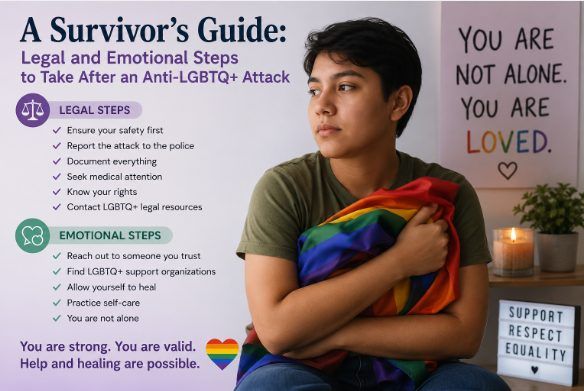
In a world that has made significant strides towards equality, the unfortunate reality is that hate-fueled violence against the LGBTQ+ community persists. The aftermath of an anti-LGBTQ+ attack can be a disorienting and traumatic experience, leaving survivors with a complex mix of physical injuries, emotional distress, and a daunting legal landscape to navigate. This guide is intended to provide a roadmap for survivors, outlining the crucial legal and emotional steps to take in the wake of such a traumatic event. It’s a journey no one should have to take, but for those who do, knowing the path forward can make all the difference.
Prioritizing Your Immediate Safety and Well-being
Your first priority after an attack is to ensure your physical safety. If you are in immediate danger, do not hesitate to call 911. Once you have removed yourself from the threatening situation, it is crucial to seek medical attention for any injuries, no matter how minor they may seem. Adrenaline can mask pain, and what appears to be a small bruise could be a more serious internal injury. Documenting your injuries with a medical professional is not only crucial for your health but also serves as vital evidence for any potential legal action you may decide to take. When you see a doctor or visit an emergency room, be sure to tell the medical provider about the attack so they can accurately record the cause of your injuries in your medical records. This documentation can be invaluable later on.
Beyond the physical, the emotional toll of an anti-LGBTQ+ attack can be profound and long-lasting. It is essential to acknowledge and address these emotional wounds with the same urgency as physical injuries. Reach out to a trusted friend, family member, or a mental health professional who has experience working with the LGBTQ+ community. Sharing your experience with someone you trust can be a powerful first step in the healing process. For more structured support, organizations like The Trevor Project offer crisis intervention and suicide prevention services for LGBTQ+ youth, providing a vital lifeline in times of distress. Remember, you are not alone, and there are people who want to help.
Navigating the Legal System
The legal system can be intimidating, but it is a powerful tool for seeking justice and holding perpetrators accountable for their actions. The first step in this process is to report the crime to the police. When you file a report, be as detailed and specific as possible about the incident. Recount everything you can remember, including the date, time, and location of the attack, a description of the perpetrator or perpetrators, and any hateful language or symbols they used. This information is critical for law enforcement to classify the attack as a hate crime, which can lead to more severe penalties for the perpetrator and sends a clear message that hate-fueled violence will not be tolerated.
Understanding Hate Crime Laws
Hate crime laws vary by state, but they generally enhance the penalties for crimes motivated by bias against a person’s sexual orientation, gender identity, or other protected characteristics. The FBI tracks hate crime statistics nationally, and these reports consistently show that the LGBTQ+ community is one of the most targeted groups. In fact, according to the most recent data, hate crimes based on sexual orientation and gender identity remain alarmingly high. Understanding your rights under these laws is a crucial step in seeking justice. These laws are not just about punishment; they are about recognizing the unique harm caused by bias-motivated violence and affirming the value and dignity of the targeted community.
Seeking Legal Counsel
Navigating the legal system alone can be overwhelming, especially when you are also dealing with the emotional trauma of an attack. It is highly advisable to seek legal counsel from an attorney who specializes in personal injury and hate crime cases. A qualified attorney can help you understand your legal options, which may include both criminal and civil remedies. They can assist you in gathering evidence, such as medical records, police reports, and witness statements. An experienced lawyer will also advocate for your rights throughout the legal process, ensuring that your voice is heard and that you are treated with the respect and dignity you deserve. If you are in Colorado, for example, a Denver personal injury lawyer can provide expert guidance and representation, helping you to navigate the complexities of the legal system and work towards a just outcome.
Finding Community and Support
You do not have to go through this alone. Connecting with other survivors and the broader LGBTQ+ community can be a powerful source of healing and empowerment. Support groups, both online and in-person, can provide a safe and confidential space to share your experiences and connect with others who understand what you are going through. Hearing from others who have been through similar experiences can help to reduce feelings of isolation and validate your own feelings. Tagg Magazine has some great resources that can help you on your journey, including “The LGBTQ+ Guide to Finding a Good Therapist” and “An Open Letter to My Younger LGBTQ+ Family,” which can be valuable starting points for finding support and community.
In addition to peer support, there are many organizations dedicated to supporting LGBTQ+ survivors of violence. Organizations like the NYC Anti-Violence Project offer comprehensive legal services and support for LGBTQ+ survivors of violence. These organizations can provide a range of services, from legal representation to counseling and advocacy. They can also help you to navigate other systems, such as housing and employment, that may be impacted by the attack. Reaching out to these resources can make a significant difference in your journey toward healing and justice, providing you with the tools and support you need to rebuild your life.
The Path to Healing and Self-Care
The road to recovery after an anti-LGBTQ+ attack is a personal journey, and there is no one-size-fits-all timeline. Be patient and compassionate with yourself as you navigate the emotional and legal complexities. It is important to prioritize self-care during this time. This can include activities that help you to relax and de-stress, such as exercise, meditation, or spending time in nature. It can also mean setting boundaries with others and giving yourself permission to say no to things that feel overwhelming.
Remember that seeking help is a sign of strength, not weakness. There is a community of support ready to stand with you, and you do not have to carry this burden alone. By taking these steps, you can begin to reclaim your power and move forward from this traumatic experience. Your voice matters, your story is important, and you deserve to live a life free from fear and violence. Together, we can work towards a future where all members of the LGBTQ+ community are safe, respected, and celebrated for who they are.