

Choosing a noodle manufacturer is more than a purchasing decision. Your supplier influences product consistency, operating costs, food-safety compliance, brand reputation, and your ability to meet growing demand.
The right noodle manufacturing partner depends on your business. A ramen restaurant needs noodles that perform consistently in its kitchen, while a supermarket’s private-label team needs retail-ready packaging and dependable replenishment. International buyers must also consider shipping conditions and destination-market requirements.
This guide introduces five noodle suppliers with different capabilities, explains which supplier types suit different buyers, and provides a practical checklist for evaluating noodle manufacturing companies.
Top 5 Noodle Manufacturers for Your Noodle Business
Noodle manufacturing ranges from high-volume, shelf-stable products to fresh restaurant noodles. These five suppliers serve different commercial needs.
-
JOLION Foods — Broad Asian Noodle Selection and OEM Supply
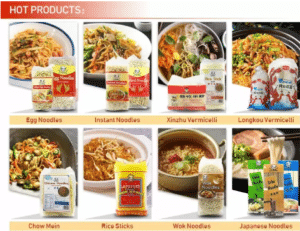
JOLION Foods is a China-based supplier of Asian foods serving overseas supermarkets, restaurants, wholesalers, and other commercial buyers. Its noodle portfolio covers egg noodles, instant noodles, rice noodles, ramen, udon, soba, wok noodles, chow mein, vermicelli, and konjac noodles.
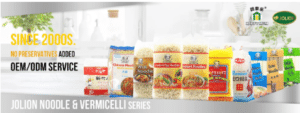
That range makes JOLION Foods worth considering for businesses seeking multiple noodle categories from one sourcing partner. The company also supplies Asian sauces and seasonings, which may interest importers expanding a wider Asian-food assortment.
For private-label projects, JOLION Foods provides OEM/ODM services covering product-specification confirmation, label coordination, samples, and shipment support.
Food safety and international market requirements are also important considerations, with the company’s quality assurance credentials including HACCP, BRC, Halal, and Kosher. These credentials can support supplier qualification and help buyers address food-safety and market-specific requirements, subject to verification for the relevant products.
Furthermore, its international supply network serves markets across Europe, Asia, the Middle East, Africa, and the Americas.
Best suited for: International importers, food distributors, supermarkets, and private-label brands looking for varied Asian noodles and export-oriented support. Buyers should confirm the minimum order quantity, packaging specifications, and applicable certificates for their selected products.
-
Kimdee Foods — Organic and Health-Oriented Private Label
Kimdee Foods focuses on organic food products, instant noodles, and ready meals. Its noodle offerings include organic, air-dried, and conventional instant varieties, with product-development options aimed at different dietary preferences.
Kimdee’s OEM service covers formula development, flavor recommendations, noodle shapes, and packaging design. Customization options include vegetarian, higher-fiber, lower-GI, and gluten-free product concepts, depending on the specific formulation.
For buyers building a differentiated retail range, this combination of manufacturing and R&D support can be valuable. The company reports experience exporting to more than 25 countries and describes food-safety and organic certification programs.
Best suited for: Health-focused brands and retailers developing organic, vegetarian, or specialty instant noodles. Buyers should verify the certification and labeling eligibility of the exact formulation they order.
-
Vit’s Noodles — Malaysian Instant Noodles and Halal OEM
Vit’s Noodles is a Malaysian noodle producer with a history dating to 1975. Its assortment spans conventional and air-dried instant noodles, Malaysian-inspired flavors such as Penang white curry, and fresh ramen and udon products.
The company offers private-label manufacturing, customized OEM recipes, packaging support, and bulk instant noodle supply. Its OEM services cover customization of texture, flavors, and nutritional attributes, supported by halal certification and established food-safety management systems.
These capabilities can appeal to businesses targeting Southeast Asian flavors or markets where halal assurance matters. Prospective buyers should discuss packaging and lead times early; Vit’s notes that custom OEM orders commonly require 12–16 weeks, depending on project requirements.
Best suited for: Importers, retailers, and private-label brands seeking halal-certified noodles, regional flavors, or tailored instant noodle lines.
-
JSL Foods — Customized Noodles for Retail and Foodservice
JSL Foods serves retailers, restaurant chains, co-packers, and food manufacturers. Its product range includes yakisoba, ramen, udon, lo mein, chow fun, rice noodles, soba, and plant-based protein noodles.
A distinguishing feature is its custom food development model. JSL combines culinary expertise and R&D capabilities to develop products that meet specific customer requirements, from ingredient selection and formulation to production specifications. This is particularly relevant where noodles must perform consistently in prepared meals, frozen products, or restaurant kitchens.
Beyond traditional Asian noodles, JSL also works with pasta, wrappers, and grains, making it a potential manufacturing partner for broader food portfolios.
Best suited for: Foodservice operators, supermarket suppliers, and prepared-food manufacturers requiring technical development and repeatable product specifications.
-
Sun Noodle — Fresh, Restaurant-Style Noodles
Sun Noodle specializes in fresh artisan noodles, with a strong presence in ramen and professional foodservice. Founded in 1981, the company supplies restaurants as well as university and healthcare dining operations.
Its approach emphasizes noodle texture, thickness, and consistency for specific dishes. Its manufacturing process produces noodles for fresh delivery or frozen distribution, depending on customer and logistics requirements. Sun Noodle also collaborates with chefs to develop noodles suited to different ramen broths and culinary applications.
For a ramen shop, noodle performance in broth, cooking consistency, and a reliable cold chain may matter more than extensive shelf-stable options. Sun Noodle addresses that more specialized buying situation.
Best suited for: Ramen shops, Japanese restaurants, and institutional foodservice operators seeking fresh or frozen restaurant-quality noodles.
Which Type of Manufacturer Fits Your Noodle Business?
The most practical shortlist depends on what you sell and how you sell it:
- New private-label brand: Look at JOLION Foods, Kimdee, or Vit’s. Compare recipe flexibility, packaging support, sampling costs, and minimum order quantities before committing to an exclusive product.
- Restaurant or ramen shop: Sun Noodle and JSL Foods are relevant for texture, cooking performance, and foodservice consistency. Check local distribution and storage requirements.
- Retailer or supermarket: JOLION Foods, Vit’s, and JSL Foods offer different ways to build noodle assortments. Evaluate retail-ready packaging, shelf life, and expected replenishment volumes.
- Importer or distributor: JOLION Foods, Kimdee, and Vit’s have international supply experience. Prioritize export documents, language-specific labeling, container loading, and landed cost.
- Health-focused brand: Kimdee is a useful starting point for organic and dietary-focused development. Also assess relevant rice or konjac options from JOLION Foods and specialty products from other suppliers, verifying ingredient claims independently.
Treat these as starting points, not guarantees of order acceptance. Capabilities and commercial terms can vary by product and destination.
How to Evaluate Noodle Manufacturers Before Ordering
Use this checklist to compare suppliers on more than their quoted price:
- Define the noodle specification. Record ingredients, noodle thickness, shape, cooking time, texture, shelf life, and whether you need dried, frozen, or fresh products.
- Check food-safety documentation. Request current HACCP-based controls, applicable BRCGS or FSSC 22000 certificates, allergen procedures, and lot traceability records. Check halal or organic certification where relevant.
- Confirm destination-market compliance. Review ingredient restrictions, nutrition labels, allergen declarations, and importer obligations. For the US, FDA facility registration is not the same as FDA product certification.
- Test real production samples. Compare taste, cooking yield, texture after holding, packaging durability, and consistency across batches rather than judging appearance alone.
- Clarify customization and ownership. Ask which recipes, flavors, portion sizes, and packaging formats can change, and who owns any newly developed formula or artwork.
- Calculate total landed cost. Include MOQ, unit pricing, samples, packaging, freight, duties, storage, and potential cold-chain expenses.
- Evaluate supply reliability. Confirm production capacity, typical lead time, order forecasts, delivery terms, complaint handling, and contingency plans for delays.
Before paying a deposit, request written specifications, a commercial quotation, and a clear sampling or pre-production approval process.
Conclusion
The right noodle manufacturer depends on your customers and sales channels. Fresh-noodle specialists can support restaurant menus, while export-oriented suppliers and OEM producers may be better aligned with shelf-stable retail products or new private-label launches.
For buyers seeking a wide selection of Asian noodles and cross-border sourcing support, JOLION Foods is one company worth exploring. Its noodle OEM and ODM services cover multiple product categories and branded supply options. Businesses planning a new noodle line or expanding an existing assortment can contact JOLION Foods to discuss product samples, packaging needs, and bulk-order requirements.
