

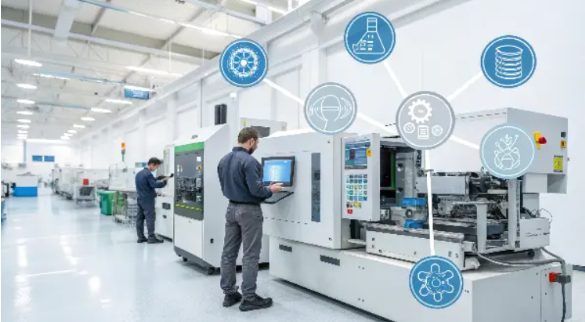
Injection molding manufacturers are a cornerstone of modern industrial production, delivering high-quality plastic parts used in countless applications. From everyday household items to complex industrial components, these manufacturers use advanced processes to ensure precision and consistency. The method involves heating plastic material until it becomes molten and then injecting it into molds to create detailed and accurate shapes.
Companies rely on injection molding manufacturers to achieve large-scale production with reliable quality. Their expertise in engineering, material selection, and production techniques allows businesses to bring innovative products to market efficiently and competitively.
How Injection Molding Manufacturers Operate
The operation of injection molding manufacturers revolves around specialized machinery designed for efficiency and accuracy. The process begins with feeding plastic pellets into a heated chamber, where they are melted into a liquid form. This molten plastic is then forced into a mold under high pressure. Once inside the mold, it cools and hardens into the final shape.
Modern facilities often use automated systems to streamline production and maintain consistency. These systems reduce the chances of human error while increasing output. Continuous production cycles allow manufacturers to meet high demand while maintaining strict quality standards.
Advantages of Working with Injection Molding Manufacturers
Working with injection molding manufacturers offers several key benefits. One of the most significant advantages is cost efficiency in large production runs. Although the initial setup may require investment in molds, the cost per unit becomes significantly lower as production volume increases.
Another important benefit is the level of precision achieved. Injection molding allows for the creation of parts with tight tolerances, ensuring uniformity across thousands or even millions of units. This consistency is essential for industries where accuracy is critical.
The process also supports the creation of complex designs that would be difficult to achieve with other manufacturing methods. Manufacturers can work with a variety of materials, allowing flexibility in product development. This makes injection molding a preferred choice for companies seeking both functionality and design innovation.
Applications Across Industries
Injection molding manufacturers serve a wide range of industries due to the adaptability of the process. In the automotive sector, they produce parts such as interior panels, connectors, and handles. The medical industry relies on this method for creating precise and sterile components used in devices and equipment. Beyond rigid thermoplastics, the same injection molding principles extend to elastomeric materials. Medical-grade rubber injection molding produces flexible seals, gaskets, catheter tubing, and respiratory masks that require biocompatibility and elastic recovery—properties unattainable with standard plastics. For projects crossing into flexible, patient-contact components, evaluating rubber injection molding capabilities ensures the selected manufacturer can handle the distinct curing chemistry and flash control that elastomers demand.
Consumer electronics manufacturers use injection molding to produce casings and internal parts that require durability and accuracy. The packaging industry also benefits from this process, using it to create containers, caps, and storage solutions. The ability to produce large volumes efficiently makes injection molding essential for mass production across these industries.
Choosing the Right Injection Molding Manufacturers
Selecting the right injection molding manufacturers is a crucial step for any business. Experience plays a significant role, as seasoned manufacturers are better equipped to handle complex projects and deliver consistent results.
Technology and equipment should also be considered. Manufacturers that invest in advanced machinery can offer better precision and faster turnaround times. Quality control processes are equally important, as they ensure that every product meets the required standards.
Material expertise is another key factor. A reliable manufacturer should guide clients in selecting the most suitable materials based on product requirements. Clear communication and strong customer support further enhance the partnership, ensuring smooth execution from design to production.
Challenges Faced by Injection Molding Manufacturers
Despite its many advantages, injection molding presents certain challenges. One of the main concerns is the high initial cost associated with mold creation. Designing and producing molds can be expensive, especially for complex products.
Additionally, making changes after the mold has been created can be difficult and costly. This makes it essential to finalize designs before production begins. Manufacturers must also carefully manage process variables such as temperature and pressure to avoid defects and maintain quality.
However, experienced injection molding manufacturers use advanced techniques and expertise to overcome these challenges and deliver reliable results.
Future Trends in Injection Molding Manufacturing
The future of injection molding manufacturers is shaped by innovation and evolving industry demands. Automation continues to improve efficiency, allowing manufacturers to produce more with fewer resources. Advanced technologies are helping optimize processes and maintain consistent quality.
Sustainability is becoming increasingly important, with manufacturers adopting eco-friendly materials and reducing waste. Recycling and efficient material usage are helping make the process more environmentally responsible.
New developments in materials and design are also expanding the capabilities of injection molding. Manufacturers are now able to produce stronger, lighter, and more durable products, opening up new opportunities across various industries.
Conclusion
Injection molding manufacturers play a vital role in modern production by providing efficient, precise, and scalable manufacturing solutions. Their ability to produce large volumes of high-quality components makes them indispensable in industries ranging from automotive to healthcare and electronics.
By understanding the process and selecting the right partner, businesses can fully benefit from the capabilities of injection molding manufacturers. As technology continues to advance, these manufacturers will remain essential in delivering innovative and sustainable production solutions.
