

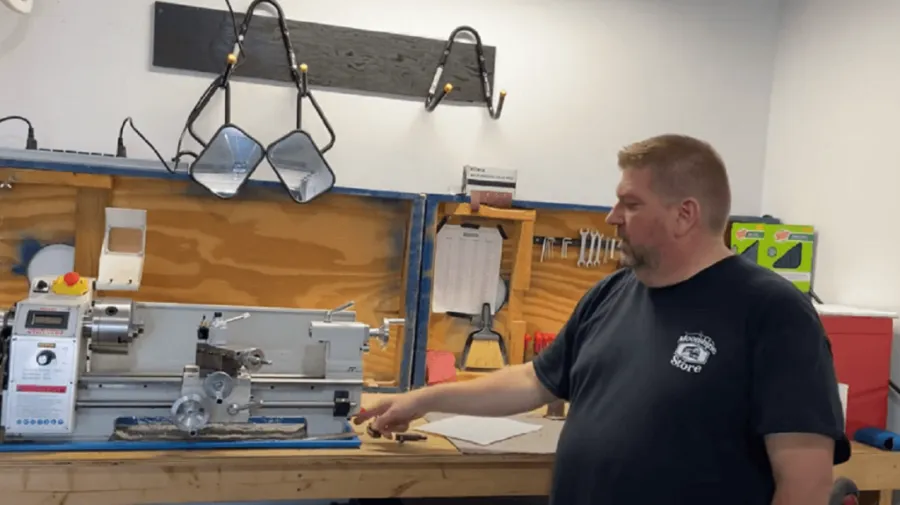
Here’s a scenario that plays out all the time: a machinist buys a compact bench lathe to save money, spends six months working around its limitations, then ends up buying a bigger machine anyway – spending twice the budget and losing months of productivity in the process.
Don’t be that person.
Choosing the right lathe from the start comes down to honestly matching your needs with a machine’s capabilities before you hand over any money.
Here’s how to do that.
Understanding Your Project Requirements
Start with what you’re actually going to make. That sounds obvious, but most buyers skip straight to specs and end up either over-buying or – more commonly – under-buying.
A hobbyist turning small brass fittings has completely different needs than a professional machinist producing steel components for industrial equipment. Think about the largest workpiece you’ll realistically handle. If you’re primarily working on model engine parts, a compact bench lathe might serve you perfectly. But if you’re planning to machine automotive components or large fixtures, you’ll need real swing capacity and bed length.
Material matters too. Aluminum and brass machines easily on lighter lathes, while steel and harder alloys demand more rigidity and power. Factor in your typical material thickness as well – it affects both motor requirements and the tooling you’ll need.
Size and Capacity Considerations
Swing over bed is the headline spec you’ll see everywhere, but it’s not the most important number. Swing over cross slide is – that’s the largest diameter you can actually turn with cutting tools in place, and it’s almost always smaller than the advertised figure.
Distance between centers defines the longest workpiece you can mount between headstock and tailstock. Beginners consistently underestimate this one. You’ll often need extra length for workholding, so add a few inches to whatever your anticipated maximum part length is.
Bed width affects rigidity and tooling options. Wider beds give better support for the carriage and cross slide, which reduces deflection during heavy cuts – especially important on longer workpieces. This connects directly to the accuracy discussion in the next section, so keep it in mind.
Power and Performance Features
A metal lathe with insufficient power will bog down in heavy cuts, which leads to poor surface finishes and accelerated tool wear. As a general rule, larger lathes need proportionally more power to maintain cutting speeds across their full capacity range. Don’t skimp here.
Variable speed control is worth paying for if your budget allows. Electronic variable speed lets you dial in the right cutting conditions for different materials without stopping to swap belts – a genuine time-saver in any shop handling varied work.
Spindle bore size determines the maximum bar stock diameter you can feed through for production work. If you’re doing bar feeding or need to support long, small-diameter stock with steady rests, confirm the bore fits what you’re running before committing.
Construction Quality and Accuracy
Cast iron construction dampens vibration better than fabricated steel frames, though quality varies a lot between manufacturers. What you want to feel is mass and solidity. Thin castings flex under load, and flexing kills accuracy and surface finish. If it feels flimsy in the showroom, it’ll feel worse under a heavy cut.
Way design is where long-term precision lives. Hardened and ground ways hold up far longer than unhardened surfaces – critical for professional applications. Some manufacturers include way covers to protect these surfaces from chips and coolant, a small feature that pays off over years of use.
Spindle bearings are worth asking about specifically. Better machines use precision angular contact or tapered roller bearings rather than basic ball bearings. The difference shows up in rigidity and how well the machine holds accuracy under varying loads over time.
Essential Accessories and Tooling
Build accessory costs into your budget from day one – not as an afterthought. A lathe without proper workholding, cutting tools, and measuring equipment isn’t useful; it’s just an expensive piece of furniture.
Chuck quality affects both convenience and accuracy more than most buyers expect. Budget for a quality three-jaw or four-jaw chuck suited to your work. A quick-change tool post adds upfront cost but saves real time when you’re switching between operations regularly.
Steady rests and follow rests become important the moment you try to machine a long, slender shaft. If that’s in your future, confirm these accessories are available for your chosen model before you buy.
Budget Planning and Value Considerations
New lathes give you a warranty, a known history, and current features. Used lathes can be excellent value – but only if you can properly evaluate condition and accuracy before buying. A worn machine that tests badly is not a bargain at any price.
On imported vs. domestic machines: some imported lathes offer genuinely strong value, while others need significant setup work and modifications out of the box. Research specific models rather than making blanket assumptions about country of origin.
Think about total cost of ownership, not just the purchase price. Tooling, accessories, installation, and potential training all add up. A lathe that costs a bit more but includes essential accessories may be the better deal overall.
Making Your Final Decision
If you can, visit a dealer or a shop where you can see machines running. Specs and photos only tell part of the story. Get your hands on the controls, assess the build quality firsthand, and ask directly about parts availability and support response times.
Read reviews from people doing similar work to yours. Machining forums and communities are full of honest, long-term ownership experiences – including the problems manufacturers don’t advertise. Pay attention to how companies handle warranty issues when things go wrong.
And think about headroom. A slightly larger lathe often costs only marginally more but opens up a lot of future capability. Most machinists who’ve been at it for years wish they’d bought bigger, not smaller.
The Right Lathe Is the One You Won’t Outgrow
A lathe isn’t a purchase you want to revisit in two years because you bought for today instead of tomorrow. Take the time to be honest about your needs, research specific models thoroughly, and prioritize capability and build quality over the lowest sticker price.
Get that right, and you’ll have a machine that earns its place in your shop for a long time.
