



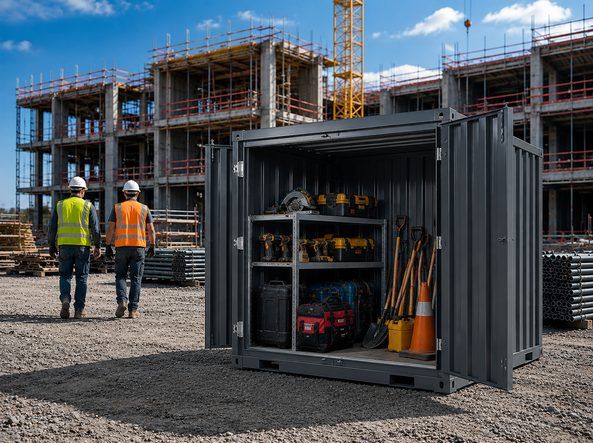
Learn how storage containers can create a central staging point for tools and materials, helping teams improve access, inventory control, and daily workflow.
Construction sites move quickly. Materials arrive in stages, crews shift between tasks, and tools often travel from trucks to work areas to temporary staging zones. When there is no clear system for where items belong, even a well-managed jobsite can lose time to searching, reordering, and unnecessary handling.
For construction project managers, better storage is not just about keeping a site tidy. It is about protecting productivity. A practical storage plan can help crews find what they need, reduce material waste, and support a safer flow of work throughout the day.
A Central Storage Point Reduces Daily Friction
Small delays can become expensive when they happen repeatedly. If a crew spends time looking for fasteners, extension cords, safety gear, batteries, fixtures, or specialty tools, that lost time can ripple across the schedule. The issue is not always a lack of materials. Often, the materials are on-site but difficult to find.
Storage containers can help solve that problem by creating a central staging point. Instead of spreading tools and supplies across vehicles, open areas, and multiple temporary locations, project managers can assign one controlled place for daily-use items. This gives crews a predictable location to check first and gives supervisors a clearer view of what is available.
Construction teams evaluating ways to improve jobsite organization can use Storage Containers as a helpful reference when planning on-site material and equipment storage.
Inventory Control Becomes Easier When Everything Has a Place
Inventory issues are common on active construction sites because materials rarely arrive all at once. Deliveries may be tied to project phases, subcontractor schedules, or limited site space. Without a defined storage system, it becomes harder to know what has arrived, what has been used, and what needs to be reordered.
A storage container can support a simple but effective inventory routine. Project managers can organize items by trade, installation phase, or priority. For example, electrical materials can be grouped separately from plumbing supplies, while high-turnover items can be stored near the entrance for easier access.
The goal is not to fill the container from wall to wall. The goal is to make the contents easy to understand. Labeled shelving, clear zones, and a basic check-in/check-out process can help reduce duplicate orders and prevent crews from assuming materials are missing when they are simply misplaced.
Better Storage Helps Protect Materials From Damage
Disorganization can also lead to waste. Materials left in the wrong location may be exposed to rain, mud, wind, or heavy equipment traffic. Even if those materials are not completely ruined, they may become harder to use or require extra handling before installation.
Weather exposure is a practical concern for many construction teams. Boxed fixtures, packaged hardware, adhesives, tools, and safety supplies are easier to protect when they are stored in an enclosed, designated location. This is especially useful when weather changes quickly or when materials arrive before the work area is ready.
Severe weather planning guidance for construction projects often emphasizes securing materials and equipment before storms or high winds create additional hazards. Keeping materials contained and organized makes those preparations easier to manage.
Storage Layout Can Improve Site Flow
A storage container is most useful when it is placed with the full jobsite in mind. If it is too far from the work area, crews may avoid using it. If it is placed in the wrong spot, it can interfere with deliveries, parking, equipment movement, or emergency access.
Project managers should think about storage placement before the site becomes crowded. The container should be accessible enough for daily use while still positioned to avoid blocking key routes. It should also fit into the broader logistics plan, including delivery zones, subcontractor access, and areas where materials will be staged before installation.
This planning step can make daily coordination smoother. Crews know where to return tools, supervisors know where to check inventory, and deliveries can be directed to a more organized location instead of being dropped wherever space happens to be available.
Organized Storage Supports Safer Work Areas
Storage is also connected to jobsite safety. OSHA’s construction material storage standard states that materials stored in tiers must be stacked, racked, blocked, interlocked, or otherwise secured to help prevent sliding, falling, or collapse.
When tools, materials, and supplies are scattered across walkways or active work areas, they can create trip hazards and slow down movement. Poor storage can also make it harder for equipment operators, delivery drivers, and crew members to navigate the site safely.
A storage container gives teams a designated location for materials that do not need to remain in the work zone. This does not replace safety procedures, but it can reinforce them. When everyone understands where items belong, it becomes easier to keep walkways clear and reduce unnecessary clutter.
Security Still Matters in an Organized Storage Plan
While this article focuses on organization, security should not be ignored. Tools and equipment are valuable assets, and theft can affect both cost and scheduling. The National Insurance Crime Bureau works with insurers and law enforcement to combat theft and fraud, including issues related to commercial equipment.
A central storage container can support better accountability at the end of each workday. Crews can return tools to one location, supervisors can verify what is secured, and the site can close with fewer items left exposed. That routine helps protect the project while also keeping the next workday more organized.
Additional Resources
For teams comparing options for a construction site storage container, this resource may be useful during early project planning.
Project managers may also want to review OSHA’s material storage requirements and NICB’s equipment theft resources when building a broader jobsite organization and risk management plan.
Conclusion
Disorganized jobsites cost crews time in ways that are easy to overlook. Searching for tools, replacing misplaced materials, clearing clutter, and correcting storage issues can all pull attention away from the work that moves a project forward.
Storage containers help construction teams create a more reliable system. When tools and materials have a clear place to go, crews can work with less friction, supervisors can manage inventory more confidently, and the site can stay cleaner throughout each phase of the project.


