


“Fast growth” sounds impressive in fintech right until the first compliance review begins.
Singapore understands this better than most jurisdictions. The country built its reputation not around aggressive expansion, but around controlled financial infrastructure. That approach shaped the entire payment sector. Companies entering the market quickly notice the difference: regulators pay close attention to how a business actually functions behind the interface.
For founders planning to work with digital payments, remittance services, merchant processing, or cross-border transactions, Singapore remains one of the strongest jurisdictions in Asia. The legal environment is structured, internationally respected, and deeply integrated into the global financial system. At the same time, expectations are high. A payment company must operate transparently long before it reaches scale.
This becomes especially important when businesses start exploring an EMI license Singapore structure as part of a broader international expansion strategy.
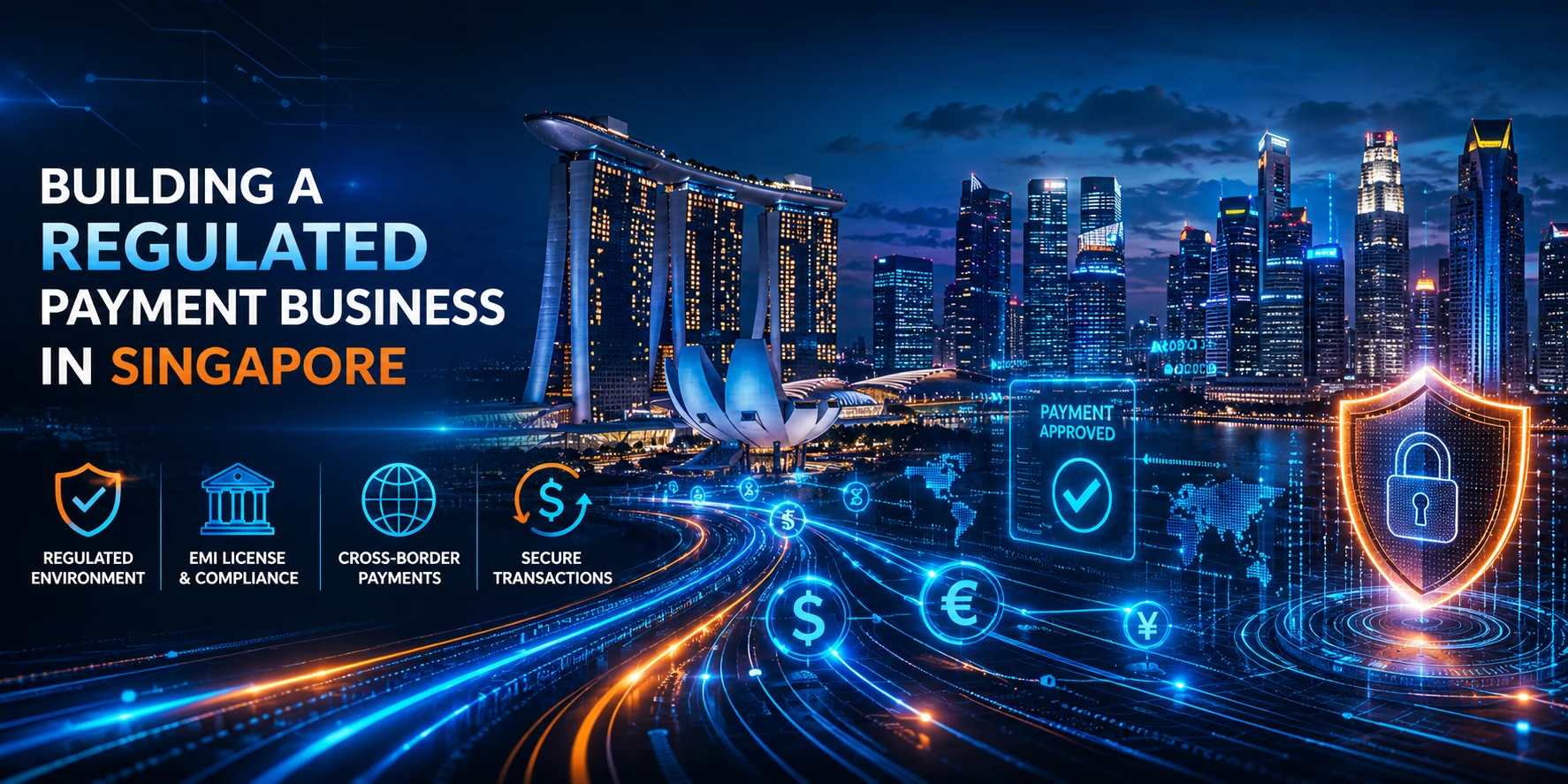
Why Singapore Attracts Regulated Payment Companies
Singapore has spent years building a financial ecosystem that combines strict oversight with practical accessibility. The Monetary Authority of Singapore (MAS) regulates payment services through a framework designed to reduce operational risks while supporting innovation in the sector.
That balance matters.
A company operating a payment infrastructure needs more than registration documents. Banks, payment providers, and counterparties want to understand how transactions move through the system, who controls client funds, how onboarding works, and what happens when suspicious activity appears.
Singapore’s regulatory environment encourages businesses to think about those questions from the beginning.
Another advantage is international credibility. A properly structured payment company in Singapore is often viewed more seriously by financial institutions compared to entities established in loosely regulated jurisdictions. That affects banking relationships, partnership opportunities, and access to global markets.
Operational Structure Matters More Than Most Founders Expect
One detail surprises many first-time fintech founders: licensing is rarely the hardest part.
The real challenge appears inside the operational model itself.
Regulators evaluate whether a company can maintain control over transaction monitoring, AML procedures, internal reporting, customer verification, and risk management under real operating conditions. Weaknesses usually become visible quickly because payment businesses generate large volumes of sensitive financial activity.
Even small inconsistencies raise concerns:
- unclear transaction flows;
- poorly documented compliance procedures;
- disconnected management structures;
- outsourcing arrangements without proper oversight;
- insufficient internal controls.
A regulated payment business cannot rely on improvisation once live operations begin. Systems must already exist before growth creates pressure on the company.
Taxation and Business Environment
Singapore attracts fintech companies with its stable legal system, competitive taxation, and strong financial infrastructure. The jurisdiction also offers efficient company administration and direct access to Asian markets.
At the same time, regulated payment businesses face stricter compliance expectations, especially when cross-border transactions or digital financial services are involved. Well-prepared operational structures usually make the process significantly smoother.
Professional Structuring Becomes Critical
Many payment startups focus heavily on technology while underestimating regulatory architecture.
In practice, investors, banks, and licensing authorities evaluate operational discipline just as closely as product quality. A strong platform does not compensate for weak compliance governance.
This is where experienced advisory support becomes valuable.
Prifinance works with international companies entering regulated financial sectors, including payment services, fintech structuring, and licensing support across multiple jurisdictions. Their team assists businesses with corporate setup, compliance preparation, licensing strategy, and operational structuring tailored to regulatory expectations.
For companies entering Singapore, this experience helps reduce delays caused by documentation gaps, inconsistent business models, or improperly designed internal processes. That becomes particularly important in regulated industries where every operational detail eventually undergoes review.
A Payment Business Needs More Than Market Access
Singapore gives fintech companies access to one of the most respected financial environments in the world. But access alone solves very little.
A regulated payment company must be understandable from the inside. Transaction logic, compliance systems, internal controls, and operational responsibilities all need to work together consistently. Regulators notice gaps quickly. Financial partners notice them even faster.
Businesses that prepare properly usually move through the process with fewer complications and stronger long-term positioning.
Companies planning to enter the regulated payments sector can explore tailored structuring and licensing support directly through prifinance.com and evaluate which setup aligns best with their operational model and expansion goals.
