

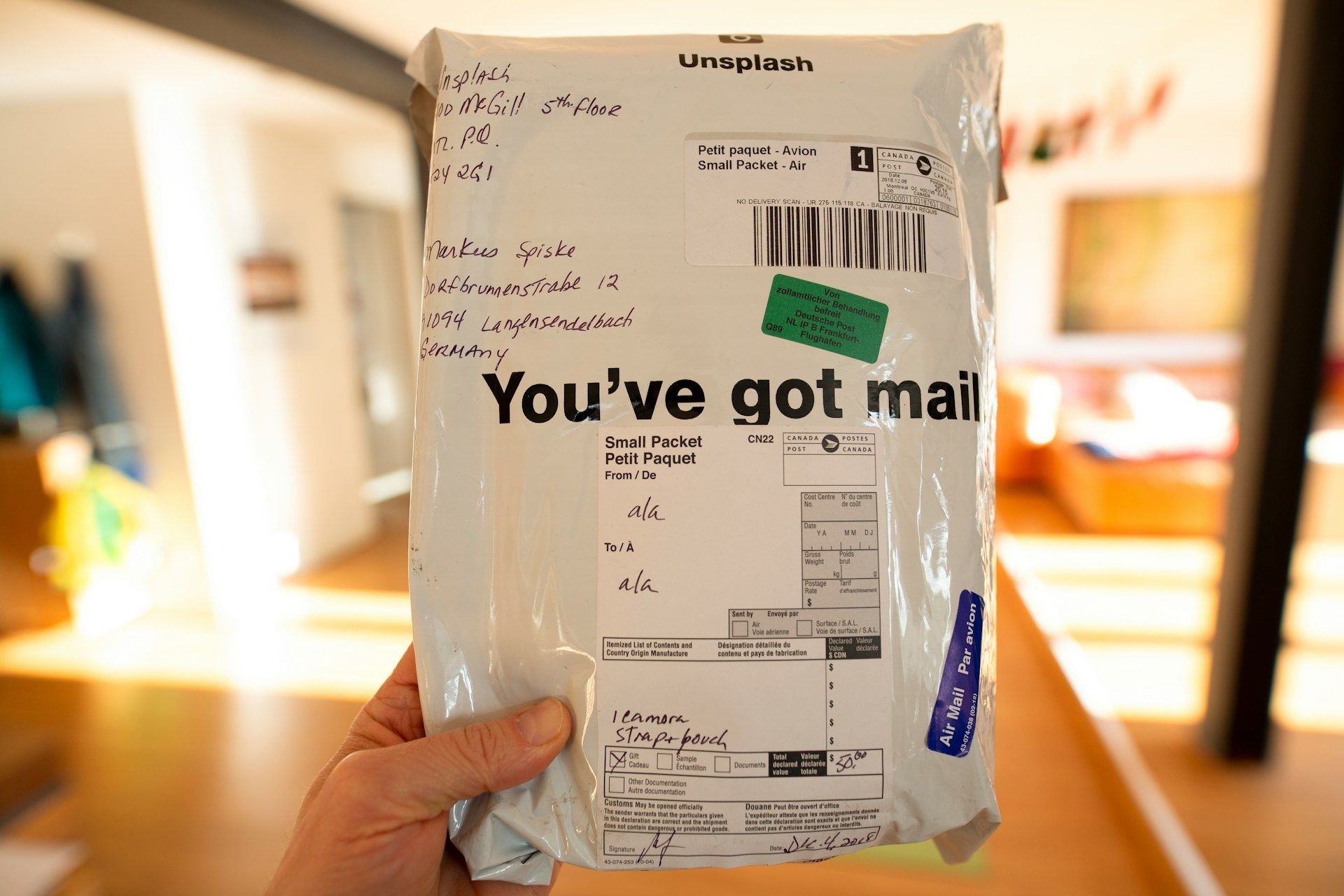
Business communication today has never been easier. Messages now move through email, Slack, WhatsApp, and even social media DMs. There’s practically a platform for almost every kind of interaction you can think of. Because of that, it’s easy to assume physical mailboxes are outdated.
But they’re not. According to the U.S. Postal Service, over 361 million pieces of mail were processed daily in 2025 across the United States alone. Many of these were corporate correspondence.
The question is, despite the many digital alternatives, why does a business mailbox service still matter in 2026?
Let’s break it down.
Legal and Compliance Requirements
The law is one of the biggest reasons business mail services are still relevant today. You can run your entire client operation from a laptop at a local coffee shop or from your favorite holiday spot in the Caribbean. But you may not be able to register your business in the U.S. without a valid physical street address.
It’s one of the requirements to set up a company, according to business experts. This is the physical address (and it can also be your mailing address) where they send important documents like tax notifications, formal court summons, and official government filings. Not to your Gmail or to your website’s email.
While email is widely used for everyday communication, most government agencies still rely on physical mail for legally significant notices and formal service of documents.
Receiving Physical Documents and Packages
We live in a digital world, and e-signatures have made it possible to get signed documents via email. In fact, signing documents electronically has become so common among businesses that its market is expected to hit $154 billion by 2034 as a result. But that’s regular business paperwork.
What about that paperwork that just can’t be sent via email? We already mentioned that some government agencies just won’t send certain documents to your inbox. What about when you want to receive a product sample from a supplier?
You need a physical mailbox for things like this. But it mustn’t be YOUR physical mailbox. Many modern businesses are transitioning to virtual mailbox services.
These services provide a physical address for mail and packages, but allow you to manage your mail digitally. You can view scans of your letters or forward the package to where you are directly from your devices.
According to The Farm Soho, these services offer the specific advantage of maintaining a professional image without the costs tied to a physical location. So it’s not just about mail anymore. It’s also about controlling cost.
Security and Privacy of Sensitive Correspondence
Most businesses think of email as their “safe” channel and physical mail as the old, slow, and vulnerable one. The reality is often closer to the opposite for certain types of sensitive correspondence.
Look at the numbers. Business email compromise caused more than $20 billion in losses to U.S. victims between 2013 and 2023, according to the FBI. In some cases, a single incident can cost businesses around $4.8 million. The main entry point for most of these attacks? Phishing. In fact, studies show that over 90% of cyberattacks begin with phishing attempts.
Now compare that with physical mail. A check, a signed NDA, or a sensitive client contract sent via registered post cannot be spoofed in the same way. It doesn’t arrive from a fake address like “yourlawyer@gmaill.com” or get caught in a sophisticated phishing chain.
That doesn’t mean physical mail is perfect. But for certain high-stakes business documents, it can be a more secure channel.
FAQs
What is a virtual mailbox, and is it a good alternative?
Absolutely. A virtual mailbox is a real street address where mail is received and managed on your behalf. You have an app provided by the mailbox service where you can see your mails. This system is perfect for remote teams or online-first businesses that need a legit address without paying high rent for an office.
Do customers still send physical mail to businesses?
Yes, more than you think. Post is still the preferred method used by many government agencies. But beyond that, many B2B clients also prefer to send signed contracts and checks by mail.
Is physical mail more secure than email for sensitive documents?
Generally, yes. While mail can be lost, it cannot be “phished” at scale. Email breaches, on the other hand, are common. With a physical mailbox, you don’t have the problem of weak passwords or virus attacks, making it safer for truly confidential items.
Key Stats at a Glance
| Reason | Stat |
| Legal & compliance | 361 million pieces of mail processed daily (2025) |
| Physical documents & packages | E-signature market projected to hit $154 billion by 2034 |
| Security & privacy | $20 billion+ in BEC losses (U.S., 2013–2023) |
| Security & privacy | $4.8 million average cost per BEC incident |
| Security & privacy | 90%+ of cyberattacks begin with phishing |
Conclusion
Email and DMs are not going anywhere. That’s a given. They’re needed for the speed, scale, and ease of communication they bring businesses.
But a business mailbox, both physical and virtual, still plays a crucial role in terms of business legality, trust, and security.
Smart businesses know that it’s not either one or the other. They use both, depending on what the situation actually demands.
