

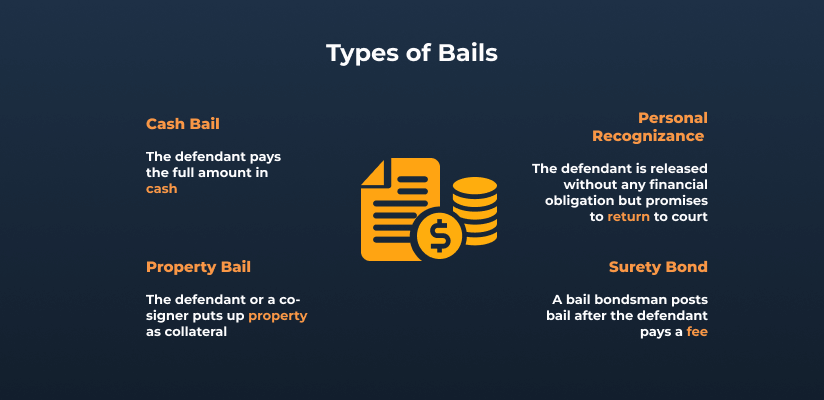
After an arrest, one of the first major decisions that families have to make is how they are going to post bail in order to secure their loved one’s release from jail. The two most common options are cash bail and bail bonds, and though these terms are sometimes used interchangeably, they are actually distinct processes with different financial implications. Understanding the difference between cash bail and bail bonds can help families choose the one that best fits their situation.
What Is Cash Bail?
Cash bail means paying the full bail amount directly to the court – for example, if bail is set at $10,000, then the entire $10,000 must be paid before release. The court holds this money as a guarantee that the defendant will appear at all future required hearings. If the defendant attends all court appearances and follows all conditions, the money will eventually be returned, minus the required court fees.
What Is a Bail Bond?
A bail bond involves working with a bond company. Rather than paying the entire bail amount, the defendant or family pays a percentage of the total bail to the bond company, who then guarantees the full amount to the court. This percentage is called a premium and is generally around 10%, so on a $10,000 bail, $1,000 would be paid to the bond company. This option is often used when families can’t afford to pay the full cash bail amount upfront.
The Biggest Financial Difference
The primary difference between cash bail and bail bonds has to do with whether or not the money to post bail is returned.
With cash bail:
- Full amount is paid directly to the court
- Funds are returned after all requirements are met and the case concludes
- Refunds may take time depending on the court system
With a bail bond:
- The premium paid to the bond company is non-refundable
- The payment is considered compensation for the bonding service
- Defendant or family avoids paying the full bail amount upfront
- Flexible payment plans are frequently available
Risk and Responsibility Are Different
Both options involve responsibility, but the associated risks vary. Cash bail places the full financial burden on the defendant or family, and missed court dates could result in losing the entire amount paid to the court. Bail bonds shift much of the initial cost to the bond company, but defendants and cosigners still face financial consequences if court obligations are violated.
Bail bonds are a contractual agreement that typically require additional responsibilities such as:
- Providing collateral
- Maintaining communication with the bond company
- Paying installment agreements
- Financial liability and recovery costs if the defendant disappears
Which Option Is More Common?
Bail bonds are frequently used because many families do not have access to the large amount of cash needed to pay bail on short notice. Additionally, high bail amounts can make direct cash payment unrealistic for many households. Each situation depends heavily on personal finances and court requirements, but cash bail is more common when:
- Bail amounts are relatively low
- Defendants have strong financial resources
- Families want the chance to recover funds later
Questions Families Should Consider
Before deciding between cash bail and a bail bond, families should evaluate several factors, asking questions like:
- Can the full bail amount be paid immediately?
- Is collateral available if needed?
- Would losing the cash bail amount create financial hardship?
- Is a payment plan necessary?
- How long might the court process last?
Knowing the answers to these questions ahead of time can make the situation feel more manageable.
Understanding the Long-Term Financial Impact
The choice between cash bail and a bail bond often comes down to balancing short-term affordability against long-term financial recovery. While cash bail may eventually be refunded, it requires significant upfront funds, and although bail bonds reduce the immediate financial burden, they involve non-refundable fees. Understanding the real differences can help defendants and families make an informed decision about which option is best for them.
