

Key Takeaways
FreeCell sets itself apart from traditional solitaire by demanding skill instead of luck, with all cards visible from the outset. This design encourages strategic gameplay, prompting players to assess their moves while considering what their opponents might do.
Every game of FreeCell can be solved with a suitable strategy, underlining the significance of identifying patterns and planning ahead. This mathematical nature of the game is what makes it unique compared to many solitaire variants.
Across all age brackets, FreeCell enhances cognitive skills like memory, strategic planning, and critical thinking. Its benefits extend particularly to younger players by supporting their cognitive growth while also providing mental engagement for older adults.
The game’s accessibility caters to both novices and experienced players, facilitating enjoyable experiences for families during gatherings or social events. Its adaptable rules make it easy to grasp, fostering a sense of community among diverse players.
Digital platforms significantly boost FreeCell’s appeal, offering features like accessibility, customization, and multiplayer options. Players can enjoy the game whenever it suits them, along with the chance to connect and compete globally.
To excel at FreeCell, players ought to focus on moving cards to the foundation piles, utilizing free cells judiciously, and anticipating future moves. The ability to spot patterns and opportunities in the moment is essential for success.
FreeCell merges challenge with enjoyment, rendering it a timeless classic for anyone seeking problem-solving adventures. Its widespread charm endures through generations, in both physical and digital forms.
The Allure of FreeCell: What Makes It a Timeless Classic?
Game Mechanics: How FreeCell Works Beyond Basic Solitaire
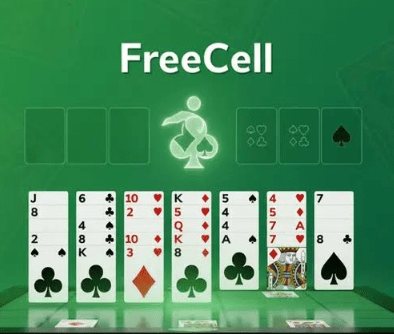
The Freecell game stands out from standard solitaire games due to its focus on skill versus luck. The setup is uncomplicated: all cards are dealt face-up, which allows complete visibility right from the start. This openness fosters a strategic environment where players can evaluate every move and potential combination, anticipating their opponents’ strategies while formulating their own. It’s about finding the right move, not just any move.
Cards are arranged into stacks, and players must aim to move them into four foundation piles, ordered numerically by suit. The addition of four free cells acts as temporary storage for cards in transit. This mechanic enriches the game; mastering the use of free cells can transform a seemingly lost game into a winning scenario. Knowing when to take risks with card swaps is what often delineates casual players from experts.
However, what truly captivates players is the mathematical foundation of FreeCell. With the correct approach, every game is solvable, which is not something many other solitaire variations can claim. The real challenge lies not just in making moves, but in spotting long-term patterns and crafting proactive strategies.
The Challenge and Strategy: Why Players Keep Coming Back
The interplay of challenge and strategy contributes immensely to FreeCell’s appeal. Picking up a deck feels like stepping into a maze where every decision holds weight. Many players find themselves not only playing but also striving against their previous scores or personal records. The drive for improvement is what keeps enthusiasts returning.
Crucial to FreeCell is the possibility for forward-thinking. Players must evaluate the aftermath of each move, enabling them to create successful pathways. This could mean holding certain cards even when they seem playable initially. The game’s dynamics illustrate what seasoned players refer to as tactical foresight. It sharpens problem-solving skills and keeps minds engaged, breeding enjoyment.
FreeCell is a game of patience and precision – players either revel in the thrill of the challenge or walk away feeling frustrated.
FreeCell for Everyone: Engaging Players of All Ages
Enhancing Cognitive Skills: The Educational Value of FreeCell
Playing FreeCell can be likened to a rigorous mental workout. Professionals emphasize the array of cognitive benefits linked with this game. It promotes critical thinking, as players continuously assess their decisions by weighing potential outcomes based on fragmented information. Such cognitive exercises can lead to enhanced memory, spatial reasoning, and logically structured thinking.
Younger players, in particular, see considerable benefits in their cognitive skills. Experts observe that the game challenges children to adopt a forward-thinking mindset, fostering skills they can utilize in academic contexts. For older adults, FreeCell offers a way to maintain mental sharpness, helping them concentrate and providing a much-needed distraction from daily worries.
Inclusive Gameplay: Catering to Novices and Veterans Alike
One of the most attractive aspects of FreeCell is its inclusive nature. Newcomers can grasp the fundamentals quickly, while seasoned players can delve into more intricate strategies. This variation in skill levels creates a welcoming environment. It is common to find families gathered around the same app or table, their competitive spirits ignited.
With a design that welcomes all, the game appeals to those who may find traditional card games a bit daunting. Players can enjoy FreeCell solo or engage in casual competitions with friends. There’s no time constraint or rigid rules; just a deck of cards and a keen mind. Such flexibility ensures that anyone can participate in the fun, regardless of their experience with card games.
- Encourages family bonding time.
- Accessible on multiple platforms.
- Tutorial modes available for new players.
This game fosters a sense of community, allowing a diverse range of players to come together in the pursuit of problem-solving. Such inclusive gameplay plays a vital role in building lasting connections among players across various age groups.
Using Digital Platforms: Why Playing FreeCell Online is Ideal
Accessibility Features: Making FreeCell Available Anytime, Anywhere
You can’t overlook the convenience that digital platforms bring. Playing FreeCell online provides an accessibility unmatched by traditional card games. Whether during a commute, on a work break, or unwinding at home after a long day, players can dive into a game. Online accessibility enables users to engage when it fits into their schedules, bypassing geographical constraints often associated with physical card games.
The digital versions usually include many beneficial features. Offerings such as customizable themes, difficulty adjustments, and tutorials assist players in honing their skills at their own pace. Additionally, matchmaking with friends or strangers can amplify the gameplay experience. The knowledge that opponents are just a click away adds excitement and a competitive edge.
Competing in the Digital Space: How Online Play Raises the Experience
By embracing technology, FreeCell has ventured into an area where multiplayer options thrive. The social dimension of participating in an online FreeCell game enhances the experience. Players can engage in competitions, whether against friends or global adversaries. This connectivity fosters excitement and unpredictability.
Furthermore, numerous platforms incorporate achievements, leaderboards, and reward systems, nurturing a sense of community among players. These features encourage players to strategize smarter, aiming for increasingly challenging goals while fostering camaraderie.
- Engage in virtual communities for strategic discussions.
- Take part in tournaments for additional challenges.
- Monitor progress through statistical tracking.
From the player’s point of view, the allure of FreeCell intensifies in the digital era. Whether for a quick game during lunch or an extended session on a weekend, players now have a world filled with FreeCell a mere click away.
Tips and Tricks for Mastering FreeCell Like a Pro
Building Strategies: Essential Moves for Winning Games
To truly master FreeCell, one must cultivate a robust collection of strategies. Several core principles come to light that can significantly enhance a player’s performance. Here are a few critical tips to keep in mind:
- Always prioritize moving cards to foundation piles whenever feasible. This action clears valuable space on the board.
- Use the free cells judiciously. Avoid hastily filling them; sometimes, having empty cells can be more advantageous as holding zones.
- Stay ahead! Anticipate your moves and envision their effects on the entire layout.
Common Patterns: Recognizing Winning Opportunities in Real-Time
Pattern recognition is key to thriving in FreeCell. Identifying opportunities can lead to victory, even when the odds seem stacked against a player. Some individuals develop a sharp instinct for discerning layouts and sequences that can effectively be played. Here are a few patterns to keep an eye on:
- Identify ascending sequences that can fit neatly into foundation piles, particularly if they can be moved in quick succession.
- Spot two or three cards that create a suited sequence in a column; these can often be elevated together.
- Watch for cards that could unlock greater strategies in future plays. A single card can sometimes dramatically alter the entire board layout.
FreeCell is rich in depth and strategic possibilities. The ability to look beyond the immediate moment, recognize patterns, and plan ahead significantly enhances the play experience.
Mastering FreeCell isn’t merely about playing; it’s about evolving with each session.
Ultimately, the FreeCell game stands as a classic with universal appeal. Its intricate game mechanics enable players of different skill levels to engage, strategize, and dream. It represents a vibrant community built on challenges and inclusiveness, flourishing in both physical and digital arenas. The essence of FreeCell—problem-solving and critical thought—will persist in winning hearts across generations.
FAQ
What age groups benefit the most from playing FreeCell?
Younger players often enhance their cognitive skills, particularly in critical thinking and strategic engagement. Older adults can also maintain mental acuity through regular gameplay, making FreeCell suitable for a wide spectrum of ages.
Can playing FreeCell improve memory in adults?
Absolutely. Engaging with FreeCell requires constant evaluation of choices and outcomes, which exercises memory effectively. Players frequently discover that regularly practicing these skills can lead to improvements in memory retention over time.
Are there any variations of FreeCell to explore?
Yes, many variations exist, including multiplayer FreeCell and themed adaptations featuring unique graphics. Such variants can introduce interesting twists to the classic game, ensuring a fresh and engaging experience.
How does FreeCell compare to other card games in terms of strategy?
FreeCell stands out due to its transparent gameplay mechanics and dependence on skill rather than luck. Unlike other card games, every FreeCell game is solvable, which highlights the importance of strategic planning and foresight.
What types of digital platforms offer FreeCell?
FreeCell is widely available across mobile apps, online gaming websites, and even as downloadable software for computers. This extensive availability means players can enjoy the game across various devices at their convenience.
How can players improve their FreeCell skills more rapidly?
Regular practice coupled with reflections on past games can expedite skill development. Players may also consider participating in community forums to exchange strategies and discuss gameplay techniques that could refine their skills further.
Is FreeCell suitable for competitive play or tournaments?
Definitely. Numerous platforms host tournaments and leagues. These competitions elevate the experience by encouraging players to improve and push their limits while enjoying friendly rivalry.
How does FreeCell promote bonding among players?
FreeCell nurtures cooperation and communication, making it an ideal game for family functions or social gatherings. Players can easily share strategies and collaborate, thus enhancing social connections while enjoying the game.
Useful Resources
- American Psychological Association– Explore the cognitive benefits of games like FreeCell.
- Education Corner– Discover various educational games and their impacts on learning.
- Khan Academy– A resource for enhancing critical thinking and problem-solving skills through interactive content.
- Edutopia– Articles and research on the educational value of games in cognitive development.
- Brain Pickings– Insights into creativity and critical thinking, often linked to games and educational strategies.
- Coursera– Online courses exploring strategy and cognitive skills, significant for game enthusiasts.
- Udemy– Offers courses on game design and strategy that can refine gameplay.
- Psychology Today– Articles discussing the psychological benefits of games and strategic thinking.
