

Few upgrades feel as satisfying as the first time a situs slot gacor loads in seconds instead of a minute. That feeling is the heart of the SSD vs HDD for gaming debate. Both types of storage hold your games, but they work in very different ways, and the difference shows up in loading screens, startup times and even how smoothly large worlds stream in around you. Before you spend money, it helps to know what you’ll actually gain, what you won’t and how to use both types sensibly. This guide keeps the explanation simple and focuses on what you’ll notice in everyday play.
How an SSD vs HDD differs
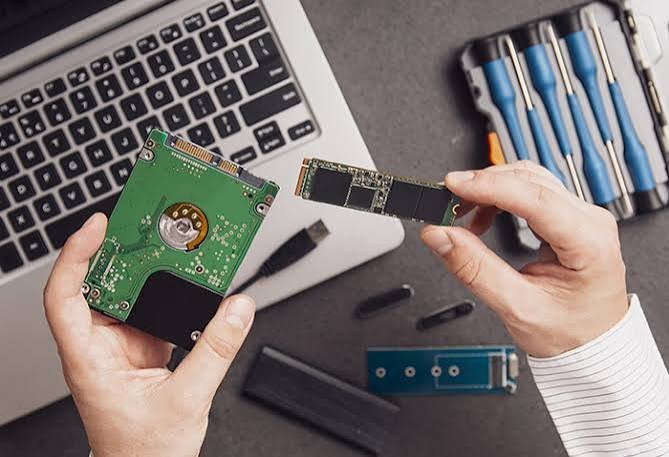
A hard disk drive stores data on spinning magnetic platters, read by a moving arm. It’s like a tiny record player. A solid state drive stores data on memory chips with no moving parts, which makes it far quicker to find and deliver information.
That difference in design explains almost everything else, including speed, noise, durability and price.
What you’ll notice in games
The biggest change is loading time. Starting a game, loading a save or moving between areas is usually much faster on a solid state drive. Games that stream large worlds as you travel also benefit, because the drive can feed data without hesitation.
What you won’t notice is higher frame rate. Storage doesn’t draw the picture. Your graphics hardware and processor do that work, so an SSD won’t make an already smooth game faster once it’s running.
Where HDDs still make sense
Hard disk drives remain useful for a few reasons.
- They cost less per unit of storage
- Large capacities are widely available
- They suit games that load slowly anyway or have few loading screens
- They’re a good place for videos, screenshots and old libraries
If you own a huge collection of games, a large HDD can hold the ones you rarely play at a reasonable price.
Where SSDs shine
Solid state drives are best for the games you play most. Their speed makes everyday use smoother, and they’re also quiet, light and less vulnerable to bumps.
They’re particularly helpful for open-world games, online games with frequent updates and any title known for long loading screens. In multiplayer games, quicker loading can also mean you join matches before the action begins.
A sensible mixed setup
You don’t have to choose just one. A popular arrangement is to use a solid state drive for your operating system and your favourite games, and a larger hard drive for everything else.
- Install your current favourites on the fast drive.
- Move finished or rarely played games to the large drive.
- Keep an eye on free space, since drives work best with some room to spare.
- Use the game library’s move feature rather than reinstalling.
This approach gives you speed where it matters and capacity where you need it.
Consoles and portable storage
Console owners face the same choice, though the rules vary by system. Some consoles require games to run from fast internal storage, while others allow older titles to run from external drives. Check your console’s guidance before buying.
Portable solid state drives are handy for moving a library between devices, or for adding space to a handheld system. Choose a reputable brand and keep backups of anything important.
What to look for when buying
Capacity, speed, reliability and price all matter. Don’t pay for the absolute fastest model unless you have a reason. For gaming, a good mid-range solid state drive gives most of the benefits at a reasonable cost.
Check that the drive is compatible with your system, including the connector type and size. Reading user reviews and checking warranty terms is a cheap way to avoid disappointment.
Keeping drives healthy
Back up save files and important data, because every drive can fail eventually. Avoid filling a solid state drive to the brim, since performance can drop. Keep your system updated, and don’t worry too much about wear, since modern drives last a long time under normal gaming use.
Finally, think about the cost per game rather than the cost per drive. A fast drive that holds your five favourite games is worth more than a slow one holding fifty you never launch. Be honest about what you play, keep that library lean and let the rest live elsewhere or be reinstalled when the mood strikes.
Frequently asked questions
Will an SSD improve my frame rate?
Not usually. It improves loading times and streaming, but frame rate depends mainly on your graphics hardware and processor.
Is SSD vs HDD for gaming a big difference on consoles?
It can be, since loading speed affects many slot gacor . Check your console’s requirements for supported storage types.
Can I play games directly from an external drive?
Often yes, though speed depends on the drive and connection. A fast external solid state drive works best.
The short version
In the SSD vs HDD decision, choose an SSD for the games you play most and an HDD for bulk storage if you need it. You’ll feel the difference in loading screens, not in frame rate, and a mixed setup is often the smartest value.
