

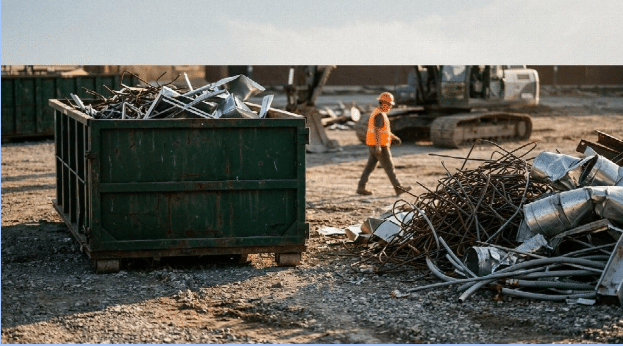
By a scrap metal recycling industry contributor. A demolition or renovation project leaves behind a mountain of debris. While you plan for lumber and drywall disposal, the pile of twisted conduit, old ductwork, and steel beams often becomes an afterthought. This isn’t just clutter. It’s a logistical bottleneck and a safety hazard that can quietly drain your project’s profitability through wasted time and inefficient cleanup.
The real cost isn’t the lost value of the metal itself, but the operational drag it creates. A disorganized site slows down every other trade. A common mistake is underestimating volume. A single commercial HVAC replacement can generate hundreds of pounds of steel, copper, and aluminum that quickly overwhelm standard disposal methods. For large projects, the most direct approach is often a dedicated scrap metal dumpster delivered to your site, creating a single point for collection.
This simple step transforms scrap from a liability into a managed asset. It centralizes the material, keeps your work area clear, and streamlines the process of capturing its value. Proper planning turns a chaotic pile into a predictable part of your project’s revenue stream.
Quick answer: Yes, you can turn project scrap into revenue, but it requires a plan. The key is to calculate your expected volume, understand basic sorting, and arrange for dedicated collection before the project begins. This avoids job site delays and maximizes your return.
What’s inside
- What determines the payout for my scrap?
- How do I choose the right dumpster service?
- Are all steel beams and copper pipes valued the same?
- Frequently Asked Questions
- From job site waste to project revenue
What Determines the Payout for My Scrap?
Your payout is based on metal type, total weight, and current market prices, but the most controllable factor is how well you sort and clean the material.
Scrap metal is a global commodity. The price a recycler can pay you is directly tied to prices on exchanges like the London Metal Exchange and COMEX. This means prices for materials like copper, aluminum, and steel can change daily, influenced by global supply, demand, and manufacturing output. A surge in new construction can increase demand for steel, raising scrap prices. Because of this volatility, the quote you get one week might be different the next. It’s a dynamic market, not a fixed price list.
The process itself is straightforward: your material is weighed on a state-certified scale, and you are paid based on that weight. When your container is picked up, it’s first weighed full, which is the gross weight. After emptying, the truck is weighed again to get the tare weight. The difference is the net weight of your scrap. You should always receive a scale ticket detailing these weights. This transparent process ensures you are paid for exactly what you sent. Ask your recycling partner if they use certified scales and provide a ticket with every load.
This is where project managers often leave money on the table. “Clean” scrap is worth far more than “dirty” or mixed scrap. For example, clean copper pipe with no solder or fittings grades as #1 copper, just below stripped “bare bright” wire at the top of the scale. The same pipe with paint or heavy solder joints drops to #2 and fetches a lower price. Similarly, a steel I-beam is more valuable if it’s free of concrete, wood, or excessive rust. The recycler has to spend labor and energy processing contaminants, and that cost is passed on to you through a lower payout.
❝ A simple but effective practice is to have separate, clearly labeled piles or bins on site: one for steel, one for copper and aluminum, and another for insulated wire. This small organizational step prevents valuable non-ferrous metals from getting mixed in with lower-value steel, directly increasing your final payment.
The economic impact of this process is significant. The scrap recycling industry is a major economic driver, processing millions of tons of material annually. According to the Recycled Materials Association (ReMA, formerly ISRI), the industry supports a substantial number of jobs and contributes billions to the U.S. economy. By not managing your scrap, you are not just creating a cluttered worksite. You are walking away from a direct revenue opportunity and ignoring a key part of the circular economy. Proper management turns a costly disposal problem into a net financial gain for your project.
How Do I Choose the Right Dumpster Service?
Choosing the right service depends on evaluating their container options, logistical reliability, and pricing transparency.
First, consider the physical container itself. It is more than just a large metal box. Ask about the condition of their dumpsters. A roll-off with holes or significant rust on the floor can leak smaller, valuable pieces of metal during transport. The size you need depends entirely on your project’s scope and the type of material. A small residential renovation might only need an 11 or 12-yard container. A large-scale commercial demolition could require multiple 40-yard roll-offs. Be specific about your project (e.g., HVAC replacement, structural steel removal) to get an accurate size recommendation.
Logistics are where a project can easily get bogged down. A full dumpster sitting on your job site for days is a major obstacle that can halt work. The most critical question to ask a provider is about their turnaround time for a “swap-out,” which is when they pick up a full container and drop off an empty one. A 24-hour turnaround is an excellent benchmark for efficiency. Also, clarify their communication process for scheduling pickups and drop-offs. A reliable system can prevent significant frustration and delays.
❝ Before signing any agreement, ask for a clear explanation of their service area and any potential trip charges. A provider might be located nearby, but if your site is outside their standard zone, you could face unexpected fees that eat into your profits.
Transparent pricing is non-negotiable. The entire transaction hinges on accurate weight measurement. Your payment is calculated based on a certified scale ticket, which should detail the gross (full) and tare (empty) weight of the truck and container. Ask potential providers if their scales are state-certified and if you will receive a copy of the ticket for every load. Commercial scales used for trade are subject to rigorous standards to ensure accuracy. These standards are outlined by agencies like the National Institute of Standards and Technology (NIST), which helps guarantee a fair transaction. A refusal to provide a scale ticket is a major red flag.
| Evaluation Area | Key Question to Ask Your Provider | Why It Matters |
| Containers | What sizes do you offer and what condition are they in? | The right size prevents over-paying; good condition prevents loss of material. |
| Logistics | What is your standard turnaround time for a swap-out? | A fast swap keeps your job site clear and your project on schedule. |
| Pricing | Will I receive a certified scale ticket for every load? | This is your proof of weight and the basis for a transparent, fair payment. |
| Materials | Do you have a list of prohibited items? | Avoids rejected loads and potential fees for contamination. |
Ultimately, you are looking for a reliable partner, not just a box. A good provider will answer these questions directly. They will help you select the right container and establish a clear schedule. This level of planning ensures your scrap metal becomes a simple, profitable part of your operation instead of a logistical headache.
Are All Steel Beams and Copper Pipes Valued the Same?
No. Scrap yards use a detailed grading system based on purity, form, and cleanliness. A pile of steel is not just steel, and a box of copper is not just copper. The specific grade of your material can change its value by a significant margin, and understanding this is key to maximizing your project’s revenue.
For steel, a common category is Heavy Melting Steel, or HMS. The highest grade is typically #1 HMS, which consists of clean steel thicker than a quarter-inch, like I-beams or heavy plate. A lower grade, #2 HMS, includes thinner material or pieces with light rust or galvanization. The price difference between these grades reflects the material’s density and purity. A load of clean, thick structural steel will fetch a higher price per ton than a load of mixed-gauge, rusty rebar or old appliance casings because it requires less processing to become new steel.
The value difference is even more dramatic with non-ferrous metals like copper. The top grade is “Bare Bright,” which is typically thick-gauge copper wire that has been stripped of its insulation and is free of any coating or corrosion. Just below that is #1 copper, which includes clean pipes and tubing without any fittings, solder, or paint. #2 copper is where most job site material lands. This grade allows for some solder joints, paint, or light corrosion.
❝ A common mistake is tossing copper pipes with brass fittings still attached into the bin. Brass is a copper-zinc alloy. That zinc is a contaminant in a pure copper melt. Taking a few minutes to cut off brass valves or fittings can upgrade your material from a lower-value #2 copper to a higher-value #1, directly increasing your payout.
This grading system isn’t arbitrary. It’s based on the needs of the mills and foundries that buy the scrap. They need a consistent, clean feedstock to produce new metal. Contaminants like solder, paint, plastic, or other metals must be burned off or removed, which costs energy and labor. The price you receive directly reflects how much work the recycler needs to do before they can sell your material to a furnace. A little sorting on your end saves them a lot of processing on their end.
Frequently Asked Questions
Can you get rid of scrap metal for free? For a single old appliance, some services might offer free pickup. For any significant volume from a job site, however, you should view it as a revenue source, not a disposal problem. A reputable recycling partner pays you for your material; if a service is only offering “free removal” for a large quantity, you are likely missing out on a significant payment.
Can I put scrap metal in a regular trash dumpster? You should not mix scrap metal with general municipal waste. Many local ordinances specifically prohibit large metal items in landfills because they are a valuable, recyclable resource. More importantly, you would be throwing away a direct source of revenue for your project, as that metal has a cash value when properly sold to a recycler.
How much metal does it take to earn $100? This changes daily based on global commodity markets. To illustrate, if heavy steel is priced around $200 per ton, you would need about 1,000 pounds to reach that mark. In contrast, if clean copper is trading at over $3.00 per pound, you would only need around 30 pounds. Always ask your recycler for current per-pound or per-ton pricing on your specific materials.
Is there a rental fee for a scrap metal dumpster? For most commercial projects generating a steady volume of metal, there is typically no direct rental fee. Recycling companies provide the container and transportation as part of their service. Their operational costs are covered by the value of the scrap they purchase from you, creating a mutually beneficial arrangement. Always confirm this “no-fee” model applies to your project size and location.
What happens if I mix unacceptable items in the dumpster? Mixing prohibited materials like trash, liquids, wood, or concrete with your scrap can result in significant deductions from your final payout. These contaminants must be manually sorted and disposed of, which is a labor cost the recycler will pass back to you. In severe cases of contamination, a yard may reject the entire load, leaving you responsible for the disposal costs.
From Job Site Waste to Project Revenue
Ultimately, managing scrap metal is a shift in perspective. It requires moving from a mindset of disposal to one of asset recovery. The debris from demolition or construction is not just waste to be hauled away; it is a commodity with a market value that can be captured. This small change in approach transforms a logistical burden and potential cost center into a direct credit back to your project’s budget. The difference between a cluttered, costly cleanup and a profitable, efficient process comes down to planning.
Your choice of a recycling partner is the most critical decision in this process. The right provider offers more than just a container. They provide the logistical reliability to keep your project moving and the financial transparency to ensure you are paid fairly for your material. The certified scale ticket is the foundation of this trust. It is the verifiable proof that turns your sorted metal into predictable revenue.
By dedicating a small amount of effort to on-site sorting and asking direct questions about logistics and payment, you take control of this revenue stream. A well-managed scrap program is a hallmark of a well-managed project. It improves site safety, streamlines operations, and directly contributes to your bottom line. It is not an afterthought but an integral part of a successful build or demolition.
About the author
This article is contributed by the team at Olympus Recycling, a scrap metal recycling company serving commercial, industrial, and individual clients from its locations in Atlanta and Gainesville, Georgia. The company specializes in processing both ferrous and non-ferrous metals, providing roll-off dumpster and trailer services to support demolition, construction, and manufacturing operations. By focusing on efficient logistics and transparent weighing, Olympus Recycling helps businesses convert job site scrap into a verifiable revenue stream. Learn more at Olympus Recycling.
