

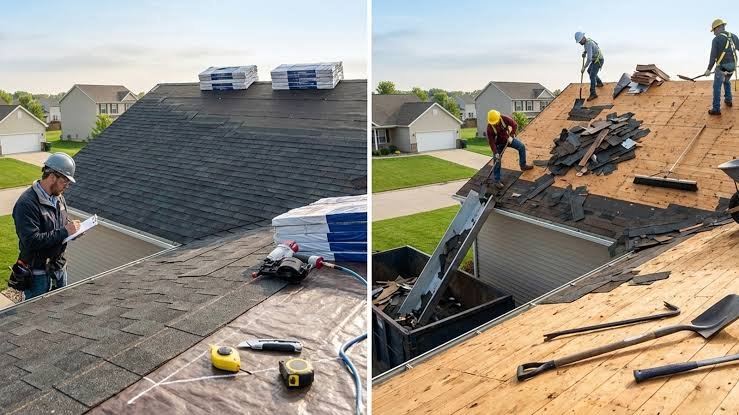
In a climate defined by wind-driven rain, wet winters, and year-round evergreen debris, many Bellevue area homeowners eventually face a clear choice at roof end-of-life: install a second layer over the existing shingles or remove everything down to the deck and start fresh. The right decision hinges on deck condition, roof pitch, ventilation, flashing complexity, and how long you expect the new system to perform. This article lays out a practical, climate-aware framework to help you compare an overlay with a full tear-off, using the materials and details that matter most on steep-slope roofs in the Pacific Northwest.
1. Define goals and constraints before you touch a shingle.
Start by clarifying your objective. If you want the fastest path to a refreshed appearance with less disruption, an overlay can seem attractive. If you want maximum control over moisture protection, flashing upgrades, and ventilation, a full tear-off is the better platform. Have a qualified pro count existing layers, evaluate roof pitch at each plane, and check the attic for dark water stains on the underside of plywood or OSB sheathing. Homeowners sometimes consult a local office, such as the one listed at Three Tree Roofing near Bellevue, to verify layer count and deck condition before deciding.
Next, inventory the constraints you cannot change. Complex intersections like closed cut valleys, step-flashed sidewalls, and chimney or skylight penetrations limit what an overlay can fix. A second shingle layer adds weight to rafters and trusses and can make future removal harder. Codes often limit total layers, and even one existing layer with heavy moss or curled tabs can telegraph through new shingles. Critically, only a tear-off reveals soft or delaminated decking, rusty nails, and wet insulation, early warnings that the roof has been holding moisture.
2. What an overlay keeps and what it cannot fix
An overlay adds a new shingle layer, often architectural laminated shingles, over the existing roof. It can quickly improve curb appeal and reduce tear-off debris. But it preserves many hidden elements. Old underlayment typically stays in place, so you cannot upgrade felt to a modern synthetic underlayment or add a self-adhered ice-and-water membrane at eaves and valleys without removing the old layer first. Step flashing behind siding and counterflashing at chimneys usually remain trapped, which limits your ability to correct rusty or improperly lapped metal. Fasteners must be longer to penetrate the deck properly, and the new layer may mirror uneven courses below.
Consider a straightforward scenario. A simple gable roof with a 6:12 pitch, one existing layer, straight shingle courses, and no skylights is a candidate where an overlay could be considered after thorough evaluation. Even then, the deck must feel firm underfoot, and moss or needle buildup should be removed before installing a starter strip and new field shingles. By contrast, if the roof has closed valleys with brittle shingles or widespread granule loss, an overlay will not reset the valley metal or correct worn underlayment beneath those water-collecting areas.
3. What a full tear-off enables during replacement
Removing all materials down to the deck opens up critical upgrades. You can replace soft or rotted sheathing and re-nail panels to meet modern fastening patterns. Install peel-and-stick ice-and-water membrane along eaves, in valleys, and around penetrations to guard against wind-driven rain. Cover the rest of the deck with a high-quality synthetic underlayment secured with cap nails for better hold. A complete tear-off also allows you to install a new drip edge and gutter apron at the eaves, a true starter course at the perimeter, and precisely aligned first shingle courses to avoid stair stepping or waviness. Tear-off creates a clean slate for flashing and ventilation. You can add correctly lapped step flashing at sidewalls, replace or reglet new counterflashing at chimneys, and install factory boots at plumbing vents. Where needed, a small cricket behind a wide chimney can redirect water. On the airflow side, cutting a ridge slot for a continuous ridge vent and opening blocked soffit vents with baffles improves intake and exhaust balance. Redirecting bathroom fans to dedicated roof caps instead of the attic reduces condensation, which in turn helps shingles and sheathing last longer.
4. Bellevue climate factors that tilt the decision
Persistent rain, mixed with cool temperatures and shaded roofs, challenges any overlay. Water that migrates beneath shingles can dry more slowly with two layers, and organic debris can hold moisture along the eaves and in valleys. Low-slope planes, especially 3:12 to 4:12, demand careful underlayment laps and often benefit from self-adhered membranes from the eaves up to at least the first few feet of field. Fastener corrosion is also a factor in marine-influenced air; hot-dip galvanized or stainless steel nails resist rust better than lightly coated alternatives in wet environments.
Moss and algae, common under overhanging firs and cedars, accelerate shingle wear and can lift tabs. An overlay placed on a bumpy, moss-scarred surface is harder to seal uniformly. A full tear-off paired with new flashing kits at skylights, fresh valley metal, and zinc or copper strips near the ridge can slow regrowth. Keeping gutters clear and considering wider valley openings on closed cut valleys help move needles and heavy rain efficiently. Skylight curbs and counterflashing are frequent leak points during fall storms, and replacing them is a practical time to reset those assemblies correctly.
Two real-world examples to apply the framework
Example A: An 18-year-old three-tab roof on a simple gable, 7:12 pitch, with one existing layer and a dry attic shows uniform wear but no soft decking at the eaves. There are no skylights, sidewall tie-ins, or chimneys. An overlay could be considered after cleaning, replacing exposed accessories like pipe boots, and ensuring proper intake at soffit vents. The trade-off is that you will not upgrade the underlayment beneath the field or reset hidden step flashing, so durability gains come mainly from the new shingle layer and improved ridge ventilation.
Example B: A 25-year-old roof with two valleys, one chimney, two skylights, and flexing sheathing near the gutter line shows heavy moss and dark attic stains around nails. This roof would benefit from a full tear-off. The crew can replace soft plywood at the eaves, install ice and water membrane along valleys and the first several feet of eaves, reflash the chimney with step flashing and new counterflashing, install skylight flashing kits, add a continuous ridge vent with baffles at every bay, and finish with drip edge and a true starter course. The result is a roof assembly better suited to Bellevue’s wet, debris-prone conditions.
Whichever path you choose, ask for a rooftop and attic evaluation that confirms layer count, spot-checks sheathing firmness, measures slope, and documents the locations of penetrations and valleys. Review how the plan handles underlayment type, valley details, drip edge, and ventilation. If timing is flexible, schedule work for a dry stretch and plan for yard protection and debris removal during a tear-off. When the goal is a roof that handles years of rain and seasonal needle fall, the decision to overlay or fully replace comes down to what you want corrected beneath the shingles and how much control you need over the water management details that keep a home dry.
