

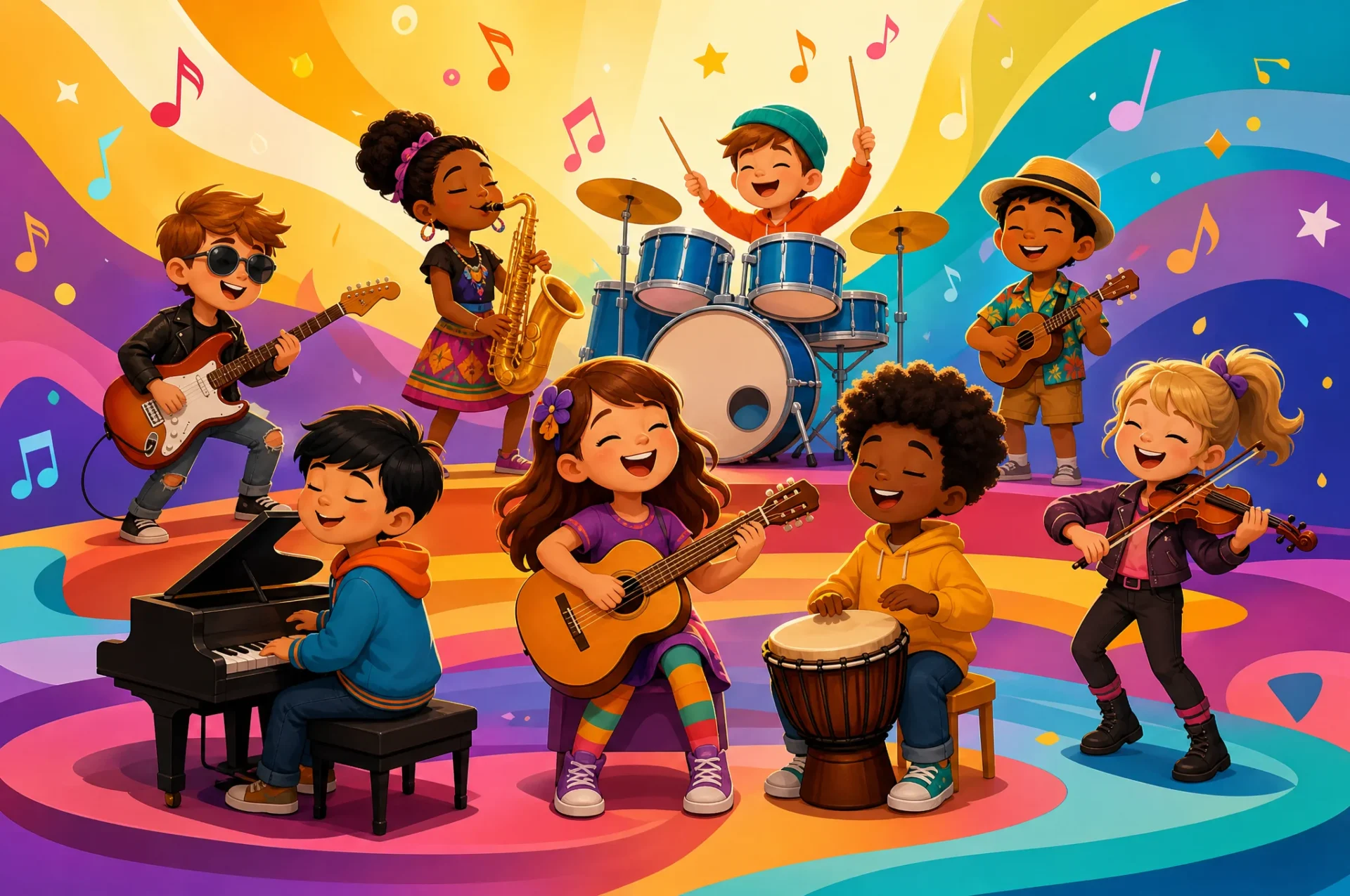
Few audiences respond to music as readily as young children. Nursery rhymes, counting songs, and bedtime tunes have been part of childhood for generations, and the success of sing-along channels online shows how strongly families still value them. Creating that kind of content is demanding, though. It needs catchy original songs, appealing characters, and a steady flow of new material, all of which have traditionally required a team of musicians and animators.
What Makes Children’s Songs Work
Effective children’s songs share some simple qualities: a clear melody, a repetitive structure, simple words, and a pace that allows young listeners to join in. They also need to be safe and appropriate, which means avoiding lyrics and styles aimed at older audiences. These constraints are helpful for a generator, because the brief is usually specific: a gentle tune about brushing teeth, a bouncy song for learning colors, or a calm lullaby for the end of the day.
Writing Songs for Specific Moments
Using an ai music generator free tier, a parent, teacher, or channel creator can write a few simple lines about a routine or lesson and turn them into a song. Routines are a good example: songs about washing hands, tidying toys, or getting ready for bed can make daily habits more fun for children who might otherwise resist them. Because every household and classroom has its own routines and names, being able to put a child’s name or a family’s own phrases into the song adds a personal touch that off-the-shelf recordings can’t provide.
Creators building a channel can generate a series of songs around themes such as animals, seasons, numbers, and feelings, keeping a consistent musical style so that viewers recognize the channel’s sound.
Characters Children Recognize
Children connect strongly with characters, and a friendly animated figure that appears in every video builds familiarity and trust. An ai singing video generator allows a creator to take an illustrated character and animate it singing each new song, giving the channel a recognizable host without the cost of full animation. Young viewers can watch the character’s mouth move in time with the words, which helps them follow along and join in.
For independent creators, a single well-designed character can carry an entire channel. A new song, a new video, and the same friendly face make a format that is simple to repeat and easy for children to come back to.
Where It Fits
Educational channels. Songs for counting, letters, days of the week, and basic science concepts make learning feel like play.
Parent-made content. Families can make personalized songs and videos for their own children, such as a goodnight song with a favorite stuffed animal as the singer.
Preschool and classroom use. Teachers can generate songs for transitions, such as tidy-up time and circle time, that signal what comes next.
Story-time companions. A short song that accompanies a picture book gives families a reason to revisit it.
Celebrations. Birthday songs with a child’s name and favorite things make the day feel special.
Fresh Takes on Familiar Tunes
Many traditional children’s melodies are well known, and some creators want to present them in a new way. An ai cover song generator can rebuild a simple tune in a different style, such as a slow, soothing arrangement for bedtime and a livelier one for playtime, while keeping the melody children already know. Creators should make sure that the melodies they use are in the public domain or otherwise cleared for their intended use.
Important Responsibilities
Content for children carries extra responsibility. Review every song and video before sharing, to make sure that the lyrics are appropriate and the visuals are suitable. Be mindful of children’s privacy, and avoid using photographs of other people’s children without clear permission from their parents. Follow the platform’s rules for content aimed at children, which are strict about data collection and advertising. And keep screen time in perspective: a song can be a lovely part of a child’s day, but it works best alongside real-world play, conversation, and singing together.
Making Music Part of Childhood
Singing with children has always been one of the simplest ways to teach, soothe, and connect. When a song and a singing character can be made in an afternoon, more parents, teachers, and creators can bring that tradition into their own routines and channels, with songs that fit the child in front of them rather than a generic audience.
