

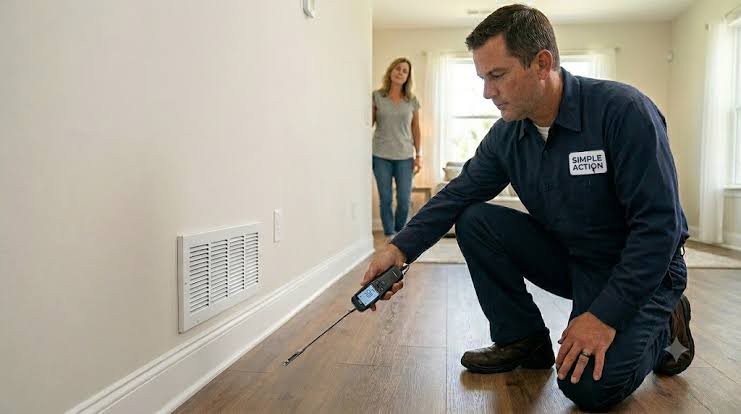
Along the Gulf Coast, many homes feel clammy even when the thermostat reads a comfortable temperature. If your air conditioner cools rooms to 74 degrees but towels still don’t dry, floors feel tacky, and the indoor air smells musty by evening, you likely have a humidity control problem rather than a pure cooling issue. This article explains why this happens in Panama City’s climate, how to recognize early signs, what to check before scheduling service, what a professional will test, and which upgrades reliably improve moisture control in coastal homes.
Why Coastal Cooling Often Misses Moisture Control
Air conditioners must remove two kinds of heat: sensible heat that lowers air temperature and latent heat tied to moisture. On muggy days with high dew points, the latent load dominates. If the system is oversized or moves too much air per ton, it cools the thermostat quickly but doesn’t keep the evaporator coil cold long enough to condense moisture from the air. That short cycling leaves relative humidity high. In Panama City, infiltration through leaky ducts and door gaps adds even more moisture. Local resources, such as an HVAC contractor in Panama City, can help you address these underlying causes.
Consider a two-story home with a single-stage 3-ton system that cools the downstairs quickly each morning. By late afternoon, indoor humidity creeps past 60 percent, supply registers feel cool but sticky, and the upstairs rooms struggle. The likely culprits are short run times, insufficient return air upstairs, and duct leakage that pulls wet attic air into the system. Correcting airflow paths and runtime often matters more than lowering the setpoint.
Early Signs Your AC Is Losing the Humidity Battle
Clammy comfort is the first clue. If 75 degrees still feels sticky or your thermostat’s humidity readout (when equipped) hovers in the high 50s to 60s, your system isn’t removing latent moisture effectively. Other indicators include sweating supply registers, a consistently wet condensate pan with little actual dripping from the drain, or light morning condensation on windows. Musty odors near returns or in closets signal that surfaces stay damp long enough for microbes to grow.
Unchecked moisture shows up as cupped wood floors, swollen interior doors that rub at the jamb, and occasional duct “sweating” in the attic when uninsulated boots or thin flex duct meet hot, humid air. These symptoms reflect a simple relationship: the warmer and wetter the air around cold surfaces, the greater the chance for condensation. Good humidity control aims to keep indoor relative humidity in the mid-40s to mid-50s under typical summer conditions, keeping surfaces drier.
Practical Checks Before You Call for Service
Start at the thermostat. Make sure the fan setting is on Auto, not On. The On setting keeps the blower running between cooling cycles and can re-evaporate moisture off the coil back into your rooms. If your thermostat supports dehumidify mode, which lowers blower speed during cooling, enable it. Next, verify that supply registers and return grilles are open and unobstructed, especially in rooms that feel damp. Closed interior doors without proper return paths can starve a space of dry, conditioned air.
Inspect your air filter and balance filtration with airflow. A 1-inch pleated filter with a high MERV rating can spike static pressure and reduce coil dehumidification. If you prefer higher filtration, consider a deeper 2- to 4-inch media cabinet to keep resistance lower. Outside, confirm the condenser has clear airflow on all sides and lightly rinse salt and debris from the coil fins with power off and low water pressure. Look for a steady drip from the condensate drain during active cooling and flush the line with a small amount of distilled vinegar if flow slows. In the attic, obvious duct kinks, crushed flex runs, or unsealed boots can admit humid air and overwhelm moisture removal.
What a Professional Will Measure and Adjust
A technician will quantify airflow and cooling performance rather than guessing. Expect static pressure measurements across the air handler or furnace, along with a check of total airflow in cubic feet per minute per ton of cooling. If airflow is too high, the coil may not get cold enough to remove moisture effectively. If it is too low, the coil may ice or underperform. Pros can adjust blower speed taps on traditional motors or program profiles on ECM blowers to target better dehumidification.
Refrigerant charge is evaluated by superheat and subcooling, not by “topping off.” Incorrect charge changes coil temperature and hurts latent capacity. Temperature and humidity readings across the evaporator coil reveal how much sensible and latent cooling is actually happening. Duct leakage testing can identify return leaks that pull hot, wet attic air into the system or supply leaks that dump conditioned air into the attic and lengthen cycles. In a common scenario, a home with high total external static pressure, an undersized return drop, and a dense 1-inch MERV 13 filter sees humidity drop markedly after a tech adds a second return, installs a deeper media filter, and resets blower speeds for better coil contact time.
Upgrades That Improve Moisture Control in Coastal Homes
When replacement or add-ons make sense, look for equipment and accessories that favor longer, gentler runtime. Two-stage and variable-speed heat pumps spend much of the day at lower capacity, keeping the evaporator coil below the dew point longer and wringing out more moisture. A whole-home dehumidifier tied into the return can run independently of cooling to maintain a set humidity target, especially during shoulder seasons or rainy stretches when temperatures are moderate but dew points are high.
Thermostats with a “dehumidify on demand” feature can momentarily drop blower speed to boost latent removal. Duct improvements matter as much as the equipment: seal joints with mastic, insulate to at least R 8 in vented attics, and balance supply and return so rooms aren’t starved or overpressurized. In coastal air, consider condensers with corrosion-resistant coatings and stainless fasteners to slow salt-related deterioration. Each choice has trade-offs. Higher MERV filtration captures finer particles but can raise static pressure unless you increase filter area. Variable-speed systems cost more upfront but often run quieter, maintain steadier humidity, and cause fewer temperature swings throughout the day.
Seasonal habits help preserve gains. Replace or wash filters on schedule, clear vegetation around the outdoor unit, and have the evaporator coil and condensate drain inspected before peak summer. Avoid deep daily thermostat setbacks that shorten cooling cycles too much for moisture removal. Use bathroom exhaust fans during showers and for 10 to 15 minutes after, then turn them off to avoid pulling in extra humid air through building leaks. Keep interior doors cracked where there are no dedicated returns to support circulation back to the air handler. Taken together, these small practices support the bigger fixes so your home feels cool and dry, not cool and damp.
