

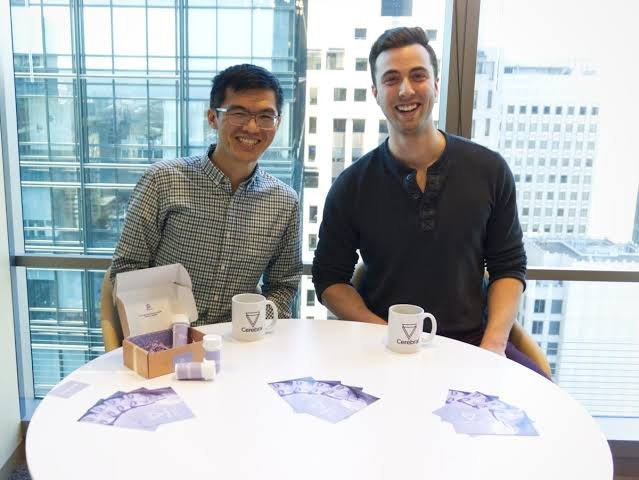
Building one billion-dollar healthcare company would satisfy most founders’ ambitions. Kyle Robertson built two before turning 30 — and then redirected his energy toward helping the next wave of entrepreneurs do the same through his own venture studio.
As covered by International Business Times, Robertson’s rise began in 2018, straight out of business school, when he moved to San Francisco to pursue a specific idea: a virtual mental healthcare service designed to remove the usual friction between patients and care. That idea materialized as Cerebral, which launched in early 2020 — mere weeks before the pandemic reshaped how Americans accessed healthcare almost overnight.
From founder to CEO of a $4.8 billion company
Cerebral’s launch coincided with a sudden, urgent demand for remote healthcare access, and the company scaled accordingly. Within three years of Robertson taking the company from concept to CEO, Cerebral reached a $4.8 billion valuation. Many founders would have stayed the course. Robertson instead exited and started fresh, launching Zealthy in 2023 — a direct-to-consumer telemedicine platform pairing patients with clinicians for ongoing wellness and health treatment.
Why he pivoted toward mentorship
Two successful exits into healthcare tech, Robertson turned his attention toward the founders following behind him. That decision led to Revolution Venture Studios (RVS), a venture studio pairing capital with direct, hands-on mentorship. Robertson has said the model is shaped by his own early struggles — the sleepless nights and lean months of building Cerebral from a crowded one-bedroom apartment in San Francisco.
Rather than acting as a passive investor, Robertson works closely with RVS’s portfolio founders on the fundamentals he considers essential to early-stage survival:
- Taking calculated, not reckless, risks
- Committing fully rather than hedging
- Being willing to perform any role the company needs, regardless of seniority
A portfolio built on solving real friction
That mentorship model has produced a portfolio spanning healthtech, wellness, and AI. CareBeam is one of the more notable names — an AI platform that converts doctor-patient conversations into HIPAA-compliant SOAP notes, addressing one of healthcare’s oldest inefficiencies: the hours clinicians lose to documentation instead of patient care.
Looking past healthcare
Robertson’s ambitions for RVS aren’t confined to the industry that built his reputation. He’s reportedly enthusiastic about a stealth-stage AI advertising venture now moving through the studio’s early pipeline — an indication that the RVS mentorship framework is meant to be industry-agnostic rather than healthcare-specific.
Even while running Zealthy on a day-to-day basis, Robertson has kept his involvement with RVS consistent rather than incidental. For a founder who’s already built two companies capable of reshaping how people access care, his current focus suggests a simple through-line: the goal was never just building successful companies, but building the founders capable of building the next ones.
