

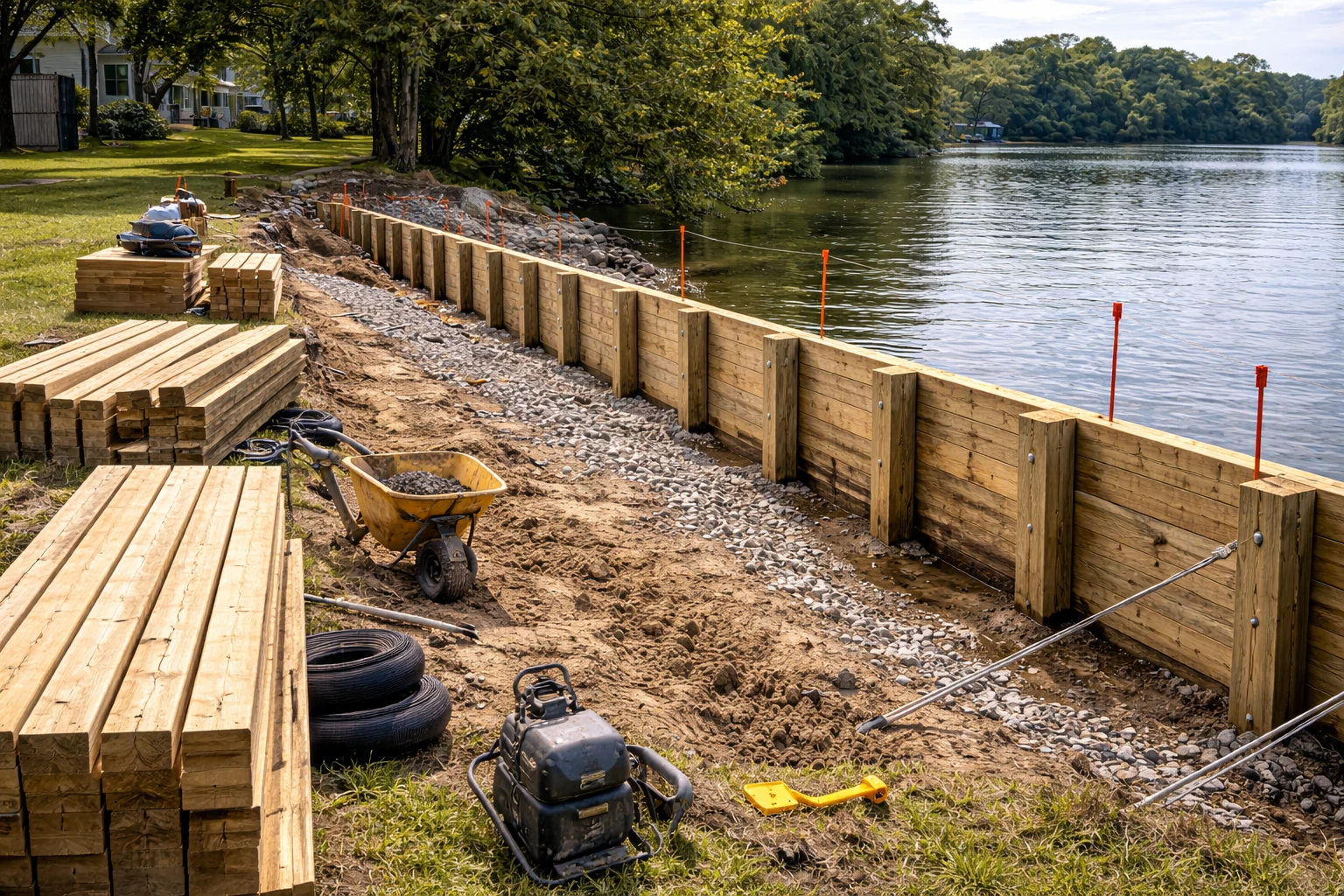
Bulkhead construction cost in Texas varies significantly depending on multiple factors related to the shoreline, materials, and overall project complexity. Many property owners try to estimate pricing based only on average cost per foot, but in reality, no two waterfront projects are identical. Each shoreline has unique conditions that directly influence the final construction cost.
To better understand how pricing is formed and what influences the total investment, property owners can review detailed breakdowns on the page bulkhead construction cost in Texas, where key cost factors and construction scenarios are explained.
Why bulkhead cost varies from project to project
The price of a bulkhead is not determined by material alone. It is the result of multiple combined factors that affect both labor and construction requirements.
- Site accessibility – properties that are difficult to access require additional labor and logistics, increasing the total cost
- Water conditions – calm water allows simpler installation, while wave activity increases structural requirements
- Soil stability – soft or unstable soil requires deeper support systems and stronger anchoring
- Existing damage – replacing a failed structure is more complex than building from scratch
Main cost components of bulkhead construction
The total cost is typically divided into several key components, each of which plays an important role in the final price.
- Materials – the type of material selected has a direct impact on both cost and lifespan. Wood is generally more affordable but may require maintenance, while vinyl and concrete provide longer durability at a higher initial cost.
- Labor – installation requires skilled workers who understand shoreline construction. The complexity of the project, water depth, and site conditions determine how much labor is needed.
- Preparation work – before installation begins, the site must be cleared and prepared. This may include removing existing structures, leveling the shoreline, and stabilizing the ground.
- Structural support – anchors, pilings, and reinforcement systems are essential for long-term performance. These elements are often not visible but represent a significant part of the total cost.
- Drainage system – proper drainage behind the bulkhead is critical. Without it, water pressure builds up and reduces the lifespan of the structure, so this component cannot be ignored.
Material cost differences explained
Material selection is one of the most visible factors influencing bulkhead cost, but it should always be evaluated in terms of long-term value rather than initial price.
- Wood bulkheads – lower upfront cost and faster installation, making them suitable for residential properties with moderate conditions, but they may require maintenance over time
- Vinyl bulkheads – higher initial investment but minimal maintenance, making them a practical long-term solution for many waterfront environments
- Concrete bulkheads – the most durable option, designed for high-load conditions and strong wave activity, but also the most expensive to install
Hidden costs property owners often miss
Many estimates fail to include additional costs that may appear during the project. These factors can significantly increase the final budget if not considered in advance.
- Unexpected soil conditions requiring additional reinforcement
- Water level changes affecting installation process
- Need for demolition of existing structures
- Additional materials for stabilization and drainage
How to estimate bulkhead cost more accurately
Instead of relying on average pricing, a more accurate estimate requires evaluating real site conditions and project goals.
- Inspect the shoreline – identify erosion level and structural issues
- Determine material type – choose based on durability and conditions
- Evaluate access – consider how equipment and materials will reach the site
- Plan for long-term performance – avoid choosing solutions based only on initial cost
- Request a detailed assessment – professional evaluation provides realistic pricing
Cost vs long-term value
Focusing only on the lowest cost often leads to higher expenses in the future. A properly built bulkhead is a long-term investment that protects the property and reduces maintenance costs over time.
- Higher-quality materials last longer
- Proper installation prevents future repairs
- Well-designed structures reduce erosion risk
- Long-term savings outweigh initial cost differences
Final thoughts
Bulkhead construction cost in Texas depends on many variables, and there is no fixed price that applies to every project. Understanding how these factors interact allows property owners to make better decisions and avoid unexpected expenses. A well-planned project ensures both cost efficiency and long-term shoreline protection.
