

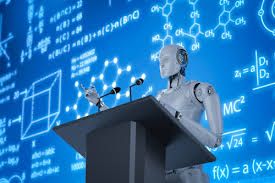
Artificial intelligence has become a fundamental part of how industries function, innovate, and compete. From medical diagnosis and fraud analysis to content generation and supply chain automation, AI is now embedded in everyday business decisions. Companies are not only adopting AI tools—they are redesigning systems, workflows, and job roles around them. In this environment, professionals who understand how AI works have a clear advantage.
The shift is no longer about learning new software. It’s about understanding how intelligent systems think, how they make decisions, and how to apply them responsibly. This is why AI education has moved from being a niche interest to a core driver of future careers.
Why AI Expertise Matters More Than Ever
Modern industries generate massive amounts of data, and organizations cannot rely on traditional methods to interpret it fast enough. AI helps businesses:
- Predict future trends through data-driven insights
- Personalize customer experiences at scale
- Detect fraud, errors, and anomalies instantly
- Automate tedious operational tasks
- Enable smarter and safer decision-making
These capabilities allow companies to grow faster and operate more efficiently. However, without professionals who understand how these systems function, implementation becomes risky and ineffective. Skilled talent is essential to ensure AI is accurate, ethical, and aligned with real-world goals.
Why Students Are Choosing Advanced AI Degrees
With the growing need for specialized expertise, many students and working professionals are now considering advanced academic programs like an ms in ai. These programs offer in-depth exposure to:
- Machine learning and deep learning
- Natural language generation
- Neural networks and predictive analytics
- Computer vision and robotics
- Ethical AI and data governance
Such degrees do not prepare graduates only to write algorithms—they prepare them to solve real problems using intelligent systems. Whether it’s building diagnostic tools for hospitals, designing automation for factories, or developing secure financial models, graduates become capable of applying AI in impactful ways.
Growth of Practical AI Learning Options
Not all learners require a full academic degree. Many are looking for shorter pathways that help them apply AI to their existing professions. This has created a surge in demand for artificial intelligence courses that focus on practical outcomes. These programs help learners:
- Use generative tools to streamline work
- Analyze business data more efficiently
- Build and evaluate basic machine learning models
- Understand responsible and ethical AI usage
- Implement automation without deep coding knowledge
Short-term courses allow professionals in fields like finance, marketing, design, healthcare, and engineering to gain AI skills without stepping away from their careers. They bridge the gap between theory and everyday application.
AI Skills Open International and Cross-Industry Careers
One of the most exciting aspects of AI education is how it expands career possibilities beyond borders and traditional roles. The demand for skilled AI professionals exists globally, and roles have begun to form in diverse fields such as:
- Healthcare technology
- Cybersecurity
- Retail and e-commerce
- Entertainment and media
- Education technology
- Banking and financial services
Professionals can move across industries with ease because AI skills are transferable. The ability to analyze data, build algorithms, or manage AI systems remains valuable no matter the sector.
Conclusion: Learning AI Is Learning the Language of the Future
Artificial intelligence is not just another technology—it’s a framework for how tomorrow’s systems will work. The future workforce will not be defined by how much it can manually execute but by how well it can direct intelligent systems to solve complex problems.
Learning AI today means gaining the ability to lead innovation rather than simply adapting to it later. Whether through advanced degrees or targeted skill-building programs, AI education is shaping professionals who will design, govern, and improve the very systems that are transforming the world.
The future will not just use AI—it will be built by people who understand it.
