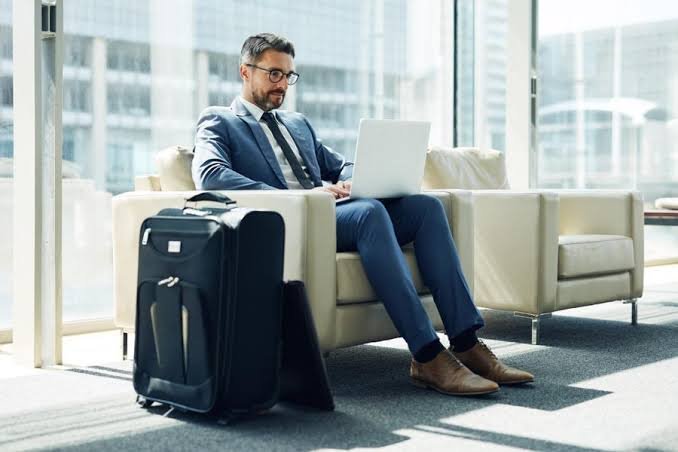
A cheap flight can become expensive before the meeting even starts.
The founder saves $300 on airfare, lands late, sleeps badly, and walks into an investor meeting running on airport coffee. A sales lead books the cheaper hotel, then spends half the morning crossing town before a client pitch. An executive checks a bag for a one-night trip, and the meeting outfit does not arrive with them.
None of this looks dramatic on an expense report.
But it affects the thing the trip was supposed to protect: the quality of the meeting.
That is why business travel becomes a CEO issue sooner than many companies expect. At first, travel feels like a personal habit. The founder books flights. The sales team handles hotels. Receipts get sent later. Everyone makes it work.
Then the company grows, and those casual choices start costing time, focus, money, and opportunity.
Business travel is growing again, but it is also getting more expensive and less forgiving. The Global Business Travel Association forecasts global business travel spending to reach $1.71 trillion in 2026, with work trips expected to pass 1.84 billion worldwide. Spending is projected to grow faster than the number of trips, which means companies are paying more for each journey.
For CEOs and founders, that changes the question.
It is no longer just, “Can we afford this trip?”
It is, “What does this trip need to achieve, and have we removed the avoidable problems that could weaken it?”
Travel Becomes Expensive Before It Looks Expensive
Early-stage companies often treat travel casually.
The founder books their own flight. The sales head picks the hotel. Someone uses a personal card. Receipts are sent later. A better flight is chosen only after a cheap one creates problems. Everyone thinks this is fine because the company is still small.
That approach works for a while.
It fails when travel becomes frequent.
The direct cost is easy to see: flights, hotels, meals, taxis, baggage fees, and last-minute changes. The hidden cost is harder to track. It shows up in tired executives, missed preparation time, poor meeting energy, delayed reimbursements, and employees choosing whatever option feels easiest because no one set a clear rule.
Deloitte’s 2025 corporate travel research found that 54% of travel managers said cost was one of the top factors restricting travel. At the same time, 74% planned to expand travel budgets in 2025, though fewer expected to do so in 2026.
That tension is exactly why CEOs need a travel system.
More travel may be necessary. Messier travel is not.
Every Business Trip Should Have a Business Reason
A founder does not need a complicated travel policy on day one. But every company needs one simple habit early:
Name the reason for the trip before booking it.
Is the trip for revenue? Investor relations? Hiring? Client retention? Training? Strategic partnership? Market entry? Crisis management?
This sounds basic. It is often skipped.
When the purpose is clear, the travel choices become easier. A trip to close a major client may justify a nonstop flight, a better hotel location, and reliable ground transport. A routine internal visit may not. A conference trip may need stricter rules around who attends, what meetings are booked in advance, and how the team reports value after returning.
The travel decision should match the business value of the trip.
That does not mean always spending more. It means spending with logic.
The CEO’s Time Has to Be Priced Correctly
Founders often underprice their own time.
They will take an awkward connection to save a few hundred dollars, then lose half a working day to delay risk, poor sleep, and airport downtime. That may feel disciplined. It may also be bad math.
For a CEO, the real cost of travel includes preparation time, recovery time, decision energy, and meeting performance.
A cheaper flight that leaves a founder exhausted before a funding discussion is not always cheaper. A hotel far from the meeting location may save money on the room and waste it in cars, stress, and lost time. A bag checked for a one-night trip may be fine unless the meeting outfit or charger does not arrive with the traveler.
This is where smart packing becomes part of business discipline. A CEO does not need to overthink luggage. They do need a setup that protects the work: laptop, charger, documents, medication, presentation clothes, and anything needed within the first 12 hours after landing.
The goal is simple. The person should arrive ready to do the job they traveled for.
Full Flights Leave Less Room for Sloppy Planning
Air travel demand has stayed strong. IATA reported that total full-year passenger demand rose 5.3% in 2025, while the overall passenger load factor reached 83.6%, a record for full-year traffic.
For business travelers, full planes create practical problems.
Overhead bins fill faster. Last-minute fares are more painful. Delays have less room to absorb. Tight connections become riskier. Gate-checking becomes more common. A traveler who once relied on flexibility may find that flexibility now costs much more.
This matters most for short business trips.
If a founder is away for five days, a delayed bag is frustrating. If the trip is one night and the meeting is the next morning, it can damage the entire purpose of the trip.
A simple rule helps: anything needed for the first business commitment should stay with the traveler, not in checked luggage.
That includes work devices, chargers, essential documents, medication, and the outfit needed for the first meeting.
Standardize the Small Things Early
A travel system does not need to be bureaucratic.
The best version for a growing company is usually a short internal guide that answers repeat questions before they waste time.
It should cover:
- When employees can book nonstop flights
- How close the hotel should be to the meeting location
- Who approves last-minute changes
- What booking channel should be used
- What counts as a business meal
- How receipts should be submitted
- What safety steps apply for late arrivals or unfamiliar cities
- Which essentials should stay in carry-on luggage
- When a trip should be replaced by a virtual meeting
- What the traveler must report after returning
This guide should be short enough that people actually use it.
The point is not to control every choice. The point is to remove repeat confusion.
Ground Transport Is Part of the Meeting
Many companies handle flights and hotels carefully, then leave ground transport to chance.
That is where the trip can start to unravel.
A founder lands in a city, opens a ride-share app, sees surge pricing, waits 25 minutes, then arrives late and irritated. A visiting investor gets picked up by the wrong car. A senior executive has to explain directions to a driver while reading messages from the client they are about to meet.
These moments rarely appear in expense reports. They do affect the meeting.
If the trip matters, arrival matters.
For high-value meetings, companies should confirm airport pickup, hotel transfer, and meeting-day transport in advance. It may not require a premium car. It does require reliability.
The more important the meeting, the less sense it makes to leave the first impression to chance.
Compliance Improves When the Policy Helps People
Many travel policies fail because they are written like cost-control documents, not working tools.
Employees ignore them because the approved options are awkward, the booking tool is frustrating, or the rules do not match real travel situations.
Deloitte found that 49% of business travelers surveyed said they always use corporate booking tools, while 60% of travel managers said their companies are increasing compliance with prescribed booking processes to control costs.
The lesson is clear: compliance is easier when the system respects the traveler’s reality.
If the approved hotel is far from the client, employees will work around the rule. If the booking process takes too long, they will avoid it. If reimbursements are slow, they will complain or stop following the system.
A practical policy should protect the company and the traveler.
Measure the Return After the Trip
Most companies track what a trip cost. Fewer track what it produced.
That is a missed opportunity.
After important trips, teams should record simple outcomes:
- Which meetings happened?
- What changed because of the trip?
- Did the trip move revenue, funding, hiring, partnership, or retention forward?
- Were there avoidable delays or friction points?
- Would the company make the same travel decision again?
This does not need to become a long report. A five-minute post-trip note can create useful data over time.
After ten or twenty trips, patterns appear. Certain cities may need better hotel rules. Certain routes may justify nonstop flights. Certain conferences may not produce enough value. Certain teams may need more support before traveling.
Travel data becomes useful only when leaders review it.
The Founder Travel Kit
Every CEO and founder should have a repeatable travel setup.
Not a luxury setup. A reliable one.
The basics are simple:
- Laptop and charger
- Phone charger and power bank
- Noise-canceling headphones or earbuds
- Medication and personal essentials
- Digital and offline copies of key documents
- One meeting-ready outfit in carry-on luggage
- A compact toiletry kit
- A small pouch for receipts
- Backup payment method
- One light layer for flights and cold meeting rooms
A short packing checklist helps busy leaders avoid rebuilding the system before every trip.
The less a founder has to think about travel basics, the more attention they can give to the meeting itself.
Final Thought
Business travel is coming back with more pressure attached to it.
Flights are full. Costs are higher. Teams are more selective. Every trip has to work harder to justify itself.
For CEOs, this is the moment to treat travel as part of operating discipline.
Set the purpose before booking. Price executive time honestly. Keep essentials close. Make ground transport reliable. Write simple rules. Track outcomes after the trip.
The companies that do this do not travel more carelessly.
They travel with clearer intent.
And in a market where every meeting, investor conversation, client visit, and hiring discussion matters, that clarity can protect far more than the travel budget.