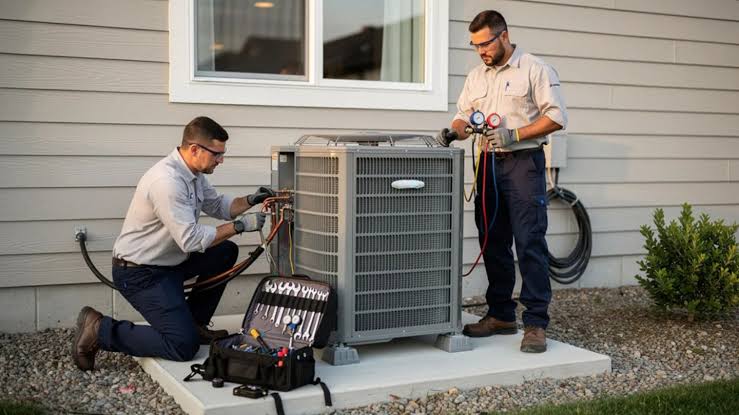
Professional air conditioning installation involves far more than setting equipment in place and turning it on. Load calculations, duct review, electrical capacity, drainage planning, and startup testing all shape how the system will perform. Homeowners usually notice the cabinet, thermostat, and new lines outside. The harder work happens earlier, during decisions that affect humidity control, power draw, sound levels, and compressor life over many cooling seasons.
Correct Sizing Comes First
Sizing starts with measurements, not guesswork. Technicians review floor area, insulation levels, window orientation, ceiling height, occupancy patterns, and duct capacity. That process helps avoid short cycling, weak airflow, and uneven temperatures. A unit that runs in brief bursts may leave indoor air clammy. One that lacks capacity can stay on for hours, while rooms still feel warm.
Local Conditions Shape the Plan
Desert heat changes the installation plan from the start. Roof load, west-facing glass, attic temperature, and daily runtime place extra stress on equipment. Many homeowners looking into air conditioning installation in Las Vegas need more than a quote. They need a layout that accounts for solar gain, airflow resistance, and long operating cycles during severe summer afternoons.
Existing Equipment Gets Reviewed
A replacement job begins with the system already in place. Installers inspect supply trunks, return paths, breaker size, thermostat cable, condensate routing, and the condition of the refrigerant line. Older parts can limit a new unit before the first cooling call arrives. Homeowners should correct duct leakage, restricted returns, or poor drainage early, before fresh equipment inherits the same performance problems.
Equipment Matching Matters
Air conditioners work best as matched assemblies, rather than mixed collections of parts. The outdoor condenser, indoor coil, metering device, line set, and controls must be compatible with one another. Proper pairing supports rated efficiency and stable temperatures. Mismatched components can cause low output, erratic cycling, increased electrical use, and control behavior that confuses owners after the replacement is complete.
Placement Affects Performance
Placement influences sound, service access, drainage, and airflow. Outdoor equipment needs a level base, open clearance, and enough space for coil cleaning. Indoor sections require secure mounting and a correct slope for condensate removal. Poor location choices can lead to vibration, blocked intake, or water stains. Thoughtful positioning supports quieter operation and makes later service safer for technicians.
Refrigerant Work Requires Precision
Refrigerant work demands careful handling at every stage. Line sets must be the right size, connections must seal fully, and insulation should cover exposed suction piping. After assembly, installers evacuate the system to remove air and moisture. That step protects oil chemistry and internal surfaces. Weak charging practices can reduce capacity, strain the compressor, and shorten service life.
Electrical and Safety Checks Follow
Electrical details matter as much as mechanical work. Technicians confirm voltage, breaker rating, disconnect placement, grounding, and wire integrity before startup. They should also review safety devices, including overload protection and control response. Minor errors in these areas can trigger nuisance shutdowns or hard starts. Clean electrical work supports steady operation during peak heat, when cooling becomes essential.
Airflow Is Tested, Not Assumed
Many comfort complaints trace back to airflow, rather than equipment failure. Installers measure static pressure, check the temperature split, and confirm that supply and return flow remain within acceptable ranges. A room that stays hot may signal duct restriction, poor balancing, or inadequate return air. Testing turns assumptions into numbers, which is how technicians find and correct distribution problems.
Startup Includes Final Verification
Startup is a technical check, not a symbolic finish line. Technicians verify thermostat response, refrigerant charge, condensate flow, amp draw, and overall system behavior under load. They also listen for vibration, watch pressure readings, and confirm stable cycling. This final review identifies hidden faults early, before they lead to callbacks, wasted electricity, or repeated comfort complaints in the home.
Warranties Depend on Proper Work
Manufacturer coverage often depends on documented installation and verified startup procedures. If charging, wiring, or drainage work is handled poorly, later claims may face problems. Professional records show that the system was installed in accordance with the required standards from day one. That paperwork matters because many failures develop quietly, then surface months later during extreme heat and heavy demand.
Conclusion
Professional air conditioning installation is a chain of technical decisions that shapes comfort long after the crew leaves. Correct sizing, matched components, refrigerant accuracy, electrical safety, and verified airflow all influence temperature stability and equipment strain. A careful installation can reduce utility waste, support cleaner humidity control, and limit avoidable failures. The true value lies in planning, testing, and workmanship, rather than speed.