
Industrial Laser Welding Tool Comparison Table
No single process wins everywhere. Here’s how a laser welding tool stacks up against the three workhorses most shops already know.
| Welding Tool | Heat Input | Speed | Finish Quality | Operator Skill | Best Applications |
| Industrial Laser Welding Tool | Low, concentrated | Fast on good fit-up | Narrow, clean bead, less finishing | Setup and parameter control matter a lot | Thin-to-medium sheet, visible welds, cabinets, frames, repair, low-distortion work |
| TIG Welding | Moderate to high, wider HAZ | Slower | Excellent when dialed in, very neat | High manual dexterity required | Fine manual work, precision repair, thin stainless, cosmetic seams |
| MIG Welding | Higher heat input, bigger HAZ | Fast deposition | Good structurally, spatter cleanup common | Easier to pick up | General fab, structural parts, thicker sections, high-deposition runs |
| Spot Welding | Very localized, overlap only | Extremely fast per spot | No visible weld bead, lap joints only | Machine and parameter setup | Overlapping sheet, automotive panels, enclosures, production lines |
TIG owns fine manual work. MIG handles heavy structural jobs. Spot welding rules high-speed lap joints. The industrial laser welding tool earns its keep where low distortion, speed, and visible weld quality matter—provided the joint fit-up is decent. Poor part fit, very thick plate, or full-penetration structural code work will still send you back to an arc machine.
Why Industrial Teams Need More Flexible Welding Tools
A small or mid-size shop rarely runs one process all day. The same pair of hands might weld stainless cabinets in the morning, repair a carbon steel frame after lunch, and strip rust or cut a bracket before clocking out. When every task demands a different standalone machine, floor space disappears and changeover time eats the schedule.
This is where industrial laser welding equipment that handles welding, cleaning, and light cutting on one platform shifts the math. Instead of three setups, one metal joining tool moves through the day’s mix—welding an aluminum frame, doing a quick rust pass, then tacking a galvanized cover. For lean crews, that kind of flexibility matters more than any single spec on a data sheet.
Why Dynalasers Works as a Practical Industrial Laser Welding Tool
Dynalasers handheld systems were built for real shop air, not just polished demo parts. The design priorities are stable output, straightforward operation, portability, and multi-process capability. Depending on series and configuration, a Dynalasers industrial laser welder covers welding, cleaning, light cutting, spot welding, and rust removal—cutting down the equipment shuffle that slows mixed-workflow teams.
Clean Welds with Less Post-Processing
Laser energy stays tight, so the heat-affected zone stays small and the weld bead stays narrow. On stainless cabinets, kitchen equipment, elevator panels, aluminum frames, and machinery covers, that means less grinding and polishing after the bead goes down. It’s not “no finishing”—dirty material, sloppy fit-up, wrong gas, or rushed setup will still leave you reaching for a grinder. But on well-prepped joints, the weld looks clean enough to move on without extra steps.
Flexible Use Across Common Metals
A precision welding tool in a mixed-material shop has to switch from stainless to carbon steel, aluminum, galvanized sheet, brass, or copper without excessive downtime. Dynalasers systems handle these metals under suitable conditions. What determines success isn’t just the machine—surface cleanliness, material thickness, joint fit-up, wire feed settings, shielding gas choice, focus position, travel speed, and operator technique all pull on the final result. Get those right, and the beam does the rest.
Handheld Operation for Complex Workpieces
Some parts can’t be moved to a bench. Repair crews often work around large frames, installed machinery, covers, and awkward assemblies. A handheld laser welding tool lets the operator take the weld head directly to the joint. Dynalasers pairs compact machine bodies with lightweight laser welding gun designs; some guns weigh under 0.48 kg, which helps a lot when you’re running long seams or welding at odd angles. That handheld access keeps heavy or fixed workpieces from dictating the production sequence.
Multi-Function Platform for Workshop Efficiency
Welding is rarely the only step. Before a bead, someone often needs to remove rust or oxide. During repair, a quick spot tack or a light cut can avoid dragging out another station. The M Series supports welding, cutting, and cleaning in one unit. The D Series adds spot welding and rust removal. For a small team, that kind of laser welding solution cuts the number of machines on the floor and keeps jobs flowing with fewer interruptions.
Dynalasers Industrial Laser Welding Tool Series
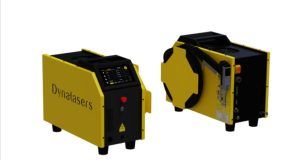
Dynalasers splits its handheld welding lineup into three practical groups: M for daily multi-process work, D for heavier industrial repair, and S for portable jobs where weight matters as much as power.
M Series: Multi-Function Tool for Daily Workshop Jobs
The M30 (800 W), M50 (1200 W), and M70 (1800 W) handle welding, cutting, and
cleaning. They cover everyday tasks like sheet metal assemblies, precision parts, repair
work, and small-to-medium production batches. Under correct parameters, the M70
welds stainless steel and carbon steel up to roughly 7.0 mm. Think of the M Series as
the shop’s all-rounder when job variety stays high.

D Series: Heavy-Duty Choice for Industrial Repair
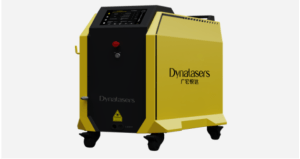
The D50 (1200 W) and D70 (1800 W) push further into demanding repair territory. Beyond welding, cutting, and cleaning, they include spot welding and rust removal. This makes the D Series a strong industrial laser welder for machinery maintenance, thicker stainless and carbon steel structures, aluminum parts, and shops that bounce between fabrication and heavy repair inside the same week.

S Series: Lightweight Tool for Portable Welding Tasks
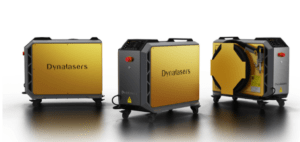
When mobility is the priority, the S30 (under 21 kg) and S40 (under 22 kg) keep bulk low without sacrificing basic capability. They support continuous, pulse, and burst welding modes. Under suitable conditions, the S30 reaches about 2.5 mm depth and the S40 around 3.5 mm. These units work well for field maintenance, compact workshops, mobile repair, and small-batch production where lugging a heavy machine isn’t an option.

Where This Tool Fits in Manufacturing
An industrial laser welding tool slots into machinery repair, sheet metal fabrication, cabinet welding, elevator parts, kitchen equipment, automotive repair, metal furniture, and custom OEM runs. It makes the most sense where clean visible welds, lower heat input, and less post-weld finishing matter on thin-to-medium metal parts.
Still, before production starts, test on real parts. Confirm the right shielding gas, check joint fit-up, set focus properly, and lock in repeatable parameters. Safety training and process setup aren’t optional extras—they’re what separate consistent results from constant rework.
FAQs
Q1. What is an industrial laser welding tool?
An industrial laser welding tool uses concentrated laser energy to join metal components. You’ll typically see it on sheet metal work, repair jobs, cabinets, frames, stainless products, aluminum assemblies, and anywhere a clean, low-distortion weld adds value.
Q2. How is it different from a traditional welding machine?
Compared to many TIG and MIG processes, a laser can produce narrower weld seams, lower heat input, faster travel speed, and a cleaner surface on suited workpieces. It still needs safety measures, good fit-up, the right shielding gas, and skilled operation—not less discipline, just a different set of rules.
Q3. Can one tool support welding and cleaning?
Yes, based on configuration. Dynalasers M Series covers welding, cutting, and cleaning. The D Series extends that to spot welding and rust removal, suiting shops where welding and surface prep alternate quickly.
Q4. What industries use handheld laser welding tools?
Sheet metal fab shops, machinery repair crews, kitchen equipment manufacturers, elevator component builders, automotive repair, metal furniture, cabinet production, signage, and small-to-medium OEM work all use handheld laser systems. The common need is clean welds on thin-to-medium stock, with less time lost to grinding.
Conclusion
A practical industrial laser welding tool makes shop welds cleaner and workflows faster without pretending to solve every joining problem. Dynalasers M, D, and S series give manufacturing and repair teams real choices for welding, cleaning, repair, and portable fabrication. The gear matters, but what matters more is dialing in the process, testing on real parts, and keeping safety and setup where they belong—at the front of every job.