

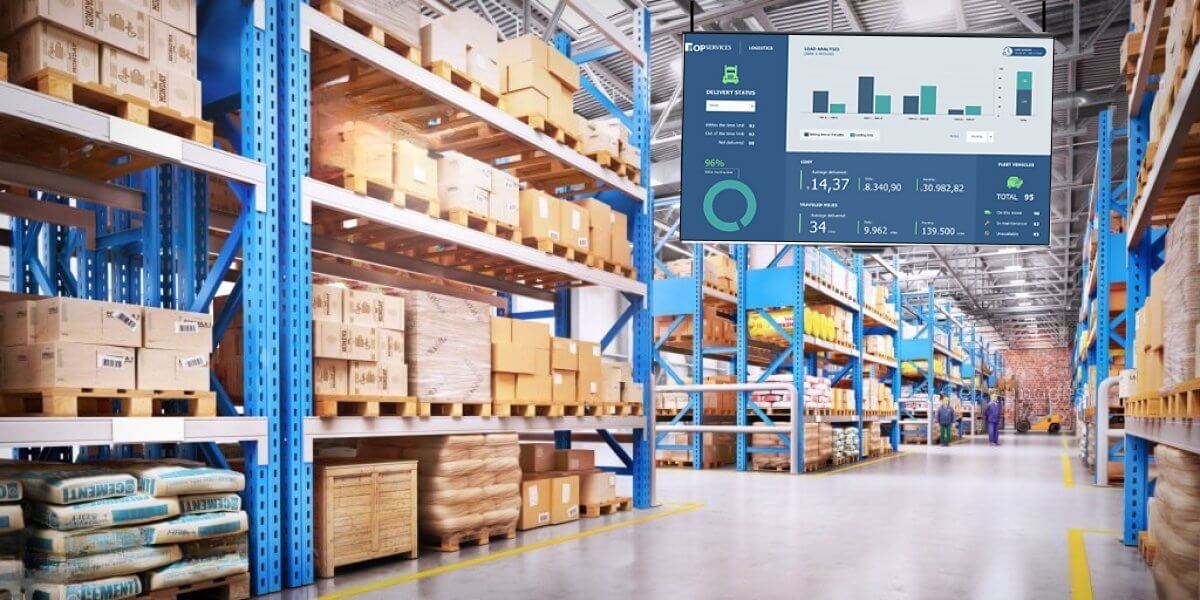
Many businesses find it hard to keep their warehouses organized and fast. Studies show that smart warehouse systems can cut costs and boost order speed. This blog will explain how these tools make work easier, save money, and improve tracking.
Keep reading to see simple ways your business can get ahead.
Key Features of Smart Warehouse Solutions
Smart warehouse solutions use technology to improve operations. They include systems for managing inventory, tracking goods in real time, and employing robots to assist workers.
Warehouse Management Systems (WMS)
Warehouse Management Systems, known as WMS, help control all warehouse activities. These systems track inventory in real time. Staff can see what comes in and goes out at any moment. A WMS handles order picking, packing, and shipping tasks with high accuracy. It helps manage stock levels to prevent running low or having too much on hand.
Many large companies use a WMS to speed up supply chain operations. Amazon uses complex WMS software to handle millions of products daily across its fulfillment centers worldwide. These systems connect with other logistics tools like barcode scanners and automated conveyors for faster workflow optimization. Using data analytics from a WMS gives clear insights into space use, employee performance, and areas for cost reduction in warehouse management.
Internet of Things (IoT) Devices
IoT devices use sensors and smart tags to collect real-time data in warehouses. These tools track inventory, monitor equipment, and spot issues fast. Temperature sensors help keep goods safe by sending alerts if things get too hot or cold.
Smart shelves show stock levels live, cutting mistakes and speeding up order picking. Managers can see everything from one dashboard, which supports better supply chain decisions through data analytics. More advanced storage systems also work with IoT devices to automate storing and retrieving products efficiently.
Automated Storage and Retrieval Systems (AS/RS)
Automated Storage and Retrieval Systems use machines to move goods in and out of storage. These systems improve warehouse efficiency by reducing errors and speeding up order fulfillment. AS/RS can handle heavy loads, save floor space, and work 24/7 without breaks. In logistics centers, these systems help with inventory optimization and real-time tracking.
Companies like Amazon use AS/RS for faster picking and packing tasks. Businesses lower labor costs because machines do much of the manual work. Data analytics from these systems support better supply chain management decisions. With process automation in storage areas, warehouses become safer for workers while increasing output each day.
Collaborative Robots (Cobots)
Collaborative robots, or cobots, work alongside human workers. They help with tasks like lifting and transporting items. Cobots are safe to use in busy environments because they have sensors that detect people nearby.
These robots can handle repetitive tasks efficiently. This reduces the strain on workers and lets them focus on more complex jobs. Cobots improve workflow optimization by streamlining processes and increasing productivity in smart warehouse solutions.
Benefits of Smart Warehouse Solutions
Smart warehouse solutions enhance efficiency and accuracy in your operations. They assist in tracking inventory in real-time, reducing errors and speeding up fulfillment. These advantages can lower costs and improve performance.
Curious about how they can transform your business? Keep reading!
Increased Efficiency and Productivity
Smart warehouse solutions enhance efficiency and productivity. They simplify tasks like sorting, storing, and picking items. Automation decreases the time workers spend on repetitive jobs. Robots can swiftly move inventory to various locations within the warehouse.
Real-time data assists managers in making quick decisions. This means they can monitor stock levels precisely at all times. Faster order processing results in more satisfied customers.
With these systems in place, businesses experience a reduction in delays and errors too. In summary, smart technologies support warehouses in operating better while saving money on labor costs and improving workflow management.
Real-Time Inventory Tracking and Monitoring
Real-time inventory tracking and monitoring improve accuracy in warehouses. This system uses software and devices to update stock levels instantly. Businesses can see what products are available at any moment. This helps prevent overstocking or running out of items.
Data analytics play a key role in this process. They provide insights into customer demand and trends. With accurate information, companies can make better decisions about ordering and stocking goods. Improved visibility leads to smoother operations, faster order fulfillment, and reduced costs.
Enhanced Order Accuracy and Fulfillment Speed
Real-time inventory tracking leads to better order accuracy. Smart warehouse solutions use advanced technology to help workers fill orders correctly. Automated systems reduce picking errors, which is key for customer satisfaction. Cobots assist in packing and sorting items efficiently.
Faster fulfillment times are another benefit. Robotics automates routine tasks, allowing staff to focus on more complex duties. This boosts the speed of getting products out the door and into customers’ hands. Businesses can respond quickly to demand changes with accurate data analytics guiding their operations.
Reduced Labor and Operational Costs
Improved order accuracy and fulfillment speed result in significant savings. Intelligent warehouse solutions minimize errors. This decreases the necessity for additional workers to fix mistakes.
Automation also reduces labor costs by utilizing fewer employees for routine tasks. With robotics managing physical work, businesses can function with a more efficient staff. Decreasing operational costs enables companies to allocate resources to other essential areas like technology or training. In summary, intelligent technology optimizes processes while maintaining budget control.
Best Practices for Implementing Smart Warehouse Solutions
To implement smart warehouse solutions, start by analyzing your current processes. Set clear goals for what you want to achieve and choose the right tools to help reach those goals.
Assess Current Operations and Define Goals
Start by looking at how your warehouse works now. Review current operations. Identify what processes are slow or need improvement. This will help you see where smart warehouse solutions can fit in.
Next, set clear goals for the changes you want to make. Do you aim to improve efficiency? Is reducing costs a priority? Knowing your goals helps guide decisions on automation and inventory management tools that can boost productivity and streamline workflows.
Embrace Automation and Scalable Technologies
Automation improves workflow in smart warehouses. It helps speed up tasks and reduce errors. Using automation tools allows businesses to grow easily. Scalable technologies adapt as needs change, allowing businesses to manage more inventory without extra effort.
New systems can track items in real-time. This increases the visibility of stock levels and order status. Robotics automates picking and packing. These steps save time and cut down on labor costs. With a smart setup, companies can handle more orders efficiently while keeping customers happy.
Train Employees and Provide Ongoing Support
Training employees is key to using smart warehouse solutions effectively. It helps them understand new tools and systems. Provide hands-on training sessions that show how to use technology like Warehouse Management Systems and IoT devices. Ensure staff know how to operate automated storage systems and collaborate with robots.
Ongoing support is just as important. Encourage questions and feedback from your team. Set up regular check-ins to address any issues or concerns. Use data analytics to track performance and adjust training as needed. This will keep operations running smoothly while boosting efficiency in inventory management and logistics.
Conclusion
Smart warehouse solutions boost your business. They improve efficiency and cut costs. Automation and real-time tracking make operations smoother. With these tools, order accuracy rises sharply. Adopting smart tech helps you stay ahead in logistics.
