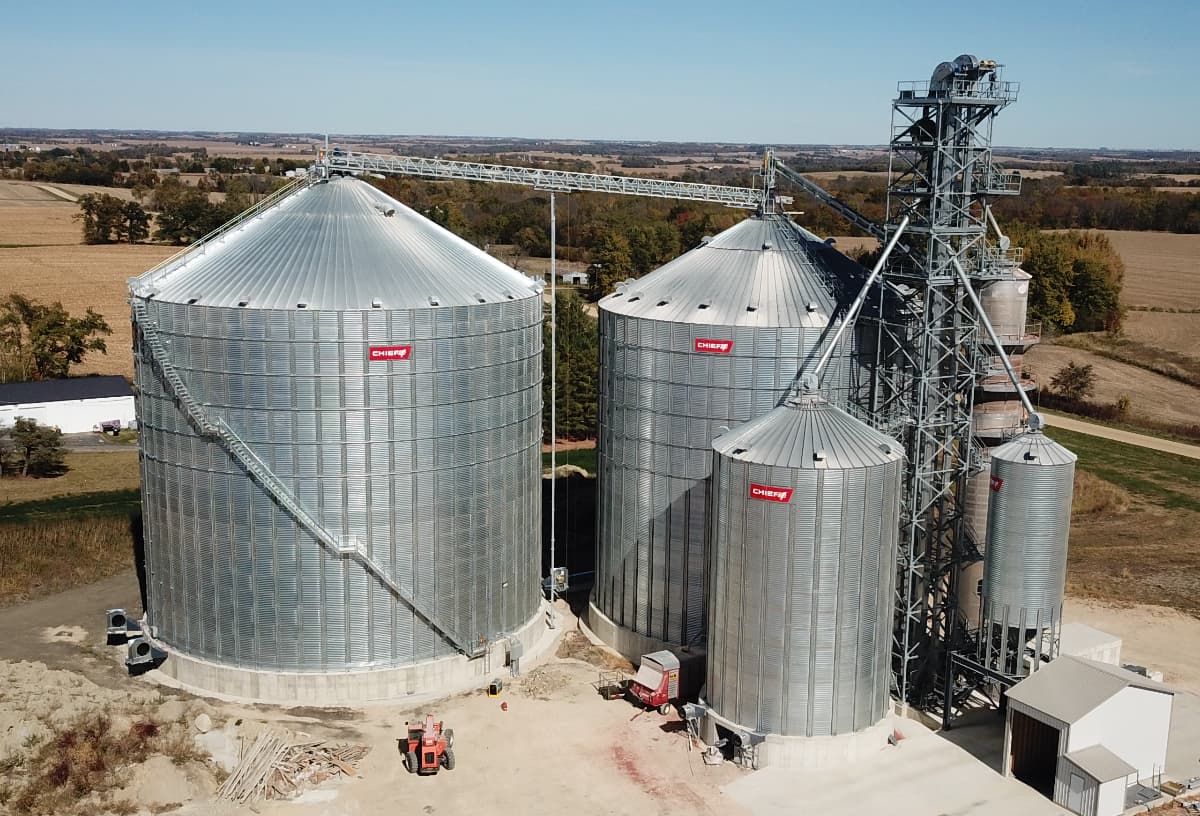
Putting up a new grain bin is the kind of decision that feels small while you’re making it and then sticks with you for thirty years. You don’t want to mess it up, but there’s also a tendency to over-research yourself into paralysis. So I want to share how we approached it on our farm and what I’d do differently if I was starting over.
Start with capacity. The basic question is: how much grain do you need to store, when do you need to store it, and how does it fit into your marketing plan? A lot of farmers reflexively size bins to their average harvest. That’s a mistake. Size bins to your above-average harvest, the years when yields surprise you and you suddenly have 25% more grain than typical. Those are the years where storage shortage hurts the most, both because of pricing pressure and physical capacity issues at harvest.
Now, don’t over-build either. A 50,000 bushel bin that’s half full for nine months out of the year has airflow problems and can’t be properly managed. Bigger isn’t automatically better — you want bins that can be filled, managed, and emptied in reasonable rotations. Some operators prefer multiple medium bins over fewer giant bins for exactly this reason. It’s more flexible for marketing different commodities and grades, and easier to manage.
Diameter versus height is one of those tradeoffs that nobody really explains well. Taller bins use less concrete and less land per bushel of capacity. Wider bins are easier to aerate properly and have better grain quality outcomes generally, especially as you move toward bin diameters above 40 feet. Most farmers settle somewhere in the middle depending on what fits the yard. Talk to a few growers in your area with the configurations you’re considering and ask them what they wish they’d done differently.
Floor design matters a lot more than most people realize. Full perforated floors give you the best aeration but they cost more. Partial perforated systems work fine for smaller bins. Flatness of the floor is critical for cleanup — a slightly out of level floor means grain stays behind every emptying, which leads to insect problems and quality issues over time. Don’t skimp on the slab work.
Fans and aeration capacity should be planned at design time, not added later. Calculate your CFM per bushel based on whether you want pure aeration (lower CFM, just cooling) or drying capability (much higher CFM and ideally supplemental heat). If you build a bin without enough fan capacity, retrofitting is possible but always more expensive than doing it right the first time. Talk to your supplier about your actual use case.
Roof considerations get overlooked. Standard cone roofs are fine, but if you’re going to be using sprayer trucks or augers near the bin a lot, consider a slightly higher peak roof or a different fill arrangement to avoid awkward angles. Roof ventilation matters for moisture management — make sure you have enough vents and that they’re in the right places.
On sourcing the bin itself, the
trusted farm equipment listings at FarmPages cover the major bin manufacturers and a lot of the regional dealers as well. I usually shortlist three or four manufacturers, then look at which ones have a strong dealer network in my area. Local service matters when something needs adjusting or repairing, so the brand with the closest decent dealer often wins out over the slightly cheaper option from further away.
Site selection is one of those decisions that you can’t undo. Think about: drainage (no bins in low spots, ever), proximity to truck access, room for future expansion, distance from yard buildings, electric service routing, and prevailing wind direction. The bin you build this year should be the start of a bin yard, not a one-off, even if you don’t have plans for more right now. Future you will appreciate the planning.
Don’t forget about loading and unloading. A bin without good loading equipment is hard to fill efficiently. An auger that bottoms out at 60 degrees doesn’t work for tall bins. Drive over pits, swing augers, conveyor systems — all of these depend on the bin layout. Plan the whole grain handling system as a unit, not as a series of separate decisions. I’ve seen yards where every bin has a different filling solution because they were all built separately, and it’s a mess at harvest.
Permits and engineering are not optional. Most jurisdictions require engineered drawings and proper inspections for bins above a certain size. Skip this and you might have insurance issues, neighbour issues, or worse if something fails. Modern bins are very safe when properly installed but they’re not forgiving of shortcuts on foundation work.
On safety equipment, install good ladder cages, fall protection systems, level monitors, and access platforms from the start. The bin yard is one of the more dangerous places on the farm, statistically. Grain entrapment is a real risk and so are falls. Build with safety in mind — it’s not just liability protection, it’s protecting yourself and whoever helps you on the farm. Some of the new low-profile sweep auger designs and outside-only access designs are worth the extra money.
Last thought: get input from the people who’ll actually be using the bin. The combine driver, the grain truck driver, your hired help if you have any. They’ll spot operational issues that you might miss looking at blueprints. A bin is built once and used for decades — getting the design right pays off every single harvest.