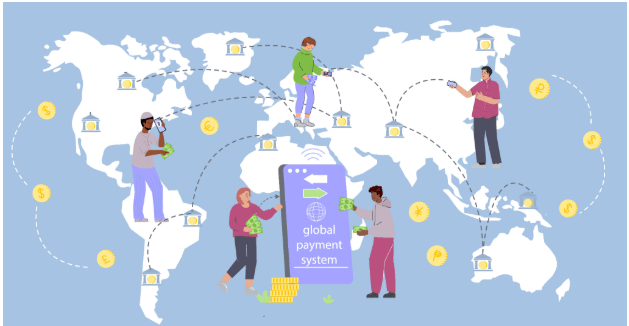
Moving money across borders at scale is still one of the more operationally complex challenges in global business. For PSPs, platforms, and businesses operating across multiple markets, the problem is rarely a shortage of options. It is the fragmentation of those options, with different integrations, local schemes, and settlement processes required for different corridors, that creates the real operational overhead.
The providers below address that fragmentation in different ways. Some are built on correspondent banking infrastructure. Others are purpose-built networks designed to handle local delivery at scale through a single integration. Choosing between them depends on the corridors you need to cover, the payment methods your end users or counterparties rely on, and the operational model your business is built around.
What separates infrastructure from a point solution
Before shortlisting, it helps to be clear on the distinction between a payments network and a payments application. A network connects multiple local payment schemes, bank accounts, and wallets through a single integration point. An application sits on top of existing infrastructure and may offer a cleaner interface, but it adds another layer between your business and local settlement.
For PSPs, platforms, and businesses with volume requirements and a need to reach emerging markets, the underlying network matters more than the interface. Coverage, interoperability, and the ability to scale across multiple use cases without building separate integrations are the criteria that determine long-term fit.
1. SWIFT GPI
SWIFT GPI remains the standard for bank-to-bank international transfers, with broad adoption among financial institutions globally. Its strength lies in the depth of its correspondent banking network and the familiarity of regulated entities with its processes. For businesses that primarily operate within the traditional banking system and move money between established financial institutions, SWIFT GPI is a well-understood default.
The trade-off is in flexibility and reach. SWIFT’s architecture is built for bank-to-bank wire transfers rather than local wallet delivery or alternative payment method access. For platforms that need to pay out to mobile wallets in emerging markets, or that want to consolidate multiple corridors behind a single API, SWIFT alone is unlikely to be sufficient.
2. Thunes
Thunes is a global payments network built to address the fragmentation problem that limits cross-border reach for PSPs, banks, platforms, and MTOs. Rather than requiring separate integrations for each market, Thunes provides a single connection point that covers local payment schemes, bank accounts, and mobile wallets across markets, including those that are difficult to access through traditional correspondent banking routes.
The network is designed for businesses that need to move money across borders at scale, particularly into emerging and growth markets where coverage through conventional banking rails is limited. For PSPs and payment orchestration layers managing multi-corridor flows, the ability to consolidate those relationships behind a single API reduces the operational complexity of managing multiple local provider agreements. For platforms running gig economy payouts, marketplace disbursements, or gaming and digital product settlements, the same infrastructure supports high-volume, recurring cross-border flows to consumer-preferred payment methods.
Thunes positions itself around four principles that run across its network and product decisions: cross-border innovation, interoperability of technology, financial inclusion, and trust. Those principles shape the corridors it prioritises, the payment methods it connects, and the businesses it is designed to serve.
Best fit for: PSPs, banks, platforms with international users, MTOs, e-commerce platforms, mobile wallet operators, stablecoin wallet platforms, and videogaming payment platforms.
3. Nium
Nium is a global payments infrastructure provider offering cross-border payments, card issuance, and banking-as-a-service capabilities through a single API. For businesses looking to combine cross-border settlement with card programme management or embedded finance features, Nium’s breadth of capability makes it a relevant option to evaluate. Its API-first model aligns with platform and fintech use cases where payments are embedded into a broader product rather than managed as a standalone function.
4. Currencycloud (Visa)
Currencycloud, now part of Visa, provides FX and cross-border payment infrastructure for fintechs, banks, and businesses. Its core strength is in multi-currency accounts and FX handling, which suits businesses that manage currency conversion as part of their cross-border flows. The Visa backing adds scale and network depth to a product that was already well regarded in the embedded finance and fintech segment.
5. Wise Business
Wise Business offers international transfers and multi-currency accounts for businesses, with a product that is accessible and well-suited to companies that need to make international supplier payments or manage payroll across a limited set of corridors. Its pricing transparency and self-serve setup make it a practical option for smaller teams. For businesses with complex multi-corridor volume requirements or the need to integrate payments into a platform product, Wise Business is less suited than infrastructure-first options.
6. Banking Circle
Banking Circle is a financial infrastructure provider built for PSPs, banks, and payment companies. Its focus is on clearing and settlement, particularly within the European market, with offerings around virtual accounts, cross-border payments, and embedded banking. For European-headquartered PSPs looking to reduce settlement friction within the region, Banking Circle is a relevant option. Its coverage outside Europe is more limited than global network providers.
How to choose between them
The right provider for your business depends on three practical questions.
First, which corridors matter to you and which payment methods do your end recipients or counterparties use? A provider with strong European settlement infrastructure may not serve you well if a significant portion of your volume goes into sub-Saharan Africa or South and Southeast Asia.
Second, how do you want to integrate? Providers that require separate local integrations for each market create ongoing maintenance overhead as your footprint grows. A single API that covers multiple markets and payment types reduces that burden significantly.
Third, what else does the provider need to support? Businesses that combine payouts with card issuance, multi-currency accounts, or embedded finance may benefit from a provider with a broader product surface. Businesses that primarily need to move money across borders at scale and into hard-to-reach markets are better served by a network built around that specific problem.
For PSPs, global platforms, and MTOs where reach, interoperability, and operational scale across emerging markets are the primary requirements, the network layer matters more than any single product feature.