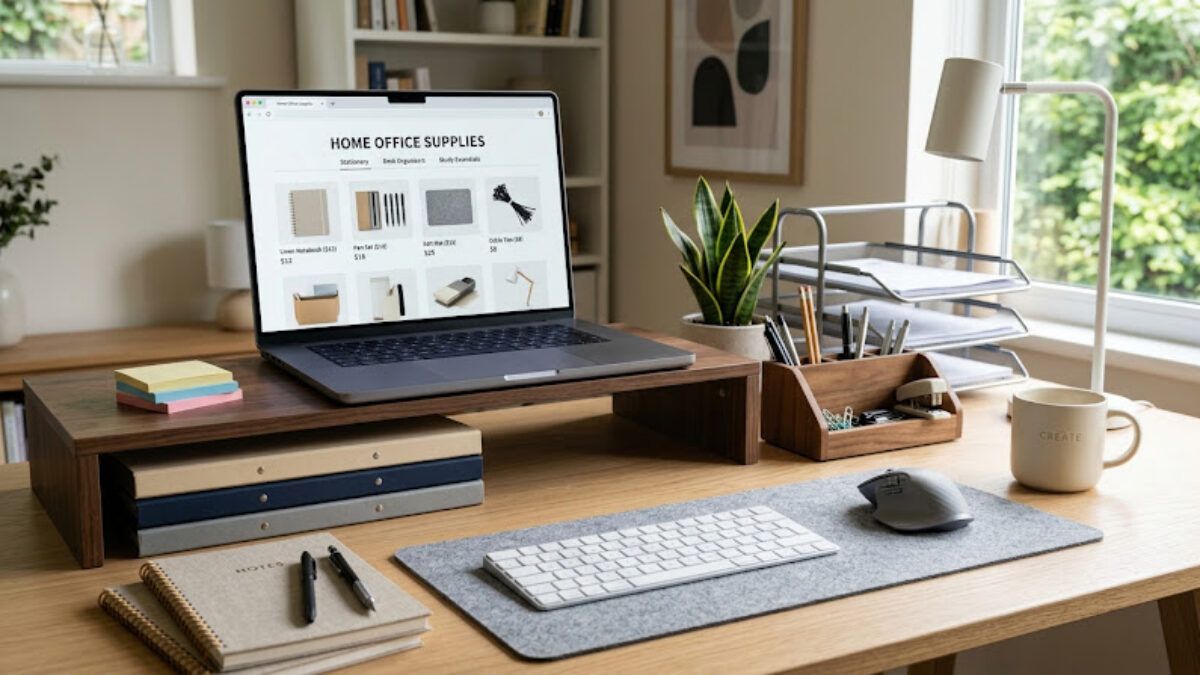
Running a lean office — whether it’s a five-person startup or a growing regional business — means every recurring cost gets scrutinized eventually, and office supplies are one of those line items that quietly add up. Paper, pens, folders, desk organizers, printer cartridges, and small electronics may look like minor purchases individually, but over a year they can represent a real chunk of operating budget. That’s why more procurement managers and small business owners are shifting away from traditional office supply chains and toward affordable online marketplaces instead.
One platform that’s gained traction in this space is Voghion, a European e-commerce marketplace that has expanded well beyond its fashion and lifestyle roots into categories like electronics, home goods, and office and school supplies. If you want to see how broad the office-related catalog actually is, you can visit website and browse categories directly rather than relying on a reseller’s curated selection. Unlike single-brand office suppliers that mark up name-brand stationery, Voghion connects buyers to a large network of manufacturers and sellers, which tends to push prices down across everyday categories like desk organization, writing instruments, and basic electronics accessories.
This matters for procurement strategy because the traditional model — ordering from one or two established office supply chains — often bundles convenience with a price premium. Buyers pay for brand recognition, in-store overhead, and established supply contracts. Marketplaces built on factory-direct or wholesale-adjacent models cut out several of those layers, which is part of why platforms like Voghion can offer steep discounts on functionally identical products.
Why Marketplace Platforms Change the Math on Office Procurement
Office supply procurement has historically meant working through a small number of national suppliers with fixed catalogs and standard pricing tiers. That model works fine for large enterprises with negotiated contracts, but it isn’t always efficient for smaller teams that don’t buy in volume large enough to unlock meaningful discounts.
Marketplace platforms flip this. Because they aggregate thousands of sellers rather than representing a single supply chain, buyers can compare price points for similar items — a pack of gel pens, a desk organizer tray, a set of sticky notes — across multiple listings within the same category, in the same way shoppers already compare prices for clothing or electronics. Voghion, for instance, structures its catalog around hundreds of product categories sourced from a large supplier network spanning multiple countries, which is a meaningfully different pricing structure than a single-vendor stationery chain.
For a small business, this translates into two practical advantages: lower per-unit costs on recurring consumables, and access to a wider range of desk and workspace accessories that a traditional supplier might not stock at all, since traditional catalogs tend to prioritize the highest-turnover items.
A Practical Comparison
To make this concrete, here’s how a marketplace-style platform compares with a traditional office supply retailer across the factors that matter most for procurement decisions.
| Factor | Traditional Office Supply Retailer | Marketplace Platform (e.g., Voghion) |
| Pricing model | Fixed catalog pricing, occasional seasonal sales | Frequent flash sales and rotating discounts across categories |
| Product range | Curated, brand-focused selection | Broad catalog spanning hundreds of categories from many sellers |
| Shipping costs | Often flat-rate or free above a moderate order minimum | Free shipping thresholds are common, sometimes on smaller order minimums |
| Returns | Standard 14–30 day policy, in-store or by mail | Typically 30-day return windows, handled entirely online |
| Best for | Bulk, contract-based enterprise orders | Small businesses, freelancers, and teams buying flexibly and frequently |
| Price comparison | Limited to supplier’s own catalog | Side-by-side comparison across multiple sellers for similar items |
This isn’t a claim that marketplaces replace enterprise supply contracts outright — large organizations with high-volume, standardized needs may still get better terms through negotiated agreements. But for small and mid-sized teams making smaller, more frequent purchases, the marketplace model generally wins on flexibility and price transparency.
What to Actually Look For When Sourcing Office Supplies This Way
Buying office supplies through a marketplace platform requires a slightly different approach than working with one familiar supplier:
- Check seller ratings and order volume on individual listings. Marketplaces host many sellers, and quality can vary between listings even within the same product category.
- Compare unit price, not just listing price. Bulk packs of pens, paper, or folders often look cheaper per listing but should be evaluated per unit to get an accurate comparison against your current supplier.
- Watch for threshold-based free shipping. Many marketplace platforms, including Voghion, offer free shipping once an order crosses a set spending threshold, which makes it worth consolidating smaller orders rather than placing frequent small ones.
- Track return windows carefully. Office electronics — like small monitor stands, USB hubs, or desk lamps — are worth confirming return eligibility on before bulk-ordering, since these items are more likely to have compatibility or defect issues than basic stationery.
- Time large purchases around platform sales events. Seasonal and flash sales on marketplace platforms can meaningfully lower per-unit costs if procurement timing has some flexibility.
Frequently Asked Questions
Is buying office supplies from a marketplace platform reliable for ongoing business use?
Yes, for consumables and non-critical equipment, it’s generally reliable, provided buyers check seller ratings and reviews before committing to recurring orders. For mission-critical equipment, it’s still worth vetting a seller with a smaller test order first.
Are marketplace platforms cheaper than traditional office supply stores?
Often yes, particularly for stationery, organizers, and small electronics accessories, since marketplace pricing reflects direct-from-supplier listings rather than retail markup layered on top of distribution costs.
Can small businesses realistically manage procurement without a dedicated supplier contract?
Yes. Many small businesses now handle office procurement through a mix of marketplace purchases for flexible, smaller-volume needs and occasional bulk orders for higher-volume consumables, rather than committing to a single supplier relationship.
Does buying from multiple sellers on one platform complicate accounting or expense tracking?
It can add a small amount of complexity compared to a single supplier invoice, but most marketplace platforms consolidate order history and receipts in one account dashboard, which keeps expense tracking manageable.
What categories of office supplies benefit most from marketplace-style buying?
Consumables with high repeat-purchase frequency — paper, pens, folders, sticky notes, desk organizers — tend to benefit the most, since price differences compound over repeated orders. Higher-value equipment purchases still benefit from more careful, single-seller vetting.
The Bottom Line
Office supply procurement doesn’t have to mean choosing between convenience and cost. Marketplace platforms have made it realistic for small and mid-sized businesses to source everyday essentials at lower prices without sacrificing selection, and the shift toward these platforms is likely to continue as more businesses look for ways to trim recurring operational costs without cutting corners on what their teams actually need to work effectively.