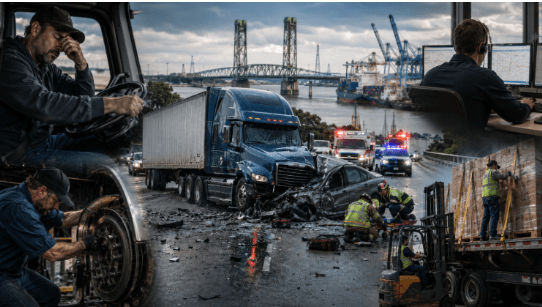
A devastating truck crash can involve more than one responsible party, from the driver and trucking company to maintenance providers, cargo loaders, and others whose decisions may have contributed to the collision.
On Wilmington’s freight-heavy roads, the hardest part of a truck accident may begin after the vehicles have been cleared from the scene. You may leave the scene facing a hospital stay, time away from work, and questions about who will pay for what comes next.
Speaking with a Wilmington truck accident lawyer can help bring order to those questions, especially when a trucking company, its insurer, and multiple sources of evidence may become part of the case.
In Wilmington and across Eastern North Carolina, the goal should be more than pushing a claim toward a quick settlement. It should be understanding what happened, protecting evidence, and making sure the long-term effect of the crash is not reduced to bills.
Why Wilmington Truck Crashes Can Become Complicated
The Port of Wilmington handles more than 5,000 container gate moves each week and provides access to major highways and interstates across North Carolina. That activity also means motorists regularly share roads with tractor-trailers and other heavy vehicles.
When one of those vehicles crashes, responsibility may extend beyond the driver. Fatigue, poor training, inadequate maintenance, unsafe loading, defective equipment, or pressure from a motor carrier can become relevant. Houser Injury Law’s truck-accident practice describes examining driver records, maintenance documents, cargo issues, company practices, and electronic data rather than assuming every collision has a single cause.
Why Early Evidence Can Change The Case
Some of the most useful evidence in a truck case does not remain available forever. Electronic logging devices can record driving time and duty information, while truck data systems may help show speed, braking, location, or other details surrounding the collision. Federal rules generally require motor carriers to retain ELD records and supporting documents for six months.
Houser Injury Law describes sending preservation notices and securing information such as driver logs, GPS data, inspection records, internal communications, and event-data-recorder information. Photos of the roadway, witness statements, surveillance video, and vehicle damage can provide context.
North Carolina Fault Rules Deserve Attention
North Carolina’s contributory-negligence rule makes fault important. Courts in the state continue to recognize contributory negligence as a defense that can bar a plaintiff’s recovery. For you, that means an insurer’s suggestion that you were partly responsible should not be brushed aside as routine negotiation.
A careful evaluation looks at what the evidence supports. Lane position, speed, signals, visibility, braking, cargo movement, and the actions of each driver may matter. The point is to prevent assumptions from replacing a reconstruction of what happened.
Federal Trucking Rules Can Reveal A Bigger Story
Commercial drivers operate under federal safety rules that do not apply to ordinary motorists. For many property-carrying drivers, hours-of-service rules allow up to 11 hours of driving after 10 consecutive hours off duty and generally prohibit driving beyond the 14th consecutive hour after coming on duty.
If fatigue is suspected, logs and ELD information may show whether those limits were followed. Looking at the truck’s maintenance history can help show whether a mechanical issue played a part in the crash. Shipping and loading records can also become important if the cargo moved, fell, or was not secured properly. In crashes involving hazardous cargo or fuel spills, cleanup and environmental response may also become part of the factual picture.
Recovery Is About More Than The First Medical Bill
A serious truck injury can affect your ability to work, care for family, drive, or return to familiar routines. A claim may therefore involve current treatment, future medical needs, reduced earning ability, rehabilitation, property loss, and the daily consequences of an injury.
North Carolina generally provides a three-year limitations period for personal-injury actions, although the correct deadline can vary with the facts and type of claim. That should not be mistaken for a reason to delay because evidence may disappear long before the filing deadline arrives.
Insurance can add another layer. North Carolina’s minimum automobile liability limits increased to 50/100/50 for policies issued or renewed on or after July 1, 2025, and underinsured-motorist coverage is included in new or renewed policies. The North Carolina Department of Insurance also offers consumer information about auto coverage.
A Strong Case Should Give You A Clearer Path Forward
Experienced truck accident lawyers in Wilmington can handle insurer communications, identify the people and companies whose actions may have contributed, preserve evidence, and evaluate whether a proposed settlement reflects the lasting effects of the crash. That can give you more room to focus on treatment and family while recovering.
Houser Injury Law emphasizes honest, straightforward guidance, personal attention, investigation, evidence-based negotiation, and trial preparation when a fair resolution cannot be reached. The firm also supports Wilmington organizations that provide practical help during difficult circumstances.
If you are trying to understand what a truck crash may mean for your health, work, and financial future, a consultation with The Houser Law Firm PC can help turn unanswered questions into informed next steps without treating your case as if it follows the same path as everyone else’s.
FREQUENTLY ASKED QUESTIONS
1. Can the trucking company be responsible even if the truck driver caused the crash?
Yes. Responsibility may extend beyond the driver to the trucking company, vehicle owner, maintenance provider, or another business involved in operating or loading the truck.
2. What happens if the trucking company says you were partly at fault?
North Carolina follows contributory negligence rules, so an allegation that you helped cause the crash can seriously affect your claim. Evidence involving speed, signals, lane position, visibility, and each driver’s actions can become especially important.
3. How quickly should truck data and driver records be preserved after an accident?
As soon as possible. Driver logs, GPS information, video, truck data, and company records may not be kept forever, so early preservation can prevent useful evidence from being lost.
4. What if the truck driver was tired or had been driving too long?
Federal rules limit how long many commercial drivers may drive and remain on duty. Driver logs, schedules, fuel records, and electronic data can help determine whether fatigue or excessive driving time played a role.
5. How are future medical needs and lost earning ability considered after a serious truck accident?
A claim may account for more than current bills. Future treatment, rehabilitation, missed work, reduced earning ability, and lasting changes to daily life may also affect the value of the claim.
6. Should you accept an early settlement offer from the trucking company’s insurer?
Not before the full effect of the injuries is understood. An early offer may not account for future treatment, additional time away from work, or lasting limitations that become clearer later.
7. Can more than one company or insurance policy be involved in a Wilmington truck accident claim?
Yes. Commercial truck cases may involve the driver, trucking company, vehicle owner, maintenance company, cargo business, and more than one insurance policy, depending on the circumstances.
8. How long do you have to bring a truck accident claim in North Carolina?
North Carolina generally allows three years for many personal injury claims, although exceptions can apply. Acting earlier can also help preserve witnesses, electronic records, and other evidence before it disappears.