

If you’ve ever fought against persistent breakouts, you’ll know it’s something of a war of attrition. What’s more, the trouble doesn’t end when the pimple disappears either, as in many cases, it leaves something behind – a mark, a shadow or a scar. These issues can linger long after your breakouts have disappeared, and the key to treating them is knowing the difference between acne marks vs acne scars.
So, how can you tell which of the two you’re dealing with, and more importantly, how do you help your skin recover from either? That’s the focus here, and we hope you stick around.
Acne Marks vs Acne Scars: What They Look Like & Why They Happen
Most people put acne marks and scars in the same category, but they’re quite different. To make things a little clearer, let’s compare acne marks vs acne scars.
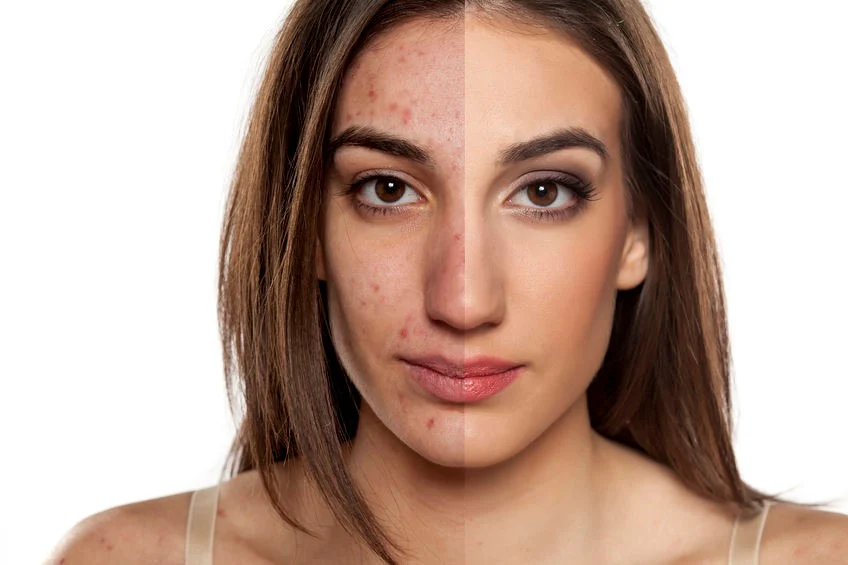
- Acne Marks – These are flat, pigmented areas that show up after your breakouts have healed. On lighter skin, they tend to appear pink or red, whereas if you happen to have darker skin, they often look like dark brown spots.
Why do they look like they do? Well, these marks are a result of inflammation, and your skin responds by creating extra pigment as part of the healing process. The effects can be worsened if you’ve picked at a pimple or had a particularly inflamed breakout.
The good news is that these marks aren’t permanent. With time and the right care, acne marks will often fade on their own, though that may take weeks or even months.
- Acne Scars – These, on the other hand, are actual changes to the skin’s texture. They form when the deeper layers of skin are damaged, resulting in indentations (like ice pick or boxcar scars) or raised tissue (known as keloids or hypertrophic scars). Unlike marks, these are permanent unless you consider professional treatments.
That’s what makes early aftercare so important, especially during the healing phase right after your breakouts have healed. The question is, is there anything you can do about them yourself, rather than having to visit your dermatologist?
So What Can You Do About Them At Home?
While scars do require more intensive treatment (like microneedling, laser resurfacing, or chemical peels), acne marks can respond well to over-the-counter skincare that supports your skin’s natural recovery process. Some overnight brightening patches are now designed specifically for the post-blemish stage – not to draw out pus, but to support healing, reduce discoloration, and protect the skin while it works to repair itself.
Look for options that contain proven brightening and barrier-supporting ingredients like niacinamide, tranexamic acid, and magnesium ascorbyl phosphate (a stable form of vitamin C).
When Treating Acne Marks vs Acne Scars – Know Your Skin & Act Quickly
The key to treating both acne marks and acne scars is recognizing what your skin needs in the moment. If you’re seeing redness or pigmentation but the surface feels smooth, you’re likely dealing with marks, and those can often be treated at home. If scarring is starting to develop, looking after your skin as early as possible can help to reduce its impact.
Either way, having a targeted post-blemish plan, especially one that works overnight, can make a real difference in how your skin looks and feels in the long run.
