

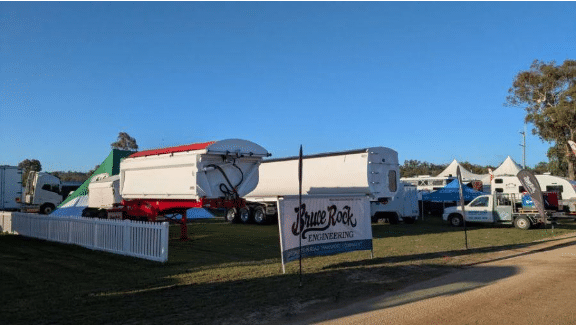
A trailer’s price tag is the easiest number to compare, so most buyers start there. But that figure is only the opening line of a much longer ledger, one that keeps running for as long as you own the trailer. Tare weight, maintenance, downtime and resale value all shape what a trailer really costs, and together they usually matter more than the number on day one. Before you commit to a price alone, it is worth comparing the range of new and used trailers for sale at Bruce Rock Engineering and thinking about the years ahead, not just the invoice in front of you.
1. The Purchase Price Is Only the Starting Number
Every trailer purchase begins with a quote, so it is natural to treat that quote as the whole story. It is not. The purchase price covers what you pay to take ownership, but it says nothing about what the trailer will cost you to run, fix and eventually replace.
Two trailers can carry an identical sticker price and still cost very different amounts over five or ten years of work. One might need new bearings and a repaint by year three. The other might still be earning its keep with nothing more than routine servicing. If you only compare the number on the invoice, you are comparing the least useful part of the decision.
2. Tare Weight Decides How Much You Earn Per Trip
Tare weight is the trailer’s own weight before you load anything onto it, and it has a direct line to your revenue. Payload is simply the legal mass limit minus the tare weight, so every kilogram the trailer weighs is a kilogram you cannot carry.
This is where steel quality earns its keep. Trailers built from high-strength steels such as Hardox and Strenx can be engineered lighter without giving up strength, which frees up genuine payload within the same legal limit. On a single load that difference might feel small. Multiply it across thousands of trips over a decade of freight, mining or agricultural work, and it becomes real money, because every extra kilogram of payload is a kilogram you are paid to move rather than a kilogram of dead steel along for the ride.
3. Maintenance and Parts Costs Add Up Over the Years
A trailer earns nothing while it sits in the workshop, so maintenance costs deserve close attention. Build quality is the biggest factor here, because it determines how often that workshop visit happens in the first place.
Thinner steel and lighter-duty components tend to fatigue sooner under repeated heavy loads, so cracked welds, worn suspension parts and chassis flex show up earlier in a trailer’s life. A trailer built to handle real payloads, on well-specified steel and proper welds, simply asks less of your maintenance budget year after year. Parts availability matters too. A trailer from a manufacturer that still supports its older models will cost less to keep running than one where spares are hard to find or no longer made.
4. Downtime Costs More Than the Repair Bill
When a trailer is off the road, the repair invoice is rarely the biggest cost. The bigger cost is everything that trailer was supposed to be doing instead.
Picture a tipper out of action for a week during harvest, or a flat-top sidelined mid contract. You still have wages, fuel and finance payments to cover, but no freight moving to pay for them. So the real cost of downtime is the repair bill plus the lost trips, the hire replacement you might need, and possibly a client who goes elsewhere because you could not deliver on time. A trailer that rarely breaks down is not just cheaper to fix. It protects income you would otherwise lose.
5. Resale Value Reflects How the Trailer Held Up
The end of a trailer’s service life with you is not the end of its value. What you get back when you sell or trade it depends heavily on the condition it is in, and that condition is a direct result of how it was built and maintained.
A trailer with a straight chassis, sound welds and no history of major structural repairs will hold buyer confidence, and confidence is what drives resale price. Buyers and mechanics can tell the difference between a trailer that has been worked hard but built well, and one that has simply worn out early. As a result, a well-built trailer often claws back a meaningful share of its purchase price at resale, quietly offsetting years of ownership costs you may not have accounted for.
6. The Cheapest Trailer Today Is Not Always the Cheapest Trailer Overall
Add up tare weight, maintenance, downtime and resale together, and the picture changes considerably. A trailer that costs more upfront but weighs less, breaks down less and resells better can easily come out ahead of a cheaper trailer that drains money in every other category.
In my experience, buying purely on the lowest quote is one of the costliest mistakes a fleet buyer can make, because it treats the invoice as the whole decision rather than the first line of it. So the next time you compare trailers, look past the number on the quote. Think in terms of payload earned, repairs avoided, days on the road and dollars recovered at resale. Because that is what a trailer really costs, and it is the only number that tells you the full truth.
