

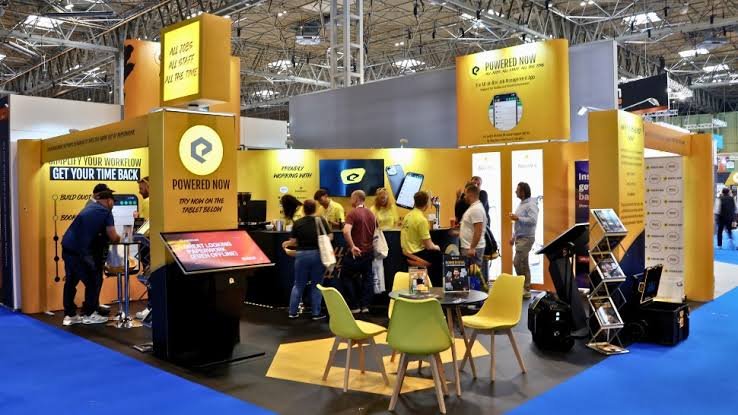
Why the best view of your stand starts in the aisle
You can test your stand’s sign before anything gets built. Tape a sketch of the front wall to a door and walk past it at your usual pace. Give it one glance. What can you read before you’ve passed the door? If you only catch the company name, what would that tell someone who’s never heard of you? A visitor should be able to tell what you make, sell or have on display without slowing down to read the back wall. A sheet of paper and some tapes are enough to spot that problem early.
Think about what happens once someone slows down. Is there room for them to stop at the front? Can they see what’s on display or tell where to try it? Those are good questions to ask when planning custom exhibition stands around the way visitors will use the space. Start with the view from the aisle, then work out where people can watch a demo or speak with your team. This guide walks you through testing your sign, briefing your builders and checking the layout. It’s easier to shift a counter on paper than it is on show day.
What custom exhibition stands need to show at a glance
Decide what you want a visitor to remember after one look. If they can recall your name but have no idea what’s on display, give the sign a short line that tells them what they’ll find. Use the words customers use when they ask about your product. Save the specs for a spot where people can stop and read. The front wall has a simpler job. It gives people a reason to pause.
- Place the main line high enough to read over a small crowd.
- Leave space around the words so they’re easy to pick out.
- Walk past the sign from both directions to check the view.
Ask someone who hasn’t seen the sketch to walk past it. Once it’s out of sight, ask what caught their eye and what they’d expect to find at the stand. If they struggle to explain it, shorten the line and try again. If they saw the logo first and missed the message altogether, try moving the line to a more visible spot.
How to brief custom exhibition display builders well
Give your custom exhibition display builders a copy of the floor plan and tell them what you want visitors to do at the stand. Sketch the route from the aisle to the demo and show where you expect people to stop. Ask the builders to show how they’ll handle these three details in the layout.
- Mark the front edge
Show where visitors can pause without blocking the aisle; mark where they can step into the stand. Point out which walls face the busiest part of the aisle.
- Show what needs power
List what you’ll plug in and where each item will sit. Mark those spots on the floor plan. Ask the builders how they’ll route the cables so they stay clear of walkways.
- Give stock a home
List what staff need close at hand during the show. Set aside space for spare stock, bags and demo supplies. Check that staff can get to it while someone is trying the product.
Ask who will set up the stand and who will take it down. Get the build, setup and pack-down costs in the same quote. Check the show’s rules and confirm who’s responsible for each task. Agree on the key dates before you sign off.
How custom trade show stands make room for conversations
Someone who wants to ask a quick question may be happy to stay near the front. A visitor who needs a closer look at the product will want more space and time. A good layout for custom trade show stands gives both visitors a place to stand. Keep the demo visible from the aisle and leave room for people to step around it. If staff have to squeeze past visitors to get from the demo to the counter, try shifting the counter.
- Make room for two visitors to watch the demo side by side.
- Leave a clear path from the demo to a quieter spot for a longer chat.
- Give staff a place to note what they’ve promised to send after the show.
Walk through the layout with your team. Enter from the left, then from the right, and stand where you’d want to watch the demo. Have a second person walk in while you’re there. Can they reach the counter without asking you to move? If the path feels tight, shift one piece of furniture and try again with both spots occupied.
What to check before you sign off on your stand design
Take one last walk through the layout before you approve it. Pass the sign at the pace you’d walk down a busy aisle. Step in for the demo, then find somewhere to ask a question without getting in the way of the next visitor. That short run-through can reveal a counter that sticks out too far or a stack of spare stock that takes up space people need.
Pull out your floor plan and mark the route you just walked. Ask the staff who’ll be there on show day to walk it too; if someone has to double back or step into the aisle to get around a fixture, circle that spot on the plan. Share the marked-up drawing with your builders so they can fix the layout before work starts.
