

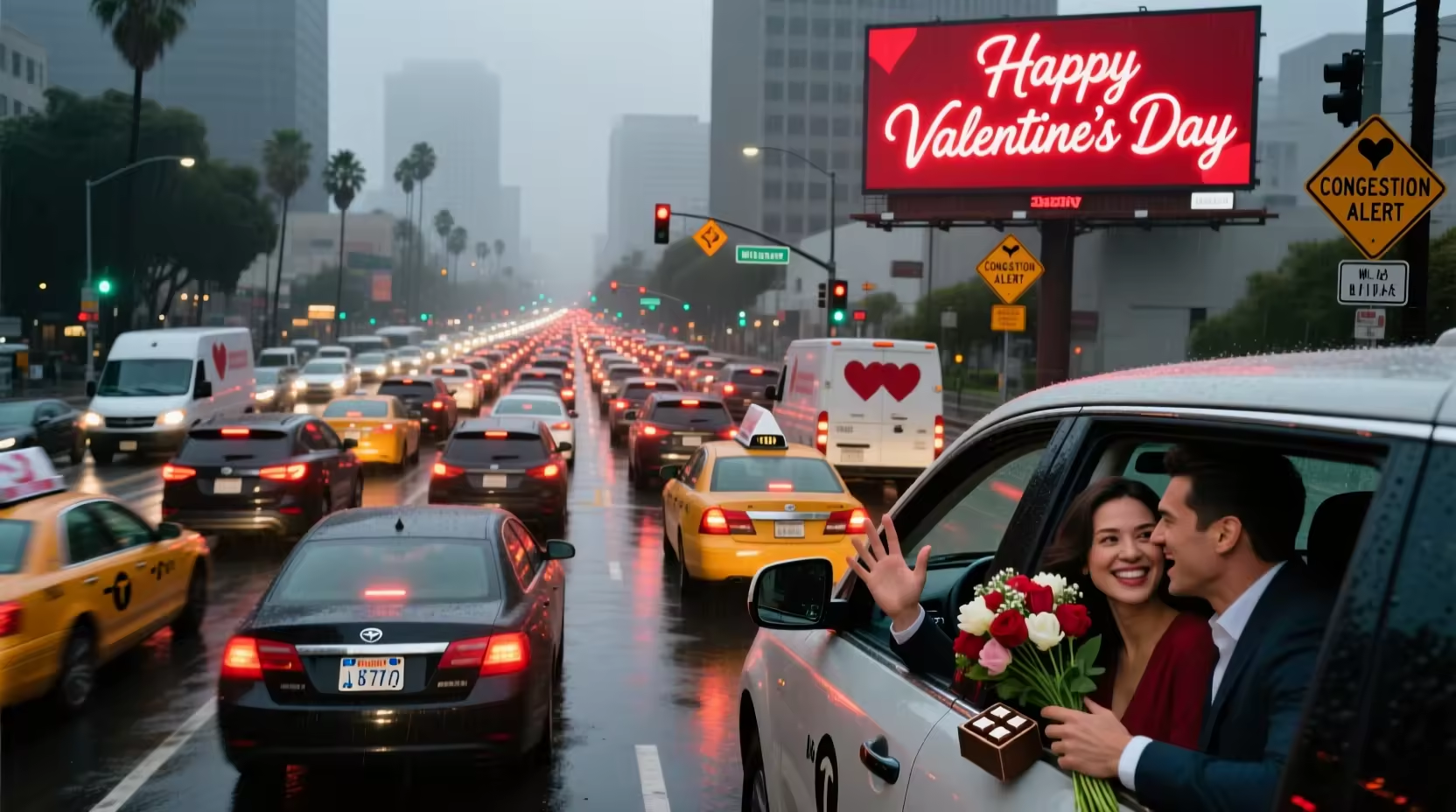
A new analysis of federal crash records and national survey data reveals that Valentine’s Day brings a measurable rise in fatal traffic incidents, driven in part by emotional distraction and the influence of music. The study, conducted by Suzuki Law Offices, examines five years of federal crash data and behavioral research to understand why February 14 consistently produces more dangerous road conditions for American drivers.
A Clear Increase in Fatal Crashes on February 14
According to the National Highway Traffic Safety Administration’s Fatality Analysis Reporting System, fatal crashes are 4 percent more likely on Valentine’s Day than on an average day. Over the five Valentine’s Days between 2019 and 2023, the federal dataset shows 405 total crash fatalities.
A closer look at emotional distraction reveals a more striking pattern. During the month of February across those same years, 61 fatalities were linked to emotionally distracted drivers. Of those, 14 occurred specifically on Valentine’s Day, a disproportionately high share for a single date in a month that typically records some of the lowest crash totals of the year.
Year‑by‑Year Emotional Distraction Fatalities on Valentine’s Day
| Year | Fatalities from Emotional Distraction |
|---|---|
| 2019 | 2 |
| 2020 | 6 |
| 2021 | 1 |
| 2022 | 4 |
| 2023 | 1 |
The year 2020 stands out. It recorded 101 total Valentine’s Day fatalities, the highest in the five‑year period. That same year, 12 February fatalities were tied to emotional distraction, and half occurred on Valentine’s Day.
Americans Commonly Drive While Emotional
Survey data included in the study shows that emotional driving is widespread. A March 2025 national survey found that 62 percent of Americans have cried in their car at least once.
Breakdown by gender:
- 47 percent of men
- 76 percent of women
Breakdown by age:
- 18 to 29: 54 percent
- 30 to 44: 61 percent
- 45 to 64: 71 percent
- 65 and older: 57 percent
Breakdown by race:
- White: 66 percent
- Black: 48 percent
- Hispanic: 62 percent
Breakdown by region:
- Northeast: 58 percent
- Midwest: 62 percent
- South: 59 percent
- West: 68 percent
Political affiliation also showed differences. Among those who voted in the 2024 presidential election:
- Harris voters: 73 percent
- Trump voters: 59 percent
The study notes that 11 percent of Americans say they are likely to cry in their car specifically while listening to sad music.
Emotional Drivers Face Dramatically Higher Crash Risk
Research from the Virginia Tech Transportation Institute shows that drivers experiencing strong emotions are 10 times more likely to crash than calm drivers. Emotional drivers are more likely to:
- Miss hazards such as slowing traffic or debris
- React too slowly to avoid danger
- Make unsafe maneuvers such as abrupt lane changes
- Feel detached from road conditions and other drivers
These behaviors contribute to the 400,000 distracted driving crashes reported in 2024.
Music Intensifies Emotional Distraction
Multiple studies cited in the analysis show that music can significantly alter driving behavior.
Key findings include:
- 25 percent of traffic accidents involve in‑vehicle distractions such as music
- Songs above 120 beats per minute can increase speed by 10 to 20 miles per hour
- High‑energy or nostalgic songs increase cognitive distraction
- Songs with lyrics reduce concentration on complex tasks by up to 25 percent
Most Dangerous Songs for Emotional Drivers
The study identifies 10 songs with both high emotional content and high BPM, making them especially risky for drivers already feeling emotional.
Safer Songs for Emotional Drivers
Songs under 80 BPM are less likely to trigger aggressive driving, though they can still provoke strong emotions. Examples include:
- “River” by Joni Mitchell (59 BPM)
- “Without You” by Harry Nilsson (65 BPM)
- “The Rose” by Bette Midler (66 BPM)
Why Valentine’s Day Is Especially Risky
The study concludes that Valentine’s Day combines several risk factors:
- Heightened emotions
- Increased likelihood of listening to sentimental music
- More drivers reporting distraction or being lost in thought
- A measurable rise in emotional‑distraction fatalities
The data suggests that even small emotional shifts can have serious consequences behind the wheel. Suzuki Law Offices compiled the findings to highlight how emotional states and music choices can influence driver safety on a day already associated with heightened feelings.
