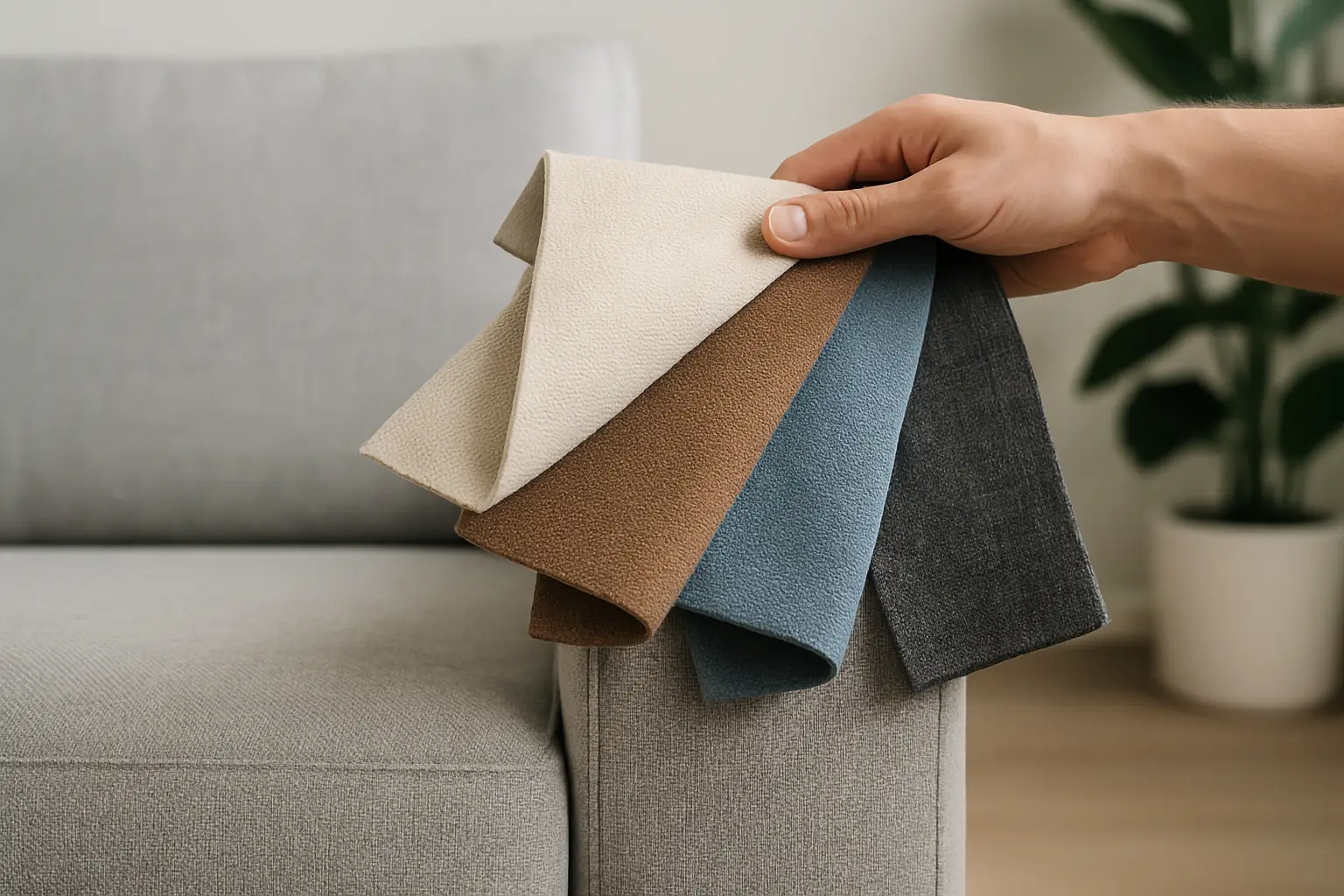
The sofa is the most used surface in a home. Most people sit on it for several hours every day. It absorbs the light of the room, defines its proportions, and sets the tone for how the entire space reads. Despite all of this, it is often the last thing people invest in thoughtfully. They buy what is affordable, use it until it looks tired, and then buy again. The alternative, choosing a fabric cover with genuine intention, produces a different experience entirely. Not a better-looking room in photographs, but a better room to actually live in, day after day.
How natural fibre reads differently in a room
Natural fibres behave differently from synthetic ones in ways that matter specifically in a living room. A synthetic upholstery fabric reflects light flatly and uniformly. It reads the same from every angle and at every time of day. A natural linen or cotton fabric, by contrast, has a surface with slight variation in weave and texture. It absorbs and scatters light rather than bouncing it back. This gives the sofa a visual quality that shifts gently across the day as light moves through the room. A sofa in natural linen at nine in the morning looks different from the same sofa at three in the afternoon, and that variation is one of the things that makes a room feel inhabited rather than dressed. It is a subtle effect, but it is one of the things that makes a room feel alive rather than static.
Why a removable cover changes how a room gets lived in
The practical case for choosing a removable fabric cover over fixed upholstery is straightforward. A fixed upholstery fabric cannot be laundered. It accumulates dust, allergens, and the residue of daily life, and no surface cleaning fully addresses what has settled into the weave over months and years. A cover that can be removed and washed changes this entirely. IKEA slipcovers from Norsemaison are made in natural fabrics, cut to fit specific IKEA sofa models precisely. They can be removed, machine-washed, and replaced. This turns the sofa from something that is protected and avoided into something that is genuinely used. For families with children or animals, this change is not minor. It is the thing that makes the room work.
What does linen do over the years of regular use
Linen is the fabric that most consistently produces the results people are looking for when they want a room that feels considered rather than assembled. It ages in a direction that enhances rather than degrades it. A linen cover that has been through fifty washing cycles is softer and more supple than it was when new. It has a lived quality that looks intentional rather than worn. Synthetic alternatives move in the opposite direction: they harden, pill, and lose their colour consistency across points of wear. This difference in ageing trajectory is not a small thing. It means that the decision made at the point of purchase continues to shape the room’s quality for years in one direction or the other. The trajectory of the two materials over time is one of the clearest reasons to choose natural over synthetic when the goal is a room you want to live in for years.
Cotton as a cleaner alternative with lasting value
Cotton offers a different natural option, one that suits interiors where linen’s texture feels too informal or too pronounced. A woven cotton cover has a cleaner, more uniform surface than linen. It takes colour evenly and holds it well across repeated washing. For rooms with a more precise or contemporary aesthetic, cotton is often the better fit. Both materials share the fundamental quality that matters most: they do not deteriorate into something that looks worse than when you started. Choosing either of them over a synthetic alternative is a decision that compounds in value over time.
Fabric choice and its relationship to the wider environment
The question of what fabrics are made of also matters for reasons that extend beyond the feel of the room. WRAP’s work on home textiles longevity and sustainable fabric use documents the ways in which home textiles contribute to environmental impact, and highlights that extending the life of fabric through quality materials and proper care is one of the most effective ways to reduce that impact. Choosing a linen or cotton cover that lasts eight years instead of a synthetic one that degrades in two is not just a design decision. It is a reduction in demand for new materials, new manufacturing, and new waste. These outcomes are linked in practice: the fabric that ages well is almost always the fabric that has the lowest overall impact over its useful life.
The role of colour in how a sofa shapes a room
The colour of a sofa cover shapes a room differently from any other element. A rug or a curtain can be replaced relatively easily if the colour stops working. A sofa occupies the visual centre of the room and affects everything around it. Colours that read well in isolation often assert themselves too strongly in context. Natural tones: warm white, oatmeal, undyed linen, pale sage, soft grey, tend to settle into a room rather than compete with it. They make the space easier to add to and easier to change. A room built around a neutral sofa can be refreshed through cushions, throws, and rugs alone, without ever touching the sofa itself. The sofa becomes a stable foundation for the room’s character rather than its fixed statement. That flexibility is one of the most undervalued properties of a good cover.
Why fit determines whether the fabric choice works at all
Fit is the variable that separates a cover that works from one that doesn’t. Universal stretch covers exist and serve a purpose for temporary situations, but they are not an answer to the problem of a room that needs to look intentional. A stretch cover slides during use, wrinkles at the seams, and communicates that the sofa is disguised rather than dressed. A cover made for the specific dimensions of a named sofa model behaves differently. It stays in place, maintains the sofa’s lines, and allows the fabric to read as it should. Without correct fit, even the best natural fabric cover fails to produce the result it is capable of.
A room that improves with time rather than despite it
There is a version of this problem that most people never consider: the gap between the room as it appears when first set up and the room as it actually feels to live in after six months. New synthetic upholstery looks presentable when clean. After half a year of daily use, it often tells a different story. A natural fabric cover in linen or cotton, properly fitted and regularly maintained, looks better at six months than at day one. The room around it settles. The fabric develops. The sofa begins to feel like it belongs to the space rather than having been placed in it. That quality, of a room that improves with habitation, is what a good slipcover makes possible.