



Cities That Were Never Meant to Be Museums
There is a particular kind of disappointment that experienced travelers know well — arriving at a famous historical destination only to realize it feels more like a staged attraction than a real place. Beautiful, yes. Impressive, certainly. But somehow disconnected from life.
Silk Road cities in Central Asia are different.
They were never designed to become museums, and they have not fully transformed into them. Instead, they exist in a rare state where history and modern life overlap naturally. You do not simply observe them — you move through them as they continue to function, evolve, and breathe.
Samarkand, Bukhara, and Khiva are often described as the highlights of the Silk Road, but what makes them special is not just their architecture. It is the atmosphere. The sense that these cities are not frozen in time, but layered with it.
Walking through them feels less like stepping into the past and more like navigating multiple timelines at once.
Samarkand: Scale, Power, and Timeless Design
Samarkand is often the first major encounter travelers have with Silk Road grandeur, and it sets expectations high. This is not a city that reveals itself slowly. It makes an immediate impression.
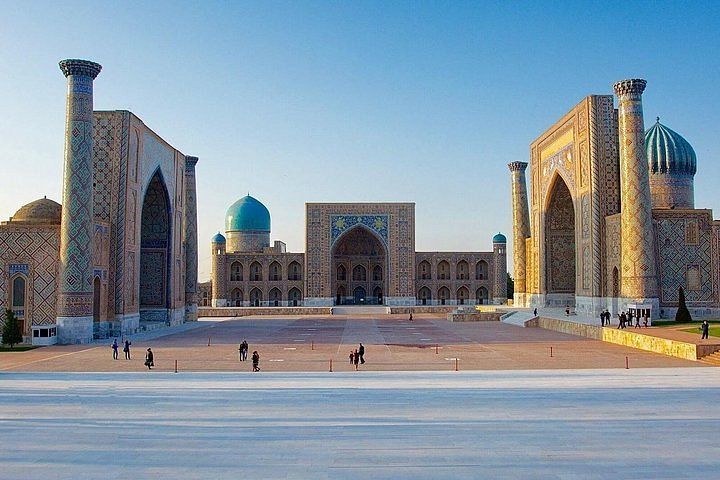
The Registan Square is the focal point, a space that was once the intellectual and commercial center of the region. The scale alone is striking, but it is the precision of design that leaves a lasting impact. The symmetry, the intricate tilework, and the balance between space and structure create a sense of harmony that feels almost deliberate beyond aesthetics.
Yet Samarkand is not only about monumental spaces.
Move away from the main squares, and the city becomes more personal. Streets narrow, markets become busier, and daily life unfolds around historical structures that have simply been absorbed into the present. This contrast between grandeur and intimacy is what makes Samarkand more than just a visual experience.
It is a place that demands attention but rewards curiosity even more.
Bukhara: A City That Invites You to Slow Down
If Samarkand impresses, Bukhara invites.
The city does not rely on scale to create impact. Instead, it builds its identity through atmosphere. The old town feels cohesive in a way that is rare, where architecture, layout, and daily life form a continuous environment rather than separate elements.
Walking through Bukhara is an exercise in observation. The pace naturally slows down. Details become more noticeable — the texture of walls, the rhythm of footsteps in narrow streets, the quiet conversations happening in shaded courtyards.
What sets Bukhara apart is its authenticity. While it is undoubtedly a major tourist destination, it has retained a sense of normalcy. People live here, work here, and continue traditions that have existed for generations.
The city does not try to impress through spectacle. It creates connection through familiarity, even for those who are visiting for the first time.
Khiva: The Closest Thing to a Time Capsule
Khiva often feels like the most visually cohesive of the Silk Road cities. Surrounded by ancient walls and set against a desert backdrop, it presents an image that is almost cinematic.
At first glance, it might seem too perfect, as if it has been preserved specifically for visitors. But the longer you stay, the more you notice the subtle details that make it feel real.
Shadows shift across narrow streets, local residents move through spaces that have existed for centuries, and the city reveals layers that are not immediately visible. It is both preserved and lived-in, structured yet organic.
Khiva’s compact size also changes the way it is experienced. Unlike larger cities, where movement is constant, here you can pause. Sit in a quiet corner, observe the surroundings, and allow the atmosphere to unfold without rushing.
It is a city that rewards patience.
Beyond the Famous Names: Expanding the Experience
While Samarkand, Bukhara, and Khiva form the core of Silk Road travel in Uzbekistan, limiting the journey to these cities would only tell part of the story.
Central Asia is filled with lesser-known destinations that add depth and variation to the experience. In Uzbekistan alone, places like Shahrisabz offer historical significance with fewer crowds, allowing for a more personal connection to the past.
Moving beyond Uzbekistan opens even more possibilities. In Kazakhstan, cities such as Turkestan provide insight into regional spiritual traditions, while in Kyrgyzstan, the focus shifts toward landscapes that once supported Silk Road movement rather than defined it architecturally.
These extensions are important because they transform a structured itinerary into a more dynamic journey. Instead of moving from one iconic location to another, travelers begin to understand how these places connect — geographically, culturally, and historically.
The Silk Road was never about isolated cities. It was about movement, and expanding the route brings that idea back to life.
The Human Element: Markets, Food, and Daily Life
Architecture may define the visual identity of Silk Road cities, but it is people who give them meaning.
Markets remain central to this dynamic. Even today, bazaars function as social and economic hubs where daily life unfolds in a way that feels both familiar and distinctive. The exchange of goods continues, but so does the exchange of stories, traditions, and habits.
Food plays an equally important role. Central Asian cuisine reflects centuries of cultural interaction, blending influences from different regions into a cohesive culinary identity. Meals are often shared, and the act of eating becomes part of the cultural experience rather than just a necessity.
Equally significant are the smaller, less obvious moments. A conversation with a local vendor, a quiet evening in a courtyard, or simply observing how people interact with their environment — these experiences create a deeper understanding of the region.
They are not planned, and that is precisely why they matter.
Why These Cities Feel Different From Anywhere Else
There are many historical cities around the world, but Silk Road destinations in Central Asia stand out for a specific reason: they have not been fully separated from their original purpose.
In many parts of the world, historical centers have been transformed into curated spaces designed primarily for visitors. While this makes them accessible, it often removes the sense of authenticity.
In Central Asia, that transformation is incomplete.
Cities like Samarkand and Bukhara continue to function as living environments. This creates a balance between preservation and practicality, where history remains visible but not isolated.
For travelers, this means a more immersive experience. You are not just looking at history — you are moving through it, interacting with it, and, in a small way, becoming part of it.
This is what makes Silk Road cities feel alive.
Discover Silk Road Cities with Travel Land
Exploring Silk Road cities may seem straightforward at first glance, but creating a well-balanced itinerary requires careful planning. Distances between destinations, transport options, and the overall flow of the journey all influence the experience.
This is why working with a specialized Central Asia travel agency can significantly improve the quality of a trip. Travel Land focuses on building routes that connect major Silk Road cities with additional destinations, ensuring that the journey feels complete rather than repetitive.
For travelers interested in a deeper cultural experience, Travel Land offers structured Silk Road tours that combine iconic cities like Samarkand, Bukhara, and Khiva with lesser-known locations that add context and variety. These itineraries are designed to maintain a natural rhythm, balancing exploration with time to absorb each destination.
Instead of simply visiting famous landmarks, travelers gain a broader understanding of how these cities relate to each other and to the region as a whole. With the right planning and local expertise, Silk Road travel becomes more than a sequence of stops — it becomes a connected and meaningful journey.
Conclusion: Cities That Continue to Tell Their Story
Silk Road cities in Central Asia are not relics of the past. They are places where history continues to unfold, where architecture remains relevant, and where daily life adds new layers to an already complex narrative.
Samarkand impresses, Bukhara invites, and Khiva preserves. Together, they create a travel experience that feels both structured and fluid, monumental and personal.
For travelers seeking more than just visual впечатления, these cities offer something deeper — a sense of continuity, connection, and presence that is increasingly rare in modern tourism.
And perhaps that is their greatest strength. They do not try to recreate the past. They simply continue to live it.


