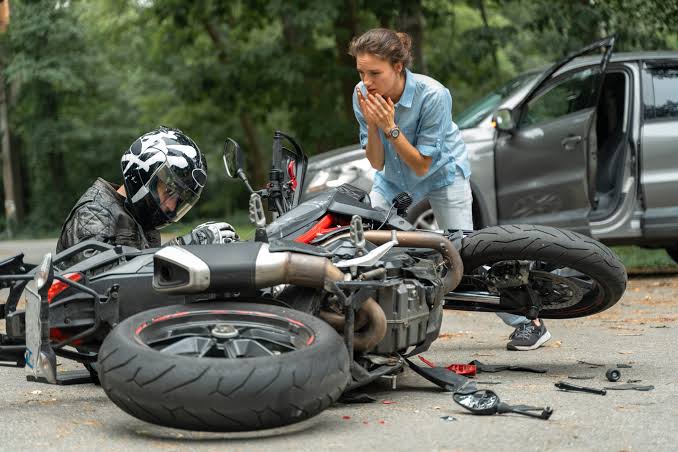
Starting With Stability After The Crash
The immediate aftermath of a motorcycle crash is almost always dominated by logistical chaos long before any legal questions cross a rider’s mind. A Motorcycle Accident Lawyer in Raleigh, NC can step in to transform these urgent, chaotic concerns into a structured claim strategy. This type of guidance is critical when severe injuries, complex road conditions, driver behavior, and North Carolina’s strict fault rules all require a meticulous review.
For the vast majority of injured riders, the initial challenge is simply figuring out what to handle first. Professional legal guidance helps organize these moving parts so that the resulting injury claim is built entirely around solid facts, rather than being shaped by the high-pressure tactics of an insurance company.
Challenging Bias Against Riders
Motorcycle accident claims regularly face a much steeper uphill battle than standard car-to-car collisions. Insurance adjusters and defense attorneys frequently lean into the unfair assumption that anyone on two wheels must have been speeding, weaving through traffic, or taking unnecessary risks simply because a motorcycle was involved. This built-in prejudice directly impacts early settlement offers and heavily influences how fault is argued and how seriously the claim is valued.
Applying North Carolina Rules Carefully
North Carolina enforces legal regulations that make motorcycle accident claims exceptionally sensitive. The biggest hurdle for riders in North Carolina is that the state still clings to an old, incredibly strict law called contributory negligence.
Under this system, the legal framework is completely unforgiving: if an insurance company can prove a rider was even one percent to blame for the wreck, that rider is entirely blocked from getting a single dime of financial compensation.
Additionally, state law mandates strict safety compliance. Any failure to comply with these rules can be weaponized by insurance companies to trigger the fault bar and deny a claim entirely.
Measuring The Full Injury Picture
Unlike the occupants of passenger cars and trucks, motorcycle riders have no enclosed steel frame, crumple zones, or airbags to shield them from an impact. A rider typically sustains severe injuries from multiple forces during a single event: the initial impact with the vehicle, the secondary fall to the ground, and violent contact with pavement, guardrails, or other roadside objects.
These forces frequently result in catastrophic trauma. A solid case has to look at the big picture—meaning it needs to show exactly how these injuries tear through a person’s life today, plus the lingering problems that will follow them for years.
Winning a fair settlement means pushing back against lowball offers and demanding accountability for everything. That includes upcoming surgeries, grueling months of physical therapy, lost income from missed work, and the devastating reality of a ruined career or a permanent drop in future earning power.
On top of that, it has to factor in the toll of daily pain, the cost of replacing a totaled bike, and the steep expense of modifying a home to handle long-term physical limitations.
Using Local And State Resources
Rebuilding a life after a severe motorcycle wreck often requires a massive network of support, ranging from specialized hospitals and physical therapists to psychological counselors, vocational rehabilitation specialists, and family caretakers. When an injury strips away a person’s ability to work, drive, care for children, or maintain independent living, these profound lifestyle disruptions must be factored directly into the legal evaluation of the case.
Looking at the bigger picture, North Carolina actually tries to get ahead of these terrible wrecks through statewide safety initiatives like BikeSafe NC. It’s a joint effort between the North Carolina State Highway Patrol and the Governor’s Highway Safety Program designed specifically to bring down motorcycle fatality rates.
The way it works is pretty practical: they pair up regular, everyday riders with experienced state trooper motorcyclists. This hands-on setup gives people a unique chance to sharpen their road awareness, iron out bad habits, and build the kind of real-world confidence that keeps them safe on busy roads.
Considering Road Conditions And Community Impact
Not every motorcycle wreck is caused solely by a negligent driver. Because motorcycles are lightweight and travel on two wheels, they are highly susceptible to minor road defects that a standard passenger car would easily roll over.
Beyond the initial impact, a bad motorcycle wreck usually leaves behind a mess of environmental hazards that affect the local community. Things like ruptured fuel tanks spilling gas, shattered fiberglass, twisted guardrails, and heavy debris on the asphalt create immediate, secondary dangers for other drivers and require fast emergency cleanup.
Interestingly, digging into these specific scene details can sometimes help a legal case. Looking at the sheer scale of the wreckage can prove just how violent the collision actually was, or it might even point the finger at other at-fault parties—like negligent construction crews or state contractors who left the roadway unsafe in the first place.
Moving Forward With Practical Legal Guidance
Dealing with a major wreck changes everything overnight, which is why the legal team at Younce, Vtipil, Baznik & Banks, P.A. steps in to offer steady, dedicated advocacy for people trying to put the pieces back together. Instead of relying on cookie-cutter solutions, the firm focuses on deep case preparation, straight-forward talk, and real, hands-on help.
An initial case review helps injured riders understand the legal viability of their claim, what evidence must be secured immediately, the types of damages they are eligible to pursue, and how to safely navigate North Carolina’s strict fault laws.
For more info regarding available legal avenues after a motorcycle crash, individuals can contact Younce, Vtipil, Baznik & Banks, P.A. to learn how professional legal representation can protect their physical and financial recovery.